Tajikistan to receive another $300 million from World Bank for Rogun HPP construction
World Bank Board approved a $300 million grant for the second phase of Tajikistan's Rogun hydropower plant.
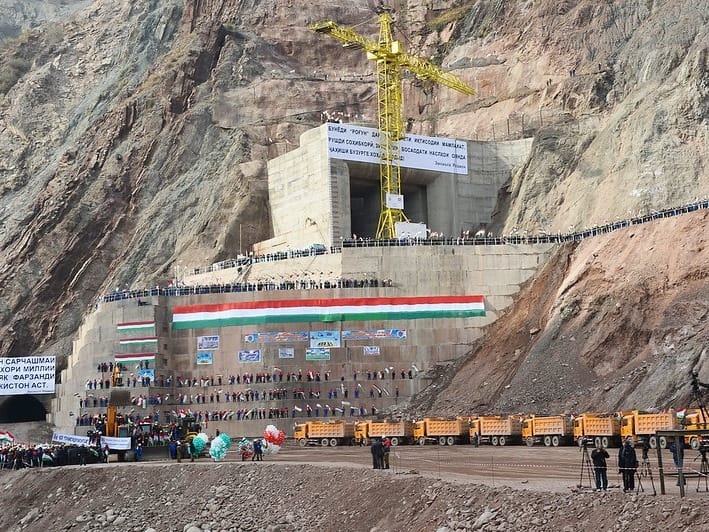
The funds from the International Development Association (IDA) will be directed towards continuing construction work, purchasing equipment, project management, as well as social and environmental safety measures, reports FERGANA NEWS. The decision confirms that international financial institutions continue to view the Rogun HPP as one of the key infrastructure projects in Central Asia.
The Gist
· The World Bank has approved a $300 million grant for the second phase of the Rogun HPP construction.
· The funds will be used for construction, equipment procurement, quality control, and the project's environmental safety.
· Separate funding is allocated for resettling residents, restoring their incomes, and modernizing the reservoir monitoring systems.
· Upon completion, the plant will be capable of producing up to 17 billion kWh of electricity per year.
· The project is intended to reduce the electricity deficit in Tajikistan and create opportunities for exporting electricity to Central Asian countries, including Kazakhstan.
Rogun Remains the Region's Largest Energy Project
The Rogun HPP is considered the largest hydropower project in Tajikistan. After all six hydraulic units are commissioned, the plant's installed capacity will reach 3600 MW, and its annual output will be between 13 and 17 billion kWh of electricity. This is equivalent to approximately 60% of the country's current electricity production.
Two hydraulic units with a capacity of 600 MW each are already in operation. Construction is planned to be fully completed by the end of 2031.
Funding Extends Beyond Construction
The allocated funds will be used not only for building the facility and installing equipment.
The project includes measures for resettling residents affected by the construction zone, restoring their sources of income, complying with environmental and social standards, and developing reservoir monitoring systems.
Special attention is given to improving flood forecasting and water resource management, which should reduce the risk of flooding in settlements located downstream.
Furthermore, the government of Tajikistan has committed to implementing a Benefits Sharing Program, under which a portion of the revenue from the hydroelectric plant's operation will be directed towards funding social programs and supporting the most vulnerable segments of the population.
An International Coalition Supports the Project
The current grant is a continuation of the international financing program for the construction of the Rogun HPP.
Back in December 2024, the World Bank allocated $350 million for the first phase of completing the project. In total, from 2008 to 2024, Tajikistan has already invested about $4 billion of its own funds in the construction.
At Dushanbe's request, the World Bank coordinates the work of an international group of partners, which includes the Asian Development Bank, the European Investment Bank, the Islamic Development Bank, the European Commission, the Asian Infrastructure Investment Bank, as well as financial institutions from the Gulf countries.
What This Means for Kazakhstan
Upon completion of construction, the Rogun HPP is expected to significantly increase electricity production in Tajikistan and create additional opportunities for export to Central Asian countries, including Kazakhstan and Uzbekistan.
For Kazakhstan, this potentially means an expansion of the regional electricity market and increased stability of the Central Asian energy system. At the same time, the project traditionally remains a subject of attention from the perspective of transboundary water resource management, as the operating regime of large hydroelectric plants directly affects water use in the Amu Darya basin.
Author's Conclusion
The allocation of another grant shows that the Rogun HPP has long ceased to be exclusively a national project of Tajikistan. Today, it is one of the largest international infrastructure projects in Central Asia, around which a coalition of financial institutions and partner countries is forming. If construction is completed on schedule, the region will receive not only additional volumes of renewable electricity but also a new impetus for the development of a common energy market. At the same time, this increases the importance of effective water resource management, as the energy and water security of Central Asia remain inextricably linked.

Comments ()