Taraz plant resumes sugar beet intake after 12.4 billion tenge modernization
The sugar plant in Taraz, being modernized since 2025, has been receiving sugar beets since October 25 according to the approved schedule.
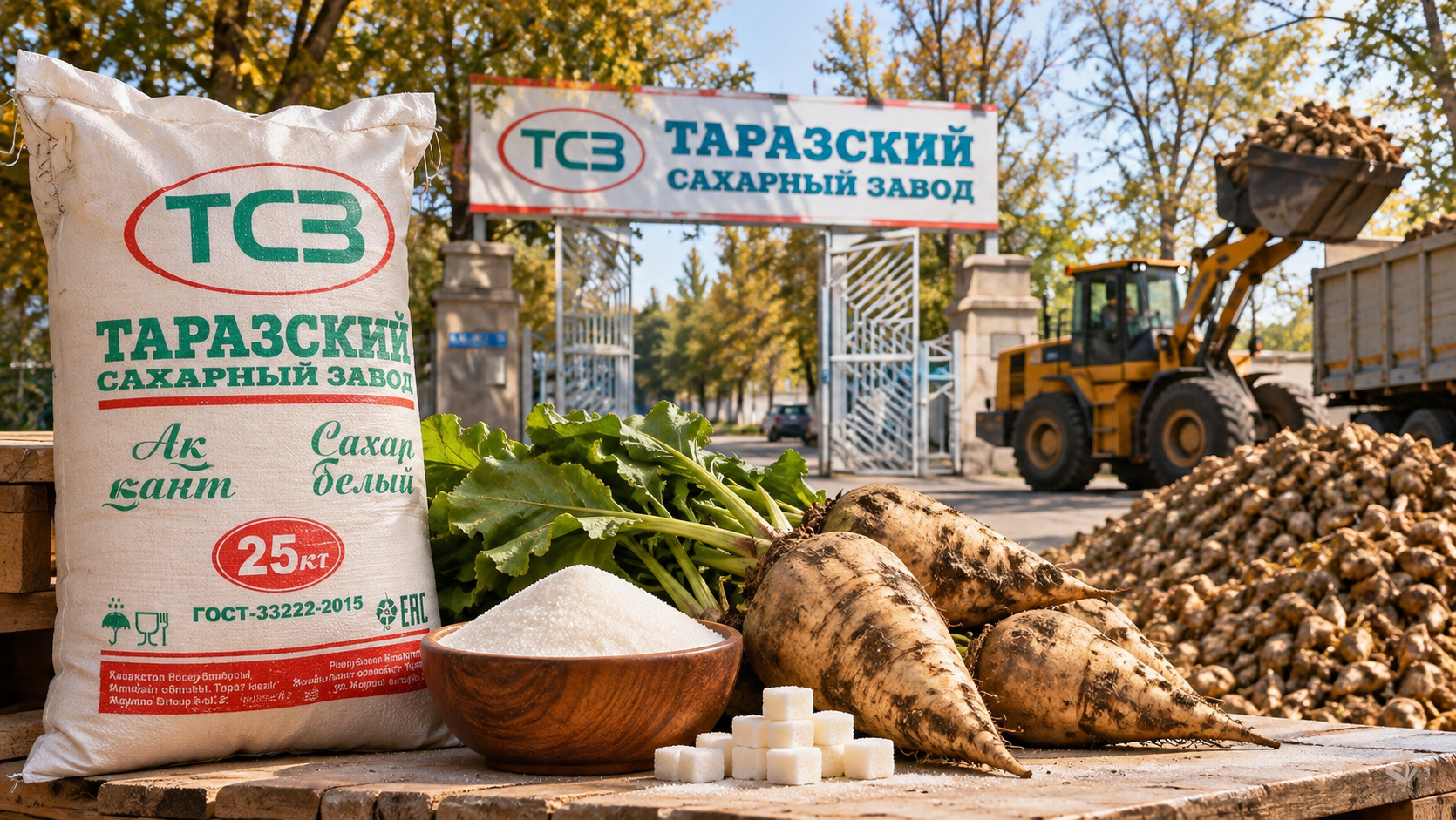
Currently, the plant accepts one thousand tons of raw materials per day; in November, they plan to gradually increase acceptance volumes, and after full launch it will be able to process up to three thousand tons per day. The progress of modernization was checked by the akim of Zhambyl region, Yerbol Karashukeyev, as reported by the regional akimat.
The essence in brief
- The project attracted 12.4 billion tenge in private investment; the investor pays for the preparation and modernization of infrastructure itself.
- After full launch, the plant will be able to process up to 3 thousand tons of sugar beet per day, or about 250 thousand tons per year.
- The enterprise's readiness for launch is 95%; work is proceeding in two shifts with the participation of 10 contractor organizations.
- In Baizak district, a second plant with a capacity of over 1 million tons of sugar beet per year is planned.
What is known about the launch
The plant has been operating since 1936. Sugar beet processing there was stopped many years ago, and later it mainly processed imported raw cane sugar. The main volume of construction and installation work is being completed. Equipment for receiving, washing and processing sugar beet, juice purification, filtration, evaporation, crystallization and centrifugation has been delivered to the plant; installation of production lines continues. To speed up the work, 10 contractor organizations were engaged, working in two shifts. With state support, the enterprise was allocated land plots and issues of increasing gas and electricity supply were resolved.
What about raw materials
According to Baq, in Zhambyl region 9.9 thousand hectares have been allocated for sugar beet this year; the expected harvest is about 450 thousand tons with a yield of up to 100 t/ha. Of this area, 5.5 thousand hectares are cultivated by 94 farms that will supply raw materials directly to Taraz. For this season, the plant plans to accept about 200 thousand tons of sugar beet, and in the future to bring processing to 700 thousand tons per year. The regional akim inspected peasant farms: at the Zhanbolat farm in Kapal village, 15 hectares are sown with sugar beet, with a planned yield of 800 centners/ha. At the Aslan Agro farm in Baizak district, 400 hectares are occupied by sugar beet. To irrigate 1 thousand hectares of land here, 17 wells were drilled and 56 km of underground water supply networks were laid.
What is planned next in the region
In Baizak district, they plan to build a plant with a capacity of over 1 million tons of sugar beet per year, approximately four times the capacity of the Taraz plant. In Shu district, a deep corn processing plant will operate at 500 thousand tons per year; later the capacity is planned to be increased to 3 million tons. For it, 25.6 thousand hectares were sown with corn this year; in the coming years the area is to be increased to 60 thousand hectares. In Baizak district, 4 thousand hectares have been allocated for grain corn this year, compared with up to 1 thousand hectares before. According to Vice Minister of Agriculture Yermek Kenzhekhanuly, deep processing is "a strategically important direction for improving the efficiency of the entire agro-industrial complex." In total, according to him, six deep processing projects with a capacity of up to 6 million tons of raw materials per year are being implemented across the country, and all of them should become operational by the end of 2029.
What the akim instructed
Following the trip, Yerbol Karashukeyev instructed that the modernization of the plant be completed within the established deadlines and that preparations for a full launch be accelerated. He ordered special attention to be paid to coordinating the acceptance, transportation and processing of sugar beet, as well as to creating conditions for the timely sale of the harvest. District akimats were instructed to complete the harvesting campaign on time and prevent product losses.
Which figures diverge
Annual plant capacity: about 250 thousand tons of sugar beet according to the akimat and Baq; in September the akimat cited up to 300 thousand tons. The expected harvest of 450 thousand tons was forecast in spring for 8.5 thousand hectares; later the area grew to 9.9 thousand hectares, so the final result may differ.
What is happening with the sugar industry in Kazakhstan
The industry has been operating intermittently in recent years: in the first half of 2026, plants produced 78 thousand tons of sugar, 35.2% less than a year earlier, and the share of imports on the domestic market grew from 49.8% in 2022 to 70.4% in 2025. The sugar self-sufficiency plan for 2025 (68%) was not fulfilled: 174.2 thousand tons were produced instead of 250 thousand tons. In parallel, the Emirati company Al Khaleej Sugar is building a plant in Konayev worth about $580 million with a capacity of 500 thousand tons of finished products per year; launch is scheduled for 2028.
Author's conclusion
The plant in Taraz plans to accept about 200 thousand tons of sugar beet this season with a design capacity of 250 thousand tons per year, and the long-term goal is 700 thousand tons, meaning that for now it is operating noticeably below its intended level. Much depends on how quickly the plant reaches 3 thousand tons per day and how much the region's raw material base catches up with its capacity: part of the harvest is intended for other plants, and the second plant in Baizak district is only being planned so far. Therefore, the real scale of processing will become clear only after the first full season.



Comments ()