Wedding of the Glaciers" — How the People of Pakistan Create Water Where There Is No More
In Pakistan's highlands, a centuries-old practice is being revived: artificial glacier growing where natural ones are rapidly retreating.
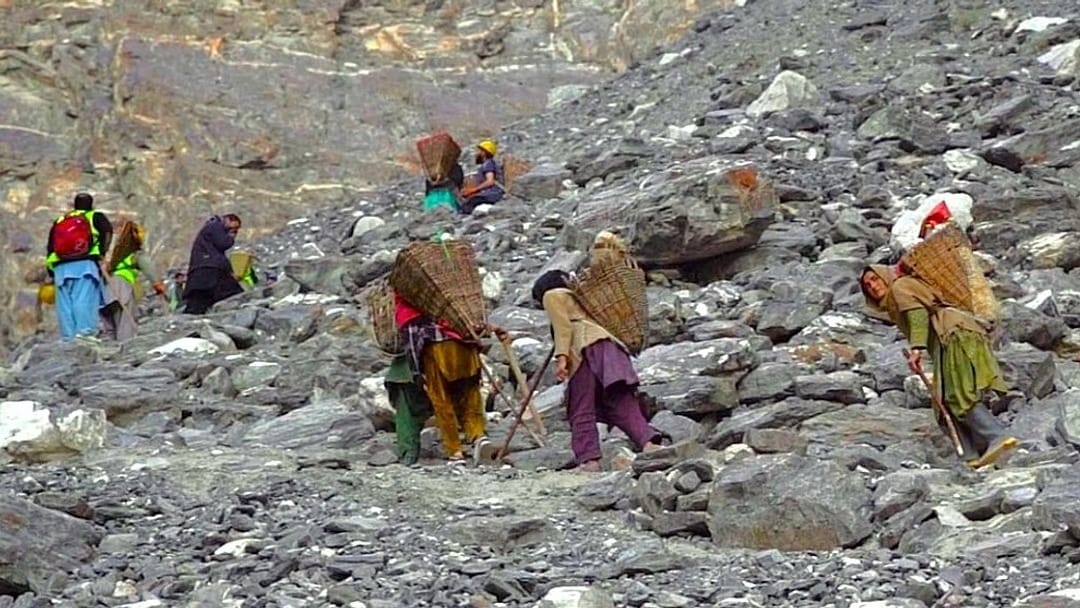
Residents literally "marry" ice to secure a reliable water source for decades to come, writes Euronews.com.
The gist in brief
- In Gilgit-Baltistan — an autonomous territory administered by Pakistan within the broader disputed region of Kashmir — local residents are reviving the traditional practice of "glacier grafting" (gang khswa), which makes it possible to create artificial glaciers as a new source of fresh water.
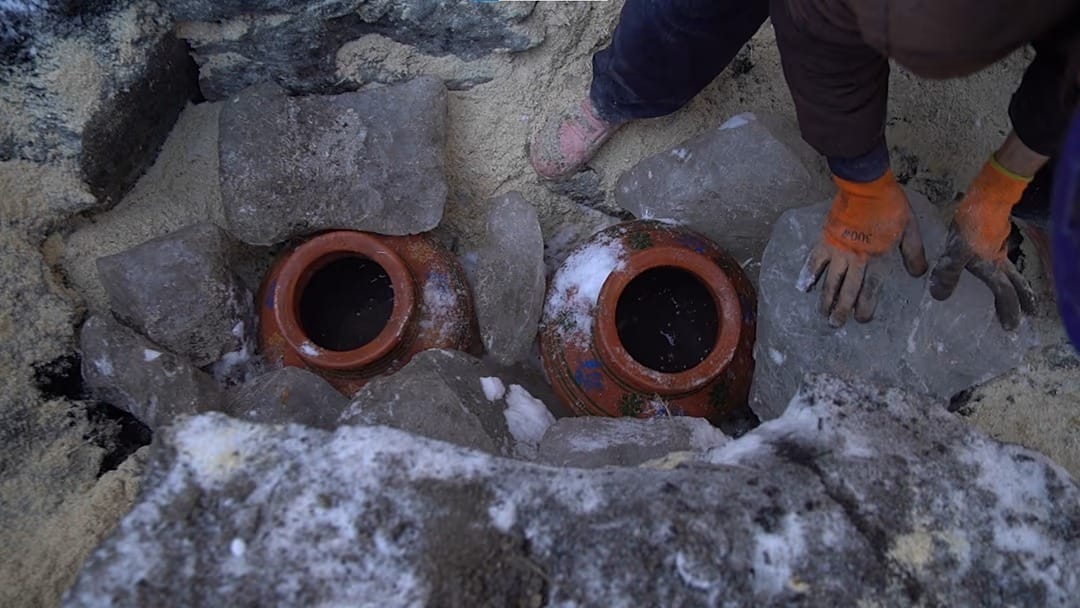
- The technique is called "glacier marriage": ice is collected from "male" glaciers (grayish, with rock impurities) and "female" glaciers (clean, yielding more water), carried to specially selected high-mountain caves at an altitude of at least 4,000 meters, and laid down in layers with insulation made of sawdust, charcoal, and apricot pits.
- Transporting the ice is a nonstop process lasting up to 48 hours; the new glacier takes root in about 10 years and becomes a reliable water source after another decade.
- According to UNDP data, 3,044 glacial lakes have formed in Gilgit-Baltistan and Khyber Pakhtunkhwa province, of which 33 are considered dangerous and capable of causing glacial lake outburst floods — just such a flood a week earlier claimed more than a thousand lives in Nepal and Tibet.
How glacier grafting works
The ideal site for a new graft must be at an altitude of at least 4,000 meters, have a high degree of permafrost, and be as exposed as possible to winds and as little as possible to the sun. Dozens of porters collect pieces of ice from both types of glaciers and carry them in wooden baskets — first by vehicle as far as the terrain allows, then on foot. At the site, the ice is placed in a pre-prepared pit or natural cave, with the male and female ice separated by clay vessels filled with water from the Indus River, and then covered with layers of sawdust, charcoal, and apricot pits for thermal insulation.
A tradition with a practical rationale
Although the modern revival of the practice began only in the 1990s, the technique itself is centuries old and closely intertwined with local beliefs — reciting verses from the Quran, singing a lullaby to the "glacier infant," and strict prohibitions such as transporting ice only at night and maintaining silence along the way. Nazir Ahmed, director general of the Baltistan Culture and Development Foundation, explains that these beliefs also have a practical meaning — transporting at night reduces melting due to lower temperatures, while silence helps the porters maintain a steady pace throughout the grueling marathon. The foundation, having received funding from the British FCDO in 2025, has already grafted ten glaciers, built six ice towers, and established a botanical garden at the University of Baltistan — expanding a single ice carry from 200 kg to more than a ton at a time.
Young people and the future of the practice
Since the practice rests entirely on community participation, involving young people is critically important for its preservation — but that is precisely where difficulties arise: more than 90% of school graduates in Skardu district leave to study in major cities and often do not return. The head of the youth initiative Siachen Sherpa, Zishan Abbas, believes the issue is not weakening interest in ecology but a lack of resources and institutional support for field projects. In his view, the younger generation should be engaged not as victims of climate change but as researchers capable of combining the traditional knowledge of their ancestors with satellite data, GPS, and modern science.
The injustice of climate consequences
The glaciers of the "Third Pole" — the Hindu Kush-Karakoram-Himalaya mountain system — irrigate 90% of Pakistan's agricultural land and provide water to more than 220 million people, and contain the largest reserves of frozen fresh water outside the Arctic and Antarctic regions. At the same time, Pakistan contributes less than 1% of global greenhouse gas emissions annually, remaining one of the countries most vulnerable to climate change — while the wealthiest 10% of the world's population, according to a 2025 study, are responsible for two-thirds of global warming since 1990.
Topics we have already covered
The topic of glaciers as a water source is already familiar to hunn.kz readers from several angles. We wrote that on Switzerland's Tsanfleuron glacier, sheep's wool was tested as an eco-friendly alternative to synthetic coverings that slow ice melt — another example of how different cultures seek their own technological and traditional answers to the same problem of retreating glaciers. Regionally closer to the Pakistani case is the Kyrgyz one: President Japarov signed a decree establishing a Fund for the Preservation of Glaciers and Lake Issyk-Kul after the lake's water level fell by almost 14 meters over recent decades — meaning both Central Asia and Gilgit-Baltistan are simultaneously seeking institutional and community-based ways to cope with the same challenge. And the study we covered earlier on the unexpected temporary growth of ice in Antarctica due to tropical teleconnections reminds us: the planet's glacial systems — from the Karakoram to the South Pole — are more complex than they seem and require attention at very different scales simultaneously.
Author's conclusion
Glacier grafting will not solve the global problem of melting mountain ice — the scale of individual community projects is incomparable to the rate at which natural glaciers are retreating under the impact of warming. But the story of Gilgit-Baltistan shows the same thing that the Kazakh, Kyrgyz, and Swiss examples show: where state and international mechanisms are not yet keeping pace with the rate of climate change, local communities find their own, often surprisingly inventive ways to adapt — drawing on both the centuries-old knowledge of their ancestors and modern science at the same time.
Comments ()