Wildfire smoke unexpectedly enriches soil with nutrients.
The wildfires that blanketed entire countries in smog this summer had an unexpected upside.
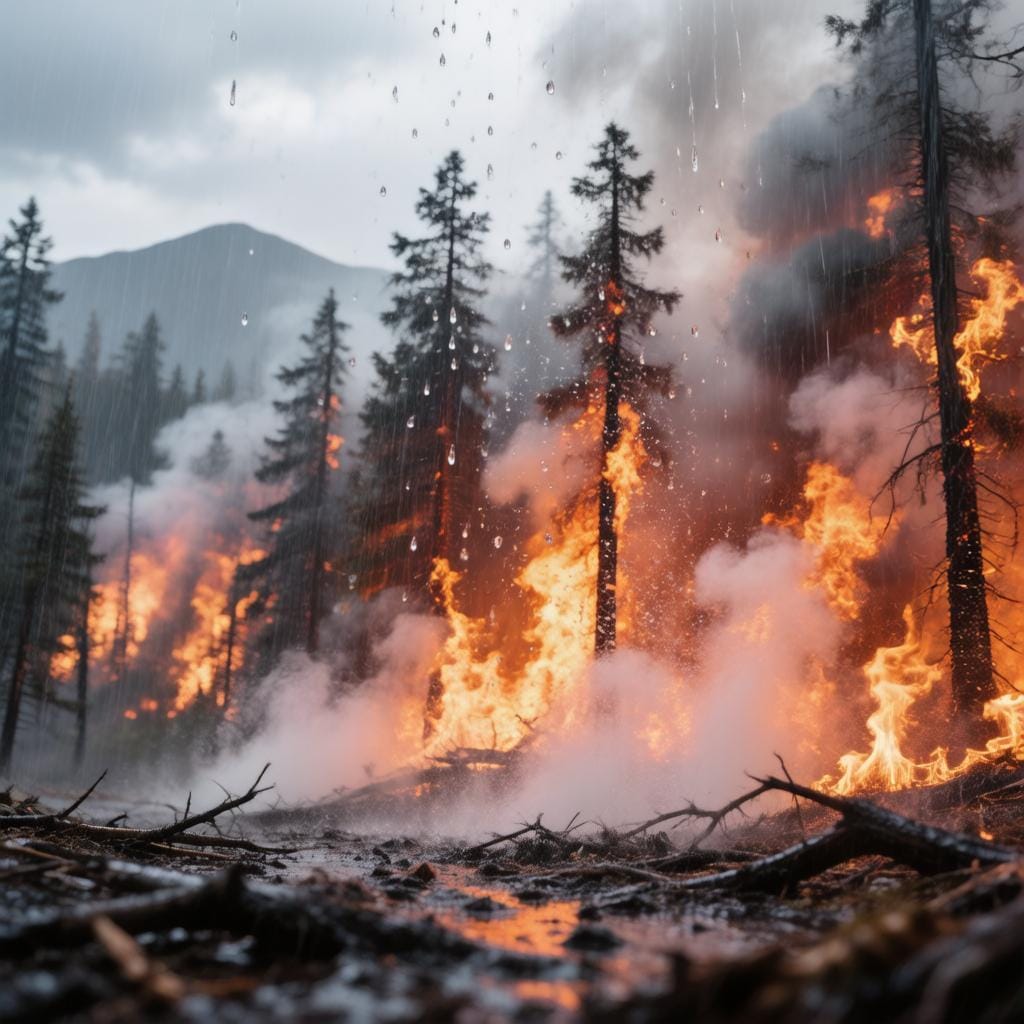
American scientists have found that rain passing through smoky air turns into a kind of natural nutrient solution — washing out of the smoke substances that are critically important for plant growth.
The gist in brief
- Researchers from the University of Utah analyzed the composition of precipitation at more than 250 monitoring stations across the United States, comparing it with satellite data on the movement of smoke clouds from wildfires in 2014, 2020, and 2022.
- On days when rain passed through smoky air, the concentration of available phosphorus in the water increased by an average of 46%, potassium by 41%, and nitrogen by 36% compared with ordinary rainy days.
- The effect was geographically uneven: in the western United States and Alaska, ammonium and potassium levels rose sharply, while in the northeast of the country, rain was predominantly enriched with phosphorus — its concentration increased by more than 100%.
- In the anomalous year of 2022, such "smoke" precipitation accounted for between 20% and 30% of the total annual volume of phosphorus, potassium, and calcium that entered the soil across the entire country.
How smoke turns into fertilizer
The mechanism of the phenomenon is physically quite simple: rainwater passing through a smoky atmosphere washes out microscopic particles of ash and soot formed by the combustion of vegetation. These particles instantly dissolve in water droplets, saturating them with the same elements that naturally accumulate in wood and plant biomass — phosphorus, potassium, nitrogen, as well as calcium, magnesium, and sulfates. In essence, every fire releases into the atmosphere nutrients that plants have accumulated in their tissues over years, and the rain that follows the fire returns some of these substances back to the soil — just in a dissolved, easily absorbable form.
A double-edged effect — not only benefits
The authors of the study emphasize that the "fertilizing" effect of smoke rain cannot be viewed as unambiguously positive. On the one hand, the additional influx of phosphorus and nitrogen does accelerate forest recovery after fires, helping young vegetation gain biomass more quickly. On the other hand, when such natural "fertilizer" ends up not in the soil but directly in mountain lakes and rivers, it can disrupt the fragile balance of aquatic ecosystems — an excess of phosphorus and nitrogen in water triggers rapid blooms of cyanobacteria, which in turn threatens drinking water quality and the health of aquatic life.
Part of the wildfire picture we already know
This study logically complements the topic we have been following all season: large-scale wildfires this summer were recorded on several continents at once — from a record fire season in Europe that even reached Germany to the smoke that blanketed Indonesia and neighboring Southeast Asian countries. Until now, all these reports described fires exclusively as a source of damage — to human health, the economy, and ecosystems. The new study adds a more complex, ambiguous facet to this picture: even a destructive natural phenomenon can simultaneously trigger processes useful for the subsequent recovery of affected areas.
Author's conclusion
The discovery by American scientists is a good reason to avoid oversimplified conclusions about climatic and environmental phenomena in either direction. Smoke rain does not negate the harm of wildfires — urban smoke pollution, health risks, and direct economic damage remain real and well documented — but it shows that even in destructive natural processes, ecosystems find ways to partially compensate for the damage inflicted. The question that arises from this study is whether the growing number and intensity of fires is itself negating this compensatory effect, as burned forests no longer have time to fully recover between increasingly frequent and large-scale fire seasons.



Comments ()