World's first nuclear waste repository receives operating license
Finland's government has granted Posiva a licence to operate the spent nuclear fuel repository on Olkiluoto Island.
This is the world's first permanent repository of its kind, World Nuclear News reports.
The essence in brief
- The license allows Posiva to store and dispose of up to 6,500 t of uranium in spent fuel from the Olkiluoto and Loviisa nuclear power plants.
- The repository is designed for approximately 3,300 canisters, with no more than 60 per year at full capacity.
- The start of disposal has not yet been scheduled: commissioning and regulatory review are required first.
- Disposal will continue until the 2120s, after which the repository will be backfilled and closed.
What was approved
The license covers the fuel encapsulation plant and the Onkalo underground repository in Olkiluoto, western Finland. Posiva has been granted the right to receive, process, store and dispose of up to 6,500 t of uranium contained in spent fuel from the Olkiluoto and Loviisa nuclear power plants. Posiva itself is owned by the operators of these plants — TVO and Fortum. In addition, the company may handle low- and intermediate-level waste in a limited volume: up to 3,000 m³, of which no more than 1,500 m³ for final disposal. The company submitted its application in December 2021 and requested a license to operate until the end of 2070.
How the repository is designed
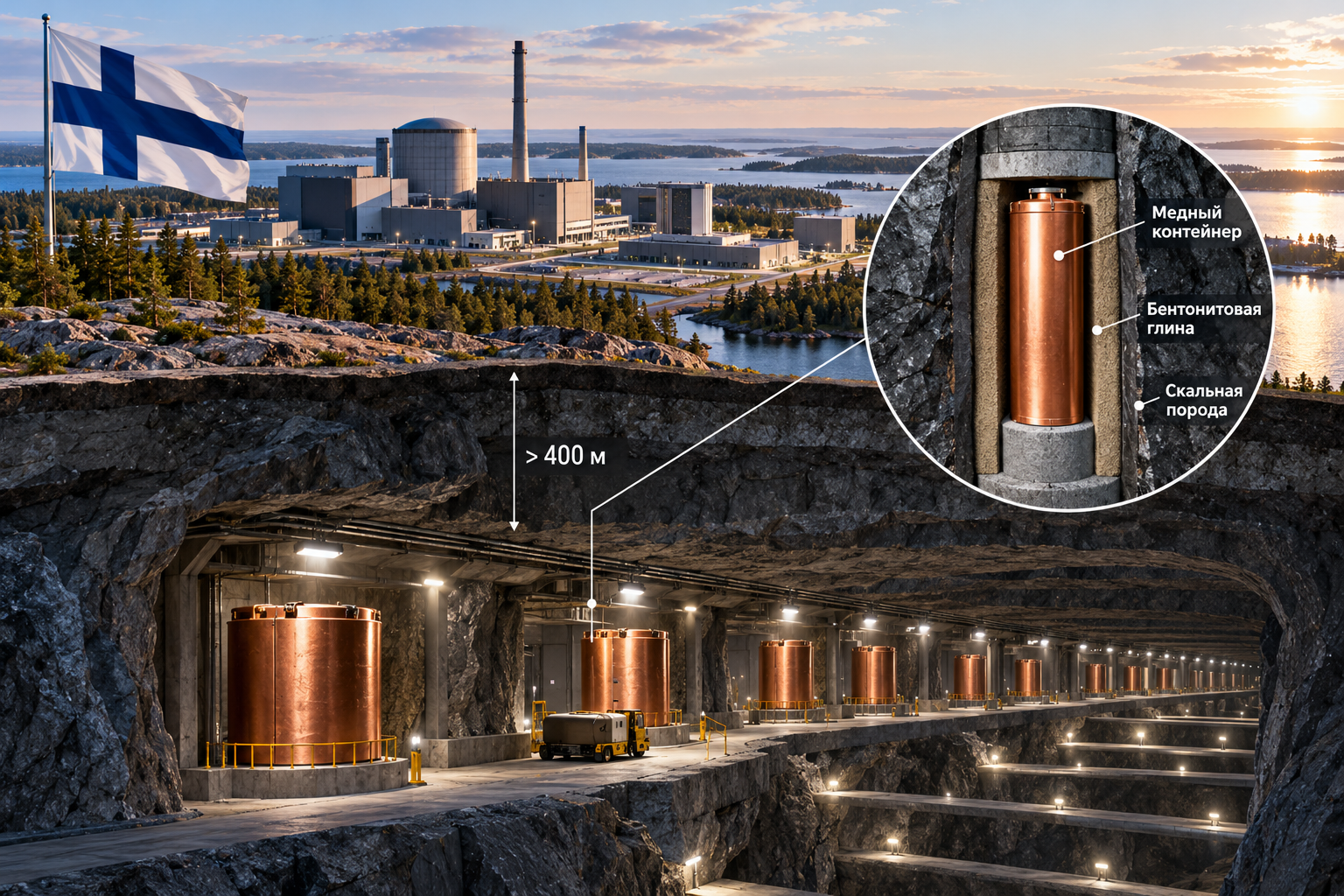
Spent fuel is encapsulated in thick corrosion-resistant copper canisters. They are then lowered into boreholes in the bedrock at a depth of more than 400 m, surrounded by swelling bentonite clay and sealed with concrete plugs. The boreholes, 8.4 m deep and 1.75 m in diameter, are drilled into the floor of the tunnels. The repository is designed for approximately 3,300 canisters, with up to 60 per year at full capacity.
When disposal will begin
The license does not mean an immediate start. Posiva must still complete commissioning, including testing and inspections. Before operations begin, the repository must be inspected by the Finnish regulator STUK (Radiation and Nuclear Safety Authority). In August, it concluded that there were no obstacles to the license from a radiation and nuclear safety perspective.
Posiva emphasizes: "The operating license does not mean the immediate start of industrial operation."
The company has not yet announced a launch date.
What's next
Fuel disposal will continue until the 2120s, after which the repository will be backfilled and closed, and responsibility for it will pass to the state. Every ten years, Posiva must submit a periodic safety assessment.
What about radioactive waste in Central Asia
In the region, the issue of final disposal remains open. Uzbekistan, as we wrote, has radioactive waste storage facilities that will last approximately 4-5 years: of the 10 facilities at the national center, four are full and the rest are at 50-92%. While preparing the waste law, Uzbek developers studied the experience of eight countries, including Kazakhstan, and cited Finnish practice of disposal at a depth of 400 meters as an example.
Legacy uranium mine sites are being cleaned up in other countries as well. In Kyrgyzstan, reclamation of uranium tailings in the villages of Too-Moyun and Kyzyl-Jar was completed in 11 months instead of the planned 18: more than 100,000 m³ of rock was moved, and impermeable barriers were installed at the sites.
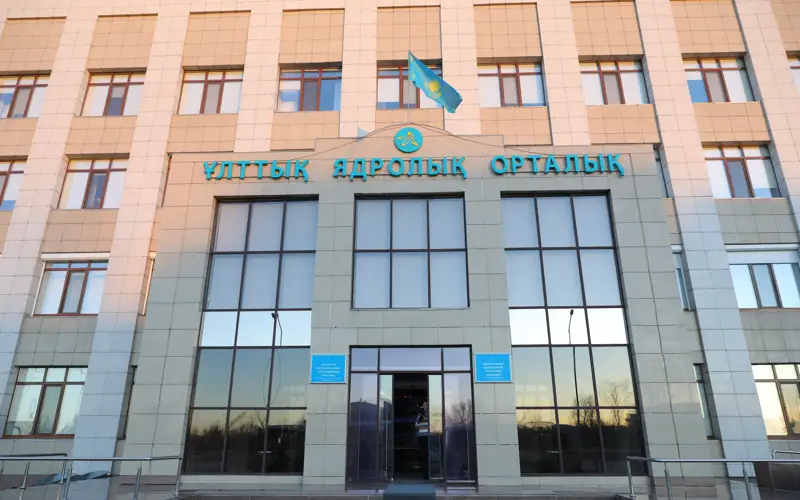
Kazakhstan plans to dispose of waste from a future nuclear power plant — about 50 m³ from two reactors — at the former Semipalatinsk test site. It also initiated the creation of a CIS Regional Competence Council on radioactive waste management based at the National Nuclear Center in Kurchatov. The council is intended to develop common approaches and assist countries in cleaning up uranium legacy sites. And in Ust-Kamenogorsk, at the Ulba Metallurgical Plant, an IAEA low-enriched uranium bank is stored: up to 90 tonnes with uranium-235 content not exceeding 4.95%. It belongs to the IAEA, not to Kazakhstan.
Author's conclusion
Construction of the Onkalo underground laboratory began in 2004, and the operating license was granted 22 years later. Another century, until the 2120s, will be needed to fill and close the repository.
Comments ()