2026 European wildfires claimed dozens of lives and reached Germany
Europe's extreme heat has fueled one of the worst fire seasons in years, with casualties reported.
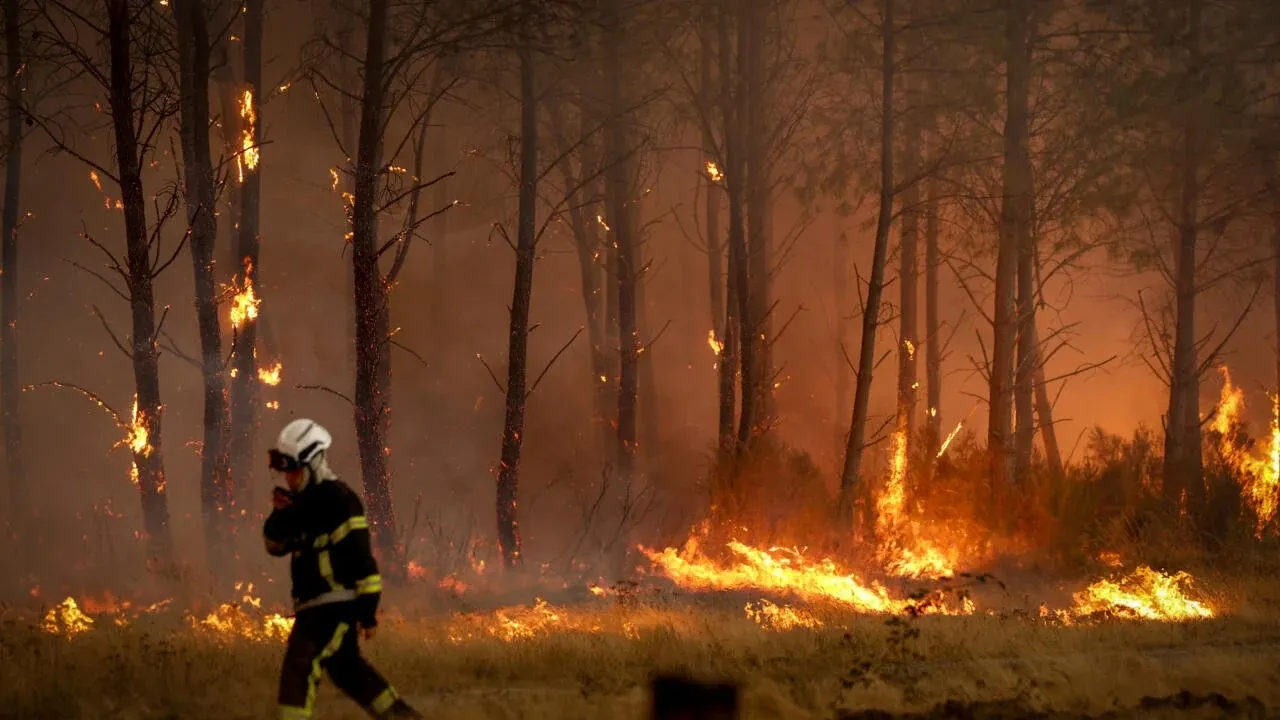
This summer has been hard on Europe: reactors were shut down, rivers ran low, and water restrictions were introduced. Now, one of the most severe wildfire seasons in recent years has been added to the list of consequences of the abnormal heat. There have been casualties. There is the largest fire in France since World War II. And the flames have reached Germany for the first time in a long while.
The gist in brief
- According to the official European forest fire monitoring system EFFIS (Copernicus), by August 6, 2026, 500,852 hectares had been burned in the EU — compared to 381,444 hectares over the same period in 2025 and a 20-year average of 197,347 hectares.
- The fire in southern France, in the Aude department, destroyed around 42,000 hectares and became the largest forest fire in France since World War II, triggering the largest evacuation over the same period.
- The deadliest fire of the season occurred in Spain's Almeria province, near the settlements of Los Gallardos and Bédar — at least 14 people died, making it the deadliest fire in Spain in roughly two decades.
- In Germany, on August 14, more than 2,000 residents of the village of Gay in North Rhine-Westphalia had to be evacuated — this is the largest forest fire in the history of Germany's most populous state.
Official EU statistics
Data from the European Forest Fire Information System (EFFIS), maintained by the European Commission's Joint Research Centre based on Copernicus satellites, provide the most accurate picture of the scale: 500,852 hectares of burned area and 1,528 recorded fires as of August 6 — almost 2.6 times more than the figure for the same period last year. The Copernicus Atmosphere Monitoring Service (CAMS) separately recorded that emissions from fires in France since the beginning of the year are comparable to or exceed those of the extreme years 2022 and 2023, and the country may end the season among the worst in the last 24 years. According to an official representative of EFFIS, the situation with drought and abnormally high temperatures affected all of Europe this summer.
France and Spain — the epicenter of the season
The largest single fire of the season occurred in southern France, in the Aude department — destroying around 42,000 hectares, it became the largest forest fire in the country since World War II and triggered the largest evacuation since that time. French Interior Minister Laurent Nuñez reported that around 115,000 hectares of forest have burned in the country since the beginning of the year. In Spain, Prime Minister Pedro Sánchez cited an even more alarming figure — over 150,000 hectares since the start of the year, six times more than the figure for the same period a year earlier. The most tragic episode of the season was the fire near Los Gallardos and Bédar in the Andalusian province of Almeria, which claimed the lives of at least 14 people — seven Britons, three Belgians, one French citizen, one American, and one Spaniard; most of the victims tried to escape by fleeing, including by car. This is the deadliest fire in Spain in about twenty years.
Germany — an unexpected front
The fire in the Hürtgenwald forest in western Germany, near the Belgian border, showed that Central European countries are not immune to abnormal heat either. On the night of August 14, authorities urgently evacuated more than 2,000 residents of the village of Gay, and by morning the fire area had grown from 25 to approximately 300 hectares. According to dpa, five people were injured during the evacuation and firefighting — an elderly man felt unwell with a heart condition, and four rescuers received minor injuries. Local fire department representative Peter Berndgen told Bild that dry air, strong winds, and heat create "extremely unfavorable conditions for firefighting." This is the largest forest fire in the history of North Rhine-Westphalia — Germany's most populous state — and police have launched an investigation into its cause. In addition to this hotspot, on the same day, separate, smaller fires were recorded in the states of Rhineland-Palatinate, Saarland, and Saxony.
Part of the same heat wave
This summer's fires are not an isolated phenomenon but yet another consequence of the abnormal heat that has already manifested itself in many different ways. The same heat wave shut down France's nuclear reactors due to overheated water in the Seine and Rhône, and as early as late June led to more than 10,000 excess deaths in just one week across Europe. Italy's Po River fell to a record low along with the Thames, Rhine, and Danube, and according to estimates by Triodos bank, the total economic damage from heat and fires could cost the EU economy €180 billion — about 1% of the union's GDP for this year. Fires, drought, shrinking rivers, excess mortality, and economic losses — different manifestations of the same prolonged anomaly that kept the continent on edge for several months in a row.
Author's conclusion
The list of countries seriously affected this summer continues to grow: what seemed to be a problem exclusively for southern Europe has reached Germany — a country for which fires of this scale were not previously a typical summer risk — and has claimed dozens of lives where evacuation failed to outpace the speed of the fire's spread. Official EFFIS statistics record not a single extreme episode but a sustained acceleration compared to last year and the twenty-year average — and it is this persistence, not individual records, that should be the main reason for revising the continent's fire preparedness.

Comments ()