A crop failure awaits Kazakhstan in 2024 and 2025.
According to the World Meteorological Organization, El Niño is expected to last until spring 2024, with ocean temperatures still rising. The effect may last 12–18 months, possibly extending into summer 2025.
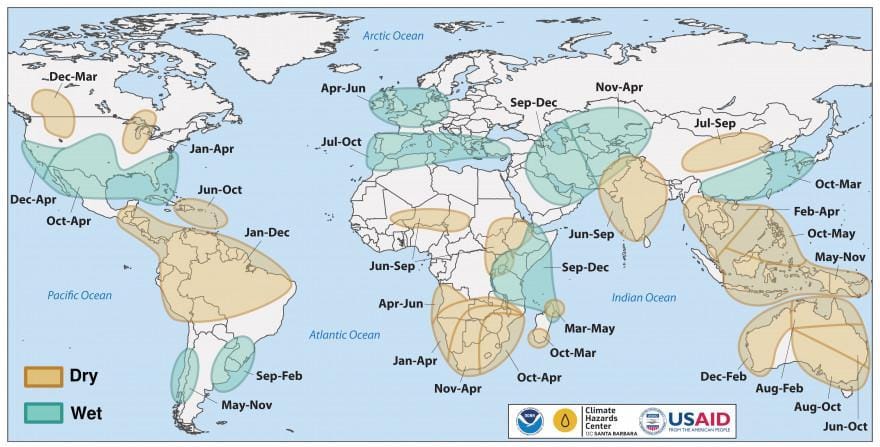
According to new data from the World Meteorological Organization, El Niño is expected to last until spring 2024 — elevated temperatures above ocean levels are still being recorded. Based on the parameters, the effect will last from 12 to 18 months and will most likely spill over into summer 2025.
I have written repeatedly about what this will lead to — proven food inflation due to global crop failures for many crops. Of course, in light of such a forecast, the corn grain rotting in southern fields due to a lack of railcars for transport evokes only a deep sense of frustration and regret.
If I were the state, I would be building up all types of reserves as much as possible — seed, commodity, and feed. The fact that we have a neighbor with incredible grain reserves does not mean that a political markup won't be demanded for it. And if something happens tomorrow, it will be just like with sugar — oh, how bitter it will be.
"The greatest increase in the probability of temperature rises in the Northern Hemisphere is forecast south of 40°N and in regions north of 65°N" — this is the forecast for November-January. The current winter warming we are experiencing is an example.
Although from November to April El Niño may bring additional precipitation, which somewhat saves the situation, in summer there is little hope for rain. However, an increase above normal temperature indicators is a safe bet.
The last time a similar effect was observed was in 2016, but it was natural rather than anthropogenic in nature and not as strong.
In general, as we will recall later, 2023 turns out not to have been such a bad year after all.
Comments ()