UN summit in Mongolia to allocate $12 billion for drought response
As the Northern Hemisphere swelters in record heat and wildfires rage across North America and Europe, UN desertification talks—once seen as the least prominent of the three Rio environmental conventions—have unexpectedly taken center stage.
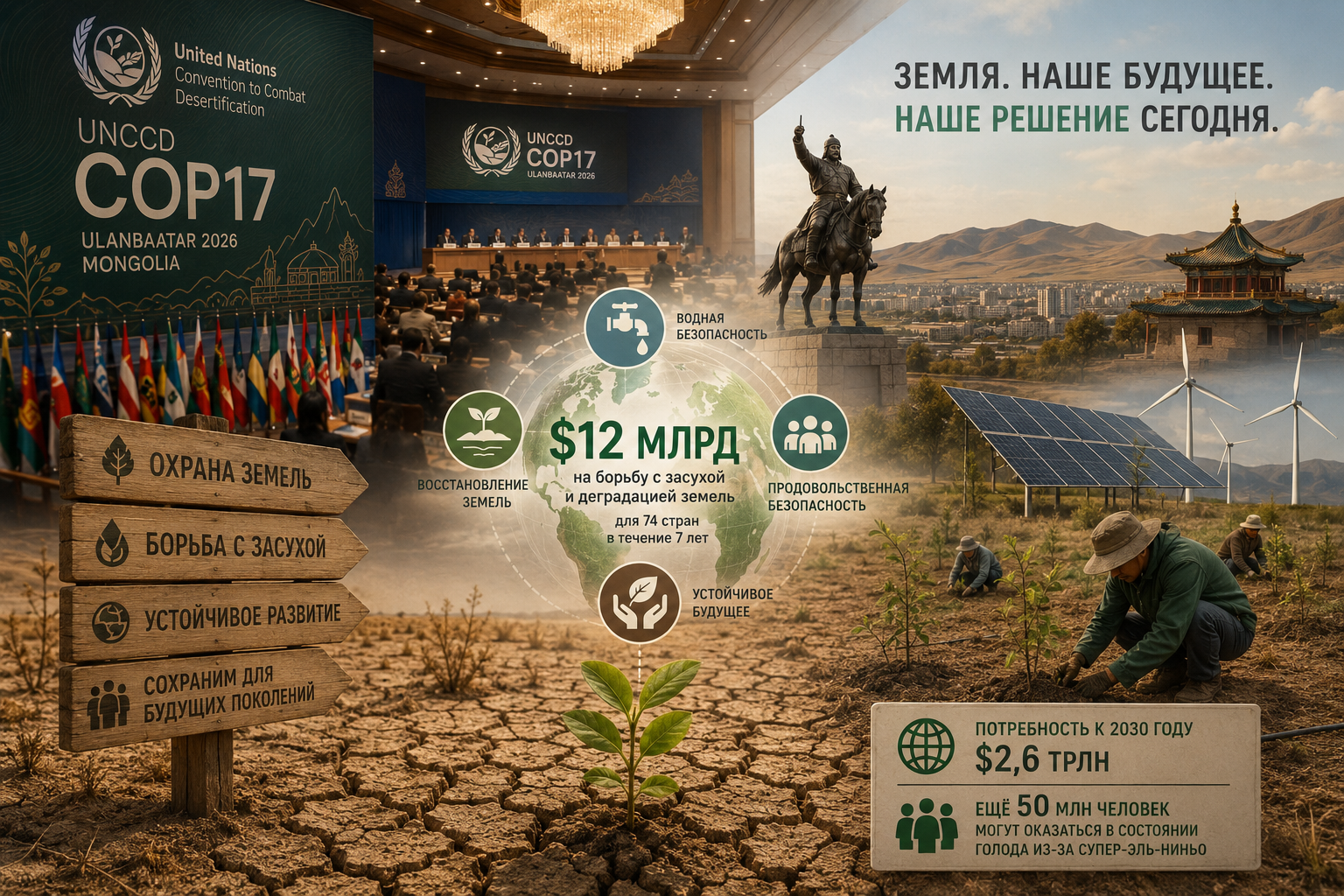
This week, Mongolia launched the distribution of the $12 billion promised to vulnerable countries to combat drought and land degradation, The Guardian reports.
The gist
- On August 17, the 17th session of the Conference of the Parties to the UN Convention to Combat Desertification (UNCCD) began in Ulaanbaatar and will run until August 28; the focus of the negotiations is the practical implementation of the Riyadh Global Drought Resilience Partnership.
- The partnership, established in 2024 under the leadership of Saudi Arabia, involves allocating $12 billion over seven years to 74 countries affected by drought and land degradation.
- This amount is nowhere near enough: according to UNCCD estimates, about $2.6 trillion will be needed by the end of the decade to restore degraded lands, protect against drought, and rehabilitate soils.
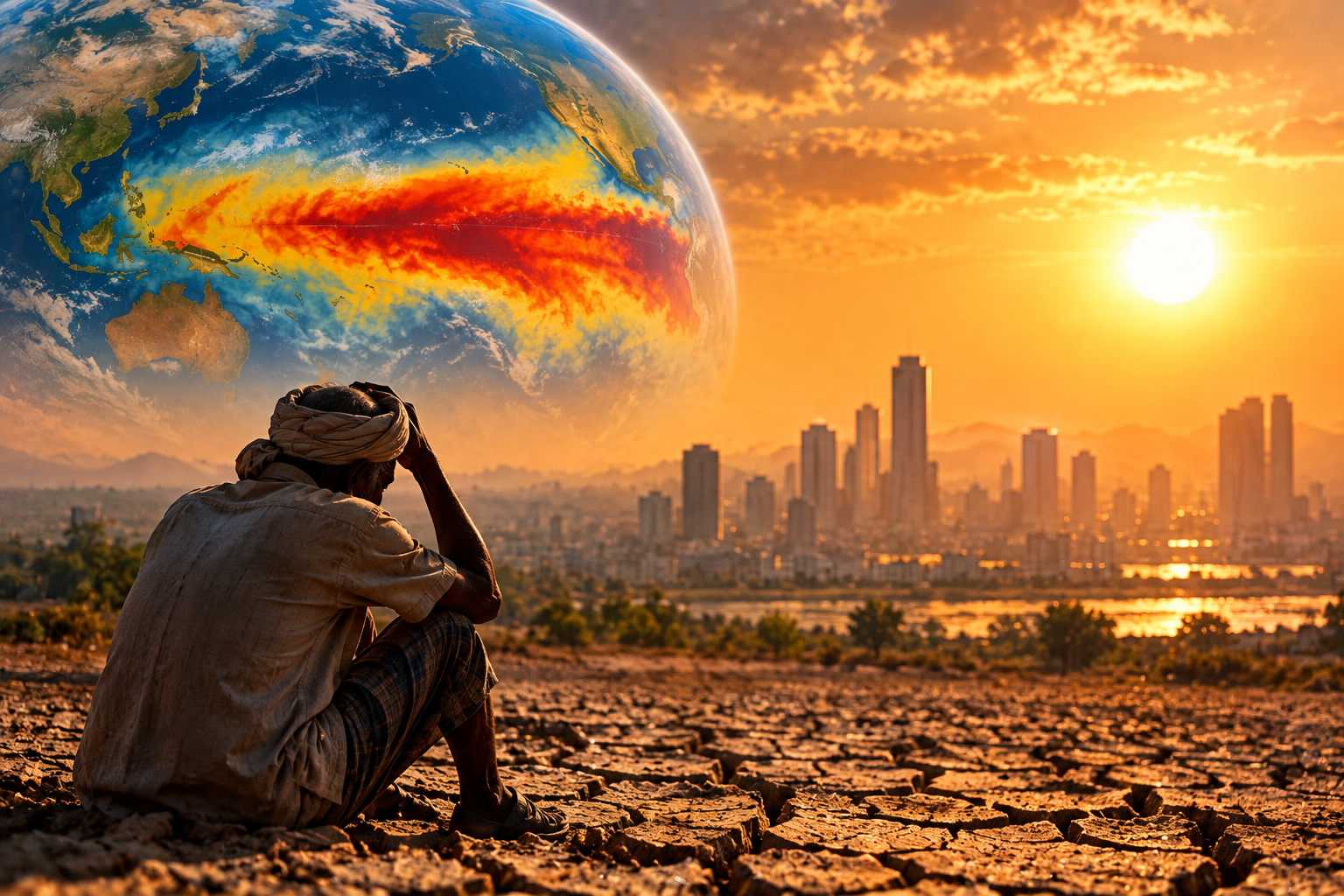
- The World Food Programme predicts that another 50 million people could face hunger due to the super El Niño currently forming.
Food security at the center of negotiations
UNCCD Executive Secretary Ibrahim Thiaw linked the summit's agenda directly to food security: "At the heart of our discussion is the issue of food security. The more you work on restoring land, the more fertile the soil becomes, which ensures food security."
According to him, more than 70 countries have already submitted their own drought plans, and the main task of the summit is to turn these plans into implementable projects: modernizing irrigation systems, transplanting drought-resistant crops to new areas, and improving rainwater storage facilities. So far, all of the promised $12 billion comes from the public sector, but organizers hope to attract private capital as well — primarily from food and textile companies that are heavily dependent on water and harvests.
An unexpected leader — Saudi Arabia
One of the most curious twists in the story is the role of Saudi Arabia. A country that for years blocked action on emissions reductions and any mention of fossil fuels at climate talks has become one of the most active supporters of the desertification convention — hosting COP16 in 2024 and pledging hundreds of millions of dollars to its goals.
Saudi Arabia's Deputy Minister of Environment Osama Faqeeha explained this by the scale of the problem: "Land degradation and drought have a significant impact on food and water security, biodiversity, climate resilience, and the well-being of nearly half of the world's population."
It is also telling that the United States remains a party to the desertification convention, despite the Trump administration's withdrawal from the Paris Agreement and the UN Framework Convention on Climate Change — the issue of drought mitigation has not yet become the subject of the same political divide as the climate agenda.
The demand for fair financing
Lily Maxwell-Lwin, head of advocacy at the Dutch non-profit organization Commonland, outlined the main demand of environmental organizations to the summit: "Our key demand at COP17 is financing for land restoration on par with what is available for climate change mitigation measures aimed at reducing emissions, supported by governments that recognize that degraded lands abroad pose a direct threat to their food security, migration pressures, and supply chain resilience."
The argument is telling: while climate negotiations have for years attracted incomparably more funding and attention than the issue of desertification, the consequences of land degradation — rising food prices, migration, supply instability — affect rich countries no less than poor ones.
Why this matters for Kazakhstan and Central Asia
The World Food Programme's forecast of an additional 50 million hungry people due to the super El Niño directly echoes what we have already covered: the climate episode forming this year is being compared to the strongest on record, and for Central Asia it brings not drought, but an increased risk of torrential rains and heatwaves — meaning different regions suffer from the same phenomenon in different ways, but simultaneously. Desertification and land degradation for Kazakhstan and its regional neighbors is not an abstract topic from a distant summit: a significant portion of irrigated land in Central Asia has already gone out of circulation, and the region's countries are implementing their own restoration programs for affected territories. According to the Ministry of Ecology and Natural Resources of the Republic of Kazakhstan, more than 70 million hectares of the country's pastureland are subject to degradation, and 26 million hectares of them — almost 20% of all pastures in the country — have already degraded to such an extent that ecologists have proposed creating a separate interagency commission to save them. A systemic response to the same problem already exists at the legislative level — in the summer of 2026, the Senate adopted the Law "On Soil Protection," introducing a mandatory land passport and a unified soil monitoring system. In the same context, Kazakhstan is already adopting China's experience, which over 40 years has created a protective green belt around the Taklamakan Desert stretching more than 3,000 km — cooperation proceeds through the China-Central Asia Desertification Prevention Center. The decisions made in Ulaanbaatar on financing mechanisms — whether through government partnerships like the Saudi one or through attracting private capital — will determine what international support similar regional initiatives can count on in the future.
Author's conclusion
The fact that the issue of desertification — the perennial "poor relative" among the three Rio environmental conventions — has suddenly gathered $12 billion and an unexpected sponsor in the form of oil-producing Saudi Arabia shows how quickly priorities are shifting under pressure from concrete, tangible consequences: record heat, wildfires, and the threat of famine for tens of millions of people. But even $12 billion against the stated need of $2.6 trillion is less than half a percent of what is required, and the main question of the two weeks of negotiations in Ulaanbaatar is not whether the promised funds can be distributed, but whether the world can be convinced that land deserves the same level of financing as climate.

Comments ()