A record drought in Europe is accelerating the harvest.
Slovak farmers started harvesting barley and peas two weeks early due to severe drought. April was the driest in 145 years.
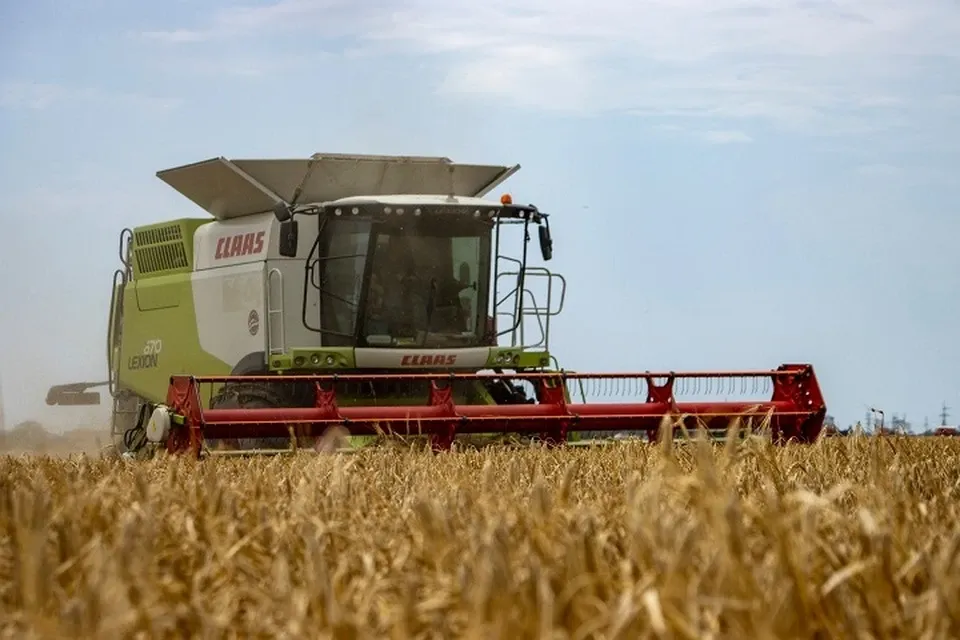
Farmers in southern Slovakia have started harvesting barley and peas earlier than ever before in the country's history — one and a half to two weeks ahead of the usual schedule. As reported by Reuters, the reason is not technological progress, but drought: the dry April and May accelerated grain ripening while simultaneously reducing yields. Europe has been recording this shift for several consecutive years. For Kazakhstan, which faces the same climatic processes, the Slovak experience is a mirror of what is happening in the Kazakh steppe as well.
The gist in brief
- The harvest of winter barley in the southwestern regions of Slovakia began 1.5–2 weeks earlier than usual — the earliest start in the history of observations.
- The reason is drought: dry April and May accelerated ripening but reduced yields. The best results were recorded only on irrigated fields.
- The head of the Slovak Agricultural and Food Chamber, Jozef Šumichrast, warned: the alternation of droughts and intense rains is becoming the new norm and will continue to create problems for agriculture.
- Farmers are adapting: switching to drought-resistant varieties and shifting barley sowing from spring to autumn so that the crop can take advantage of autumn and winter moisture.
- Across Europe, grain harvest dates are shifting earlier — this is a continent-wide trend that is forcing a revision of agronomic practices.
The harvest came early — but smaller
A mild winter created optimistic expectations among Slovak farmers for the 2026 season. However, the exceptionally dry April (the driest in all 145 years of observations) and May overturned the forecasts: where there was no irrigation, yield potential plummeted. The land became ready for harvest — not because the grain had reached its maximum, but because the drought simply halted its development.
This distinction is fundamental for understanding the situation: the early start of the harvest in this case is not a sign of a highly efficient season, but a signal of climatic stress.
The new norm: between drought and downpour
The Chairman of the Slovak Agricultural and Food Chamber, Jozef Šumichrast, formulated the essence of the problem directly: "We see periods of drought alternating with intense rains — and this will continue to create problems."
This instability makes long-term planning in agriculture extremely difficult: a farmer cannot rely on the historical calendars of sowing and harvesting that were formed over decades. Each season brings new surprises — and not in favor of yields.
It is telling that the best results this season were recorded exclusively on irrigated fields. This indirectly confirms: access to water is becoming the main dividing line between successful and unprofitable farms in an unstable climate.
Adaptation: autumn sowing instead of spring
European farmers are already changing their practices.
"Barley is traditionally a spring crop, but now many farmers sow it in autumn so it can take advantage of the moisture of autumn, winter, and early spring. It is increasingly happening that spring barley is simply useless," noted Šumichrast.
The shift to autumn sowing is not just an agronomic trick, but a systemic restructuring of the production cycle. It requires a review of logistics, seed storage, machinery planning, and the farm's financial cycle. Across Europe, farmers are also switching to drought-resistant varieties — breeding is becoming a key tool for adapting to climate change.
The Kazakhstan context
Kazakhstan — a grain power with a wheat harvest of about 15–20 million tons per year — faces the same climatic processes as Slovakia, only in a more severe form. Droughts in the North Kazakhstan, Kostanay, and Akmola regions have become more frequent and prolonged in recent years. The shift in growing seasons, reduced yields in dry years, and growing dependence on irrigation — all of this is already a reality for the domestic agricultural sector.
At the same time, the share of irrigated grain areas in Kazakhstan remains insignificant: the main grain area is rainfed farming, completely dependent on precipitation. In conditions where Europe is recording a structural shift towards an unstable climate, Kazakhstan needs to accelerate work on drought-resistant varieties, expanding irrigation, and revising agricultural calendars — before these changes outpace the industry's readiness.
Author's conclusion
The earliest harvest in Slovakia's history is not a reason for pride, but a climate indicator. Europe is collecting grain earlier not because it has become more efficient, but because the drought leaves no choice. Kazakhstan is observing this process from the sidelines — but in fact, it is inside the same trend. The only question is when the industry will begin to adapt systematically, rather than react to each drought as a surprise.
Comments ()