Agrovoltaics turned a loss-making farm in Colorado into a profitable one — Kazakhstan's neighbors are already trying the same
Vegetables grown under panels need about half the water of open-field crops. In its first full season, the farm harvested over 3.5 tons of organic produce.
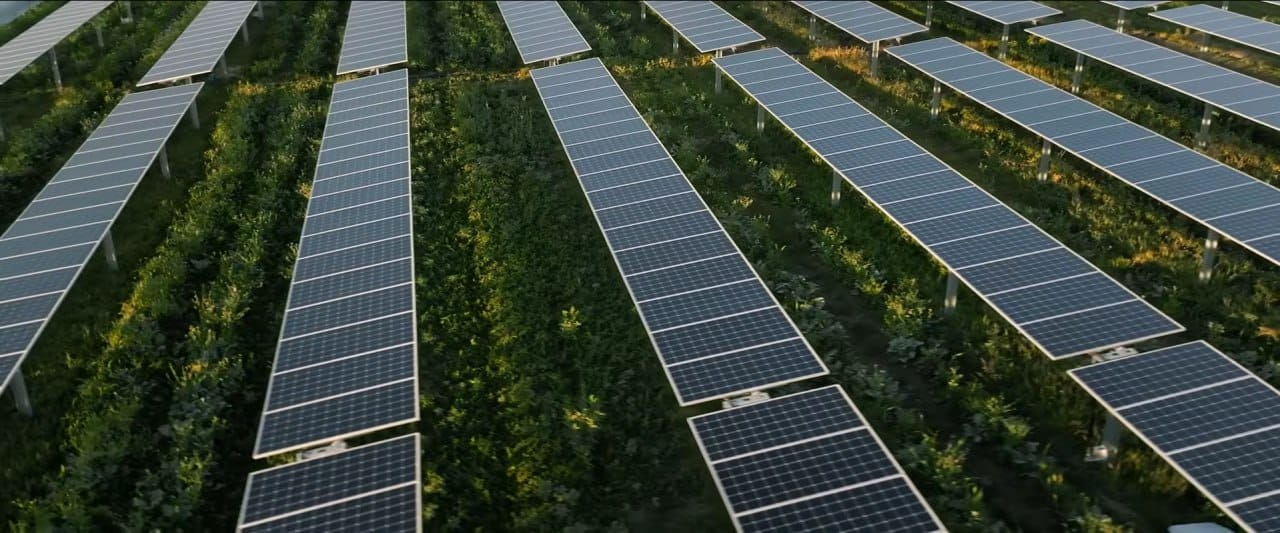
A family farm in Colorado grew hay and wheat for half a century but never turned a profit. The solution turned out to be not new crops or changing equipment, but solar panels raised above the same garden beds. A similar approach—combining electricity generation with agriculture on the same plot—is already being tested in Uzbekistan, while in Kazakhstan itself, where there is no less sun and arid land, such projects do not yet exist.
The gist
- The owner of Jack's Solar Garden farm in Colorado, Byron Kominek, installed over 3,000 solar panels with a capacity of 1.2 MW, providing electricity to about 300 homes.
- Vegetables growing under the panels require on average half the irrigation compared to open plots, and in the first full season, the farm harvested over 3.5 tons of organic vegetables.
- A similar project already operates in Uzbekistan—grapes on 10 hectares under solar panels with a capacity of 1 MW in the Tashkent region, implemented with the participation of French investors.
- In Kazakhstan, the renewable energy industry has existed for about 10 years and remains largely pilot-based—no dedicated agrivoltaic projects combining generation and agriculture have yet emerged in the country.
How a loss-making farm became profitable
Byron Kominek inherited the family farm near Longmont in 2018. His grandfather bought the land back in 1972, but traditional crops—hay and wheat—did not cover the costs of maintaining it. The turning point came with his introduction to the concept of agrivoltaics—combining electricity generation and agriculture on the same plot. On two of the ten hectares, over 3,000 panels were installed, providing 1.2 megawatts of power and, through Xcel Energy's Solar*Rewards Community program, supplying electricity to several dozen residents of Boulder County, local businesses, and municipal institutions. By Kominek's own admission, the farm now earns more from selling electricity than it ever did from hay alone.
What happens under the panels
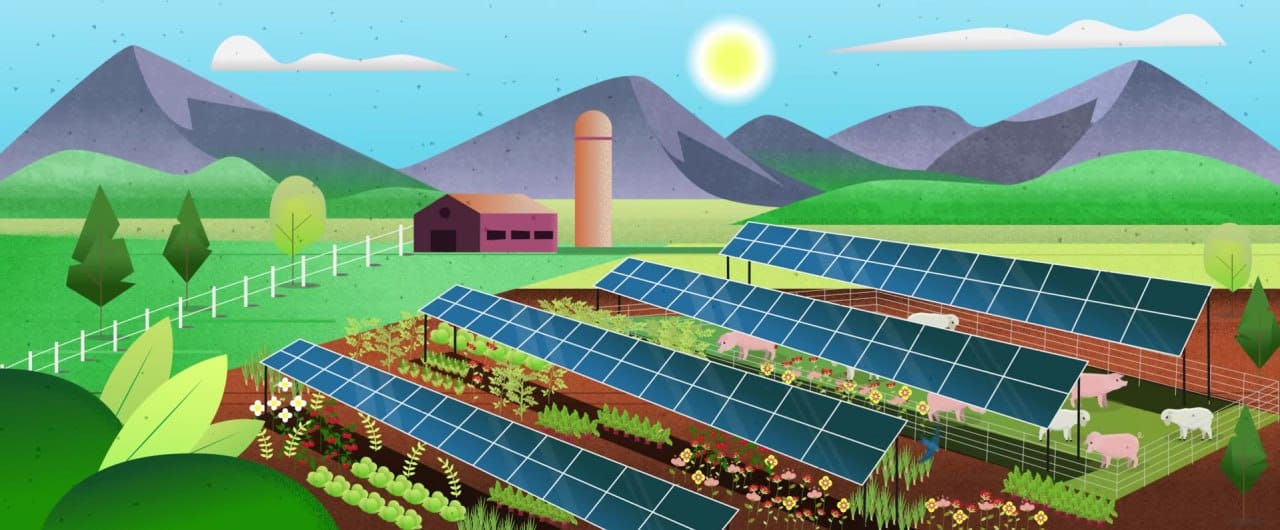
The panels on the farm are raised to a height of two to two and a half meters, allowing machinery and workers to move freely between the rows. A special microclimate forms underneath: during the hottest hours, the panels shade the plants from direct sun, lower the air temperature near the ground, and slow moisture evaporation. According to the farmers' observations, crops under the panels require on average half the irrigation compared to open plots—a critically important feature for water-scarce regions. They grow salads, greens, vegetables, raspberries, and even nutmeg sage. Research on the microclimate and yield on the plot is conducted by the U.S. National Renewable Energy Laboratory, as well as the universities of Colorado and Arizona—some panels are mounted lower, others higher, to compare the effect of different installation heights.
Neighbors are already trying agrivoltaics
Kazakhstan is not the only country in the region where this technology remains a theoretical possibility, but neighbors already have concrete experience. In Uzbekistan, on ten hectares in the Tashkent region, grapes are already being grown under solar panels with a capacity of one megawatt—a project implemented with the participation of French investors, becoming the country's first experience of this kind. The idea of agrivoltaics itself is not new: back in 1982, German scientists Adolf Goetzberger and Armin Zastrow proposed raising solar panels two meters above the ground to reduce shading of crops and combine energy generation with growing agricultural crops on the same area.
Why this could be interesting for Kazakhstan
Renewable energy in Kazakhstan remains a young industry—according to market participants, it is about ten years old, and most launched projects are still pilot-scale rather than large-scale. At the same time, it is precisely in the arid southern and southeastern regions of the country—where the issue of irrigation water from the Syr Darya and Amu Darya is acute—that agrivoltaics solves two problems at once: it reduces the need for irrigation through shading and adds additional income for farms from selling electricity.
For now, farmers in Kazakhstan install individual solar panels and pumps for irrigation for their own needs, but dedicated projects where energy generation and crop production are combined on one plot, following the model of Jack's Solar Garden or the Uzbek vineyard, have not yet appeared in the country.
Author's conclusion
The experience of the Colorado farm shows that agrivoltaics is not a niche technology for enthusiasts, but a working economic model: a farm that barely made ends meet for half a century on hay and wheat became profitable precisely through the combination of generation and agriculture.
For Kazakhstan, where the issue of efficient use of already limited irrigation water is becoming increasingly acute, and the solar resource in the south and southeast of the country is abundant, this model has direct practical relevance—the only question is who in the country will dare to undertake the first such pilot project. This is not the only area where solar energy is seeking unconventional solutions for steppe conditions—for example, the Austrian FLAPTrack system solves a related problem: protecting panels from hail and storms while simultaneously increasing output.



Comments ()