Another competitor may emerge in the uranium market — with the same technology as Kazakhstan
French company Orano made a bold statement about its own project in Mongolia.
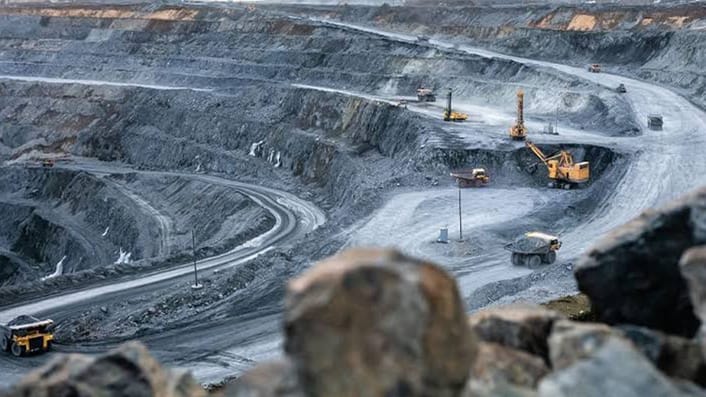
This time, it is not just about another large deposit, but about a mining technology almost identical to the one that ensures Kazakhstan's uranium leadership, reports Inbusiness.kz.
The essence in brief
- Orano expects that Mongolia's Zoovch-Ovoo deposit, once it reaches industrial capacity, will become one of the largest uranium mines on the planet — this forecast was made by the company's CEO Nicolas Maes at the World Nuclear Symposium 2026 in London.
- Unlike the Canadian Rook I project, which uses costly underground mining, Mongolia plans to use in-situ leaching — the same method on which Kazakhstan's uranium leadership is built.
- Industrial production is expected to begin by 2028, ore reserves are estimated at at least 200 million tonnes, and the project is capable of providing 2–4% of global uranium supplies; construction and installation work started in June 2026, and the total project cost is estimated at $1.6 billion.
- Currently, the world's largest uranium mine is considered to be Canada's Cigar Lake — about 7 thousand tonnes per year, around 14% of global production.
The technology that links the project to Kazakhstan
The choice of mining method is a fundamental detail of this story. We previously wrote about the Canadian Rook I mine, which also claims the status of the world's new largest, but uses traditional underground excavation — a method inherently more costly than the in-situ leaching used in Kazakhstan. Mongolia's Orano project, by contrast, will extract uranium specifically using in-situ leaching — the same method that gives Kazakh producers one of the lowest production costs in the world. This makes Zoovch-Ovoo a potentially far more direct competitor to Kazakhstan in terms of production economics than Canadian underground projects.
The history of uranium in Mongolia — not from scratch
For Mongolia, the project is not an attempt to start a uranium industry from a clean slate. In the 20th century, uranium was mined at the Dornod deposit by Soviet companies, but these operations were halted in 1995, and since then no industrial mining has been carried out in the country. The agreement on the development of Zoovch-Ovoo was concluded by the Mongolian government and Orano Mining at the end of 2024, and if successfully implemented, the project could become not only one of the world's largest uranium enterprises, but also Mongolia's largest mining facility — surpassing the current leader, the Oyu Tolgoi gold-copper deposit.
Part of an already familiar picture of growing competition
The Mongolian project fits logically into a trend we have been following for several months: the global uranium market is clearly entering a phase of active supplier diversification. We have already written that Kazakhstan remains the undisputed world leader in uranium production, providing more than a third of global supplies, but the Canadian Rook I mine has already laid claim to a third of Kazakhstan's annual output, while India and Uzbekistan are preparing their own long-term uranium agreement. The emergence of Zoovch-Ovoo adds yet another player to this picture — and specifically with the mining technology that makes the competition potentially more direct than in the case of the Canadian project.
Author's conclusion
The statement by the head of Orano remains so far a forecast rather than an accomplished fact — industrial production will begin no earlier than 2028, and by the end of October 2026 the company expects to have spent only a quarter of its capital costs. But the choice of mining technology is worth following the project more closely than most other new uranium deposits: if Zoovch-Ovoo does indeed reach industrial capacity using in-situ leaching, Kazakhstan will for the first time in a long while have to compete not only on production volume, but also with a technology comparable in economics — and not only with more expensive underground projects that are inferior in cost from the outset.

Comments ()