Bangladesh's first Rooppur NPP supplies first megawatts to national grid
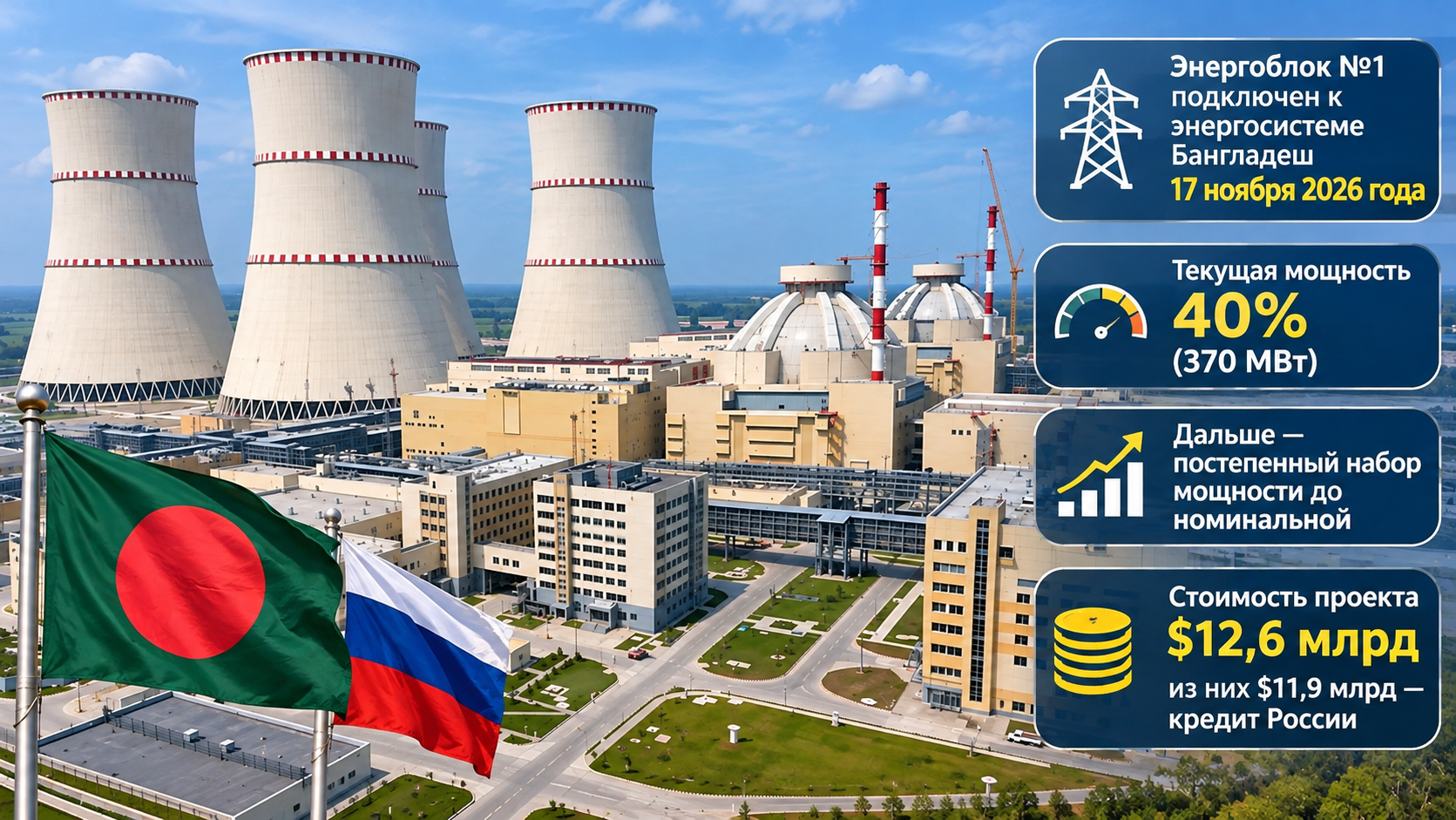
Unit 1 of Bangladesh's Rooppur Nuclear Power Plant was connected to the national grid on November 17, 2026, and the plant produced its first megawatts of electricity.
Ruppur is the first nuclear power plant in Bangladesh, and the unit must reach its nominal capacity before commercial operation begins, reports Neftegaz.RU.
The essence in brief
- Power unit No. 1 of Ruppur was synchronized with Bangladesh's power system on November 17, 2026.
- The reactor reached 40% of nominal capacity, and the generator output was 370 MW.
- The unit will then gradually increase capacity to nominal, after which commercial operation will begin.
- The total cost of the project is $12.6 billion, and Russia provided Bangladesh with $11.9 billion.
What happened with the first unit
On November 17 at 15:15 local time, power unit No. 1 was synchronized with Bangladesh's national power system. The reactor reached 40% of nominal capacity: at this level, the steam generators produce enough steam to start the turbine and ensure its normal operation. The generator output was 370 MW.
The power start-up involves a gradual increase of the reactor's capacity in several stages from zero to 40%, when turbine start-up becomes possible. Rosatom Director General Alexey Likhachev called the event significant: according to him, Bangladesh is receiving a reliable and environmentally clean energy source that will noticeably reduce the national energy sector's dependence on hydrocarbon imports.
What happens next
By this point, the reactor had already passed an important milestone: in October it was brought to the minimum controlled power level. The next stage is a gradual increase of capacity to nominal as part of the pilot operation of the new unit. After that, its commercial operation will begin. Work on the second unit is underway in parallel: at the end of October, Rosatom delivered the first batch of nuclear fuel for the initial loading of its reactor.
What kind of station it is and how it was financed
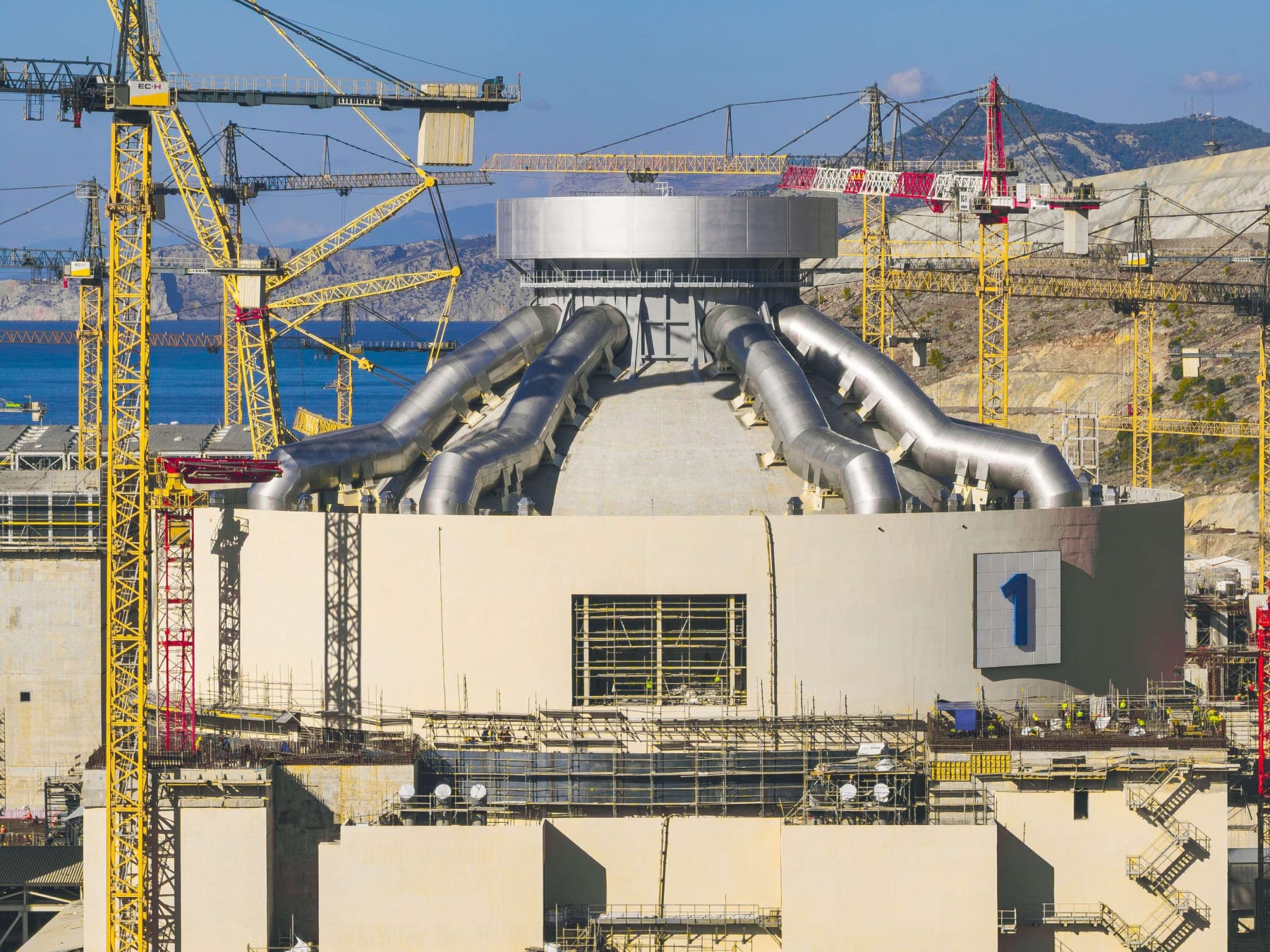
Ruppur is being built 160 km from the capital, Dhaka, under a general contract signed on December 25, 2015. The project includes two units with Russian-designed VVER-1200 reactors with a total capacity of 2,400 MW; the service life of the units is 60 years with the possibility of extension for another 20 years. Rosatom is taking a similar approach in Turkey: at the Akkuyu nuclear power plant, the regulator allowed operation beyond the design 60 years with safety checks every 10 years. As of May 2026, more than 800 specialists from Bangladesh had received licenses and joined operating organizations, and more than 1,100 more are to undergo training.
The construction is financed through a Russian state export loan. After the change of government in Bangladesh in 2024, its authorities asked Russia to lower the loan rate and grant a deferral of the advance payment. In April last year, Russia exempted Bangladesh from a $164 million fine for overdue payments on a $500 million loan. In February this year, the State Duma ratified changes to four intergovernmental loan agreements on the project to ease Bangladesh's payments.
What about the first nuclear power plant in Kazakhstan
Rosatom is also building the first nuclear power plant in Kazakhstan: at the Eastern Economic Forum in Vladivostok, Kazakhstan Nuclear Power Plants LLP signed a contract with Atomstroyexport, a subsidiary of Rosatom. It covers design, supplies, and construction. Field work at the site near Balkhash is close to completion, and before construction begins it is still necessary to prepare the site, obtain licenses, and compile a register of suppliers.
Author's conclusion
Ruppur shows what such a project looks like from contract signing to first power: the contract was signed in December 2015, the unit was connected to the grid in November 2026, and during that time the loan terms had to be revised. Not all of Rosatom's foreign projects proceed this way: for the Paks-2 nuclear power plant in Hungary, Likhachev acknowledged the risk of a complete halt. For Kazakhstan, which has signed a contract with the same corporation, this is a benchmark both for timelines and for the project's financial sustainability.
Comments ()