Belt and Road boosts green financing to record high — Kazakhstan becomes focus of Chinese metallurgy
A fresh report shows metallurgy and mining are among the few Belt and Road sectors where Kazakhstan is named a separate investment hub, alongside steel processing in Egypt.
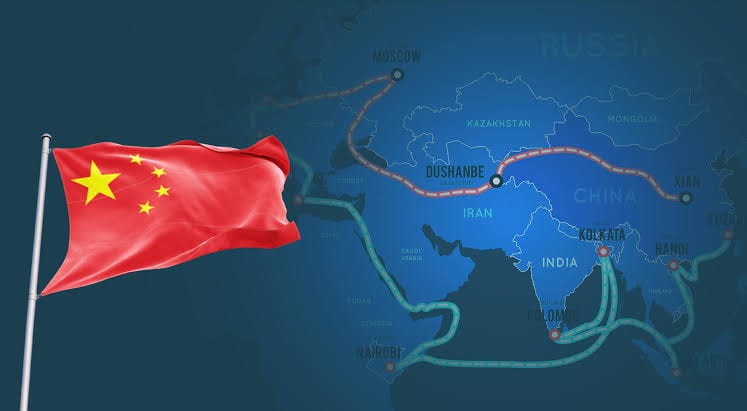
While analysts count the billions that China has invested in global infrastructure in the first half of the year, specific aluminum processing plants with Chinese capital are already being built in the Kostanay region of Kazakhstan, and an even larger project is being discussed in the Pavlodar region. A fresh report from researchers shows: metallurgy and mining are among the few sectors of the "Belt and Road" where Kazakhstan is specifically named as an investment attraction point, on par with steel processing in Egypt.
The Gist Briefly
- In the first half of 2026, the total volume of "Belt and Road" deals reached a record $126.3 billion — more than in the same period of 2025.
- "Green" energy financing grew to $19.6–20.1 billion, matching the figure for the entire year of 2025, and for the first time exceeded half of all China's energy investments.
- Metallurgy and mining set a record at $21.8 billion, with a focus on aluminum processing in Kazakhstan and steel in Egypt.
- In the report for the first half of 2026, Kazakhstan specifically accounted for two new aluminum processing plants worth $2.5 billion — this is a separate, more modest story compared to the record $19.5 billion (the East Hope aluminum complex and copper projects) that occurred in 2025.
- In parallel, Kazakhstan and the Chinese Xinfa Group are discussing another, as yet unconfirmed, project in the Pavlodar region worth $15 billion.
Record Half-Year for China's Global Construction
According to data from the Green Finance & Development Center study and Professor Christoph Nedopil Wang of the University of Queensland, the first half of 2026 was the most active period in the entire history of monitoring the Belt and Road Initiative (abbreviated as "Belt and Road") — China's global infrastructure program announced back in 2013. Investments amounted to $49.8 billion, construction contracts to $76.5 billion, and the total volume of $126.3 billion exceeded the figure for the same period in 2025. Meanwhile, the share of the private sector in deals grew from 13% in 2020 to 48% in the first half of 2026 — Chinese state capital is gradually giving way to private companies. A telling detail: during the reporting period, not a single new deal was recorded in Pakistan and Russia — two traditionally major recipients of Chinese investment.
Why "Green" Energy Surpassed Oil and Gas
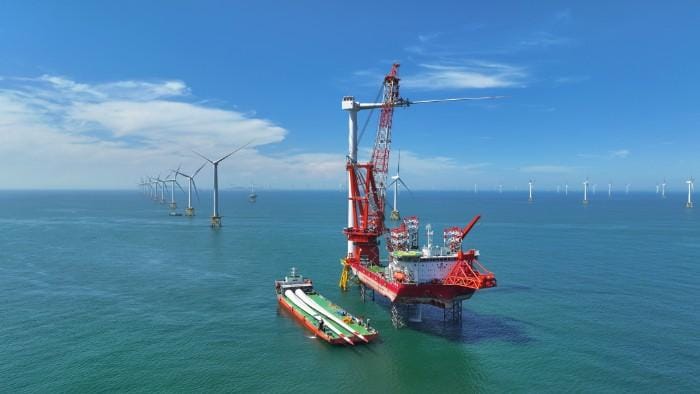
The key shift of the reporting period is that for the first time, more than half of China's energy investments under the program went to renewable sources: wind, solar, and waste-to-energy. According to Nedopil Wang's assessment, the declining cost of "green" generation is steadily driving Chinese investments regardless of trade conflicts, and countries already cooperating with China in this field now gain an additional advantage — less dependence on energy price spikes caused by the military conflict around Iran and the Strait of Hormuz. In other words, geopolitical instability in the Middle East works not against, but in favor of expanding China's renewable energy portfolio abroad.
Metallurgy and Mining Set a Record
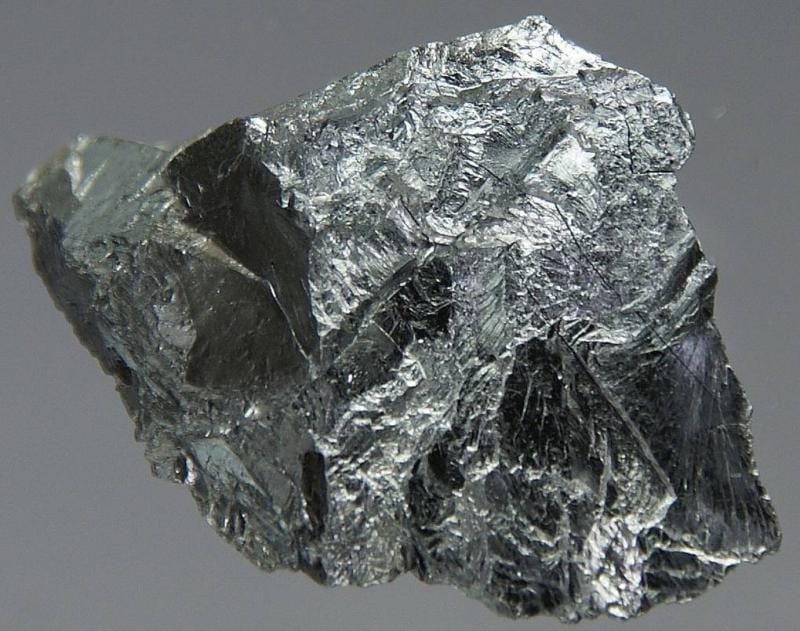
A separate record for the reporting period was set by the metallurgy and mining sector — $21.8 billion in six months, more than any other comparable period since 2013, except for the whole of 2025. The report's authors directly state that the main focus here is not raw material extraction, but its processing: steel production in Egypt and aluminum in Kazakhstan, i.e., higher value-added products critically important for the automotive industry and power transmission line manufacturing. In the report itself, Kazakhstan is named a "key partner" of China in metals and mining — for the first half of 2026, this was expressed in the announcement of two new aluminum processing plants with a total value of $2.5 billion.
Kazakhstan's Aluminum Boom
The two new aluminum processing plants worth $2.5 billion mentioned in the report for the first half of 2026 are an alumina production complex in the Kostanay region, designed for a total of 3 million tons of raw materials per year. But this is just the tip of a much larger story. Chinese researchers recorded the main record for Kazakhstan back in 2025: the country then received $19.5 billion in Chinese investments in metallurgy — $12 billion for the East Hope Group aluminum complex and another $7.5 billion for copper projects. We already covered this story in the article "China Returns to Oil and Gas. Why the New Phase of the Belt and Road Initiative Could Change the Rules of the Game", and the current $2.5 billion should be seen as a continuation of that same trend, not a new leap of comparable scale.
Separately from the report's statistics, another project is being discussed in Kazakhstan — Xinfa Group, one of the four largest aluminum producers in China, is considering building a complex for deep processing of bauxite in the Pavlodar region worth $15 billion — with an output of up to 4.8 million tons of alumina and 2.4 million tons of electrolytic aluminum per year. This is still at the stage of negotiations and memorandums, not a confirmed deal, so the project has not yet been included in the "Belt and Road" statistics for the first half of the year. For comparison, the current total aluminum production volume in Kazakhstan is about 250 thousand tons per year — meaning that even without considering the Xinfa project, we are talking about a multiple increase in capacity thanks to already confirmed Chinese capital.
Kazakhstan as a Land Bridge
China's interest in Kazakhstan is explained not only by bauxite. It was in Astana in 2013 that Xi Jinping first announced the "Belt and Road" concept, and since then the republic has remained a key overland transit corridor for delivering Chinese goods to Europe, bypassing purely maritime routes. Simultaneously, the Kazakh government is changing the rules of the game domestically: authorities are tightening conditions for the export of unprocessed raw materials to encourage companies to build processing facilities locally, rather than exporting alumina and primary aluminum abroad. This aligns with the logic of Chinese capital itself, which is increasingly financing processing rather than raw material exports worldwide.
Author's Conclusion
The global report on the record half-year for the "Belt and Road" could have remained an abstract figure in a study if it weren't backed by specific plants in the Kostanay region and negotiations on an even larger project in the Pavlodar region. For Kazakhstan, this means a continuation of the trend that began back in 2025: China's growing interest in the aluminum value chain and its own policy of retaining raw materials and processing them domestically. The convergence of these interests will determine whether Kazakhstan's aluminum industry grows manifold by the end of the decade — or whether the negotiations with Xinfa Group remain at the memorandum stage, as has happened with some previously announced projects.
Comments ()