Chinese company earned $202 million in net profit from a tungsten mine in Kazakhstan
Chinese company Jiaxin, developing the Boguty tungsten deposit in Kazakhstan's Almaty region, reported H1 results: net profit of $202.4 million, versus a loss a year earlier.
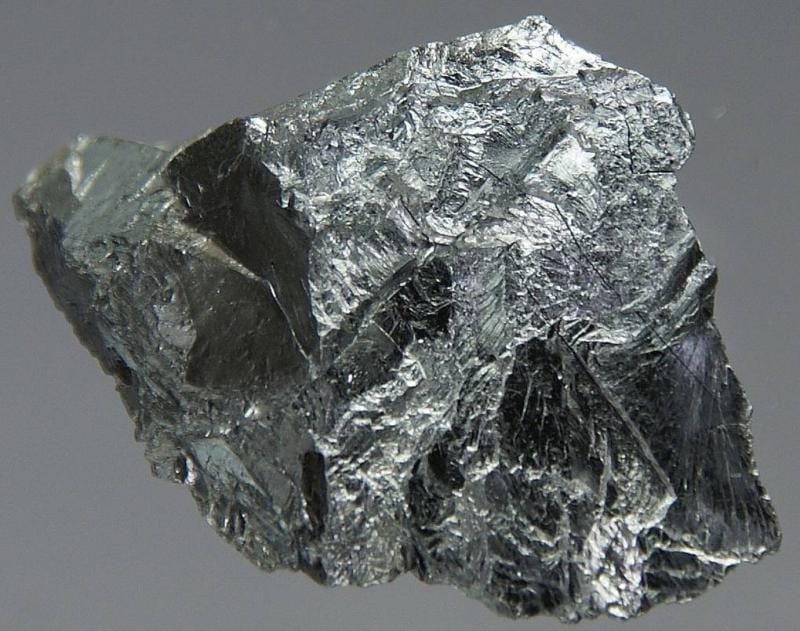
Along with growth comes the question: how much of this profit stays in Kazakhstan?
The essence in brief
- China's Jiaxin International Resources (shares trade in Hong Kong and on the Astana International Exchange), which is developing Boguty, in the first half of 2026 generated revenue of $345.5 million (a year earlier — $16.1 million) and net profit of $202.4 million against a loss of $0.9 million; net margin — about 58.6%.
- The growth should be read with caveats: commercial mining at Boguty began only in April 2025, so the comparison base is an incomplete half-year; an additional contribution came from higher prices for tungsten concentrate.
- In six months, 1.96 million tonnes of ore were mined and 4,137 tonnes of concentrate were produced with a tungsten trioxide content of 65% — that is more than 80% of the entire 2025 volume (5,008 tonnes for April–December).
- The company plans to bring annual capacity to 4.95 million tonnes of ore; production of ammonium paratungstate (APT) — a product of deeper processing — is still at the design and feasibility study stage, and the IPO funds allocated for this had not been used as of the end of June.
What the financial statements show
Revenue grew from $16.1 million to $345.5 million — more than 21-fold. Gross margin reached 73.1%: out of every $100 of revenue, almost $59 remained as net profit. Operating cash flow amounted to $168.4 million; at the end of June the company had $186.5 million in cash with loans of $130.8 million. Shareholders were declared an interim dividend of $0.24 per share, payable on November 11, 2026.
The financial statements also reflect expenses that concern Kazakhstan itself: mineral extraction tax — $40.6 million, income tax expense — $50.9 million. Together this is about $91.5 million, or roughly 26% of revenue. A caveat: these are accounting expenses, and actual budget payments may differ in timing.
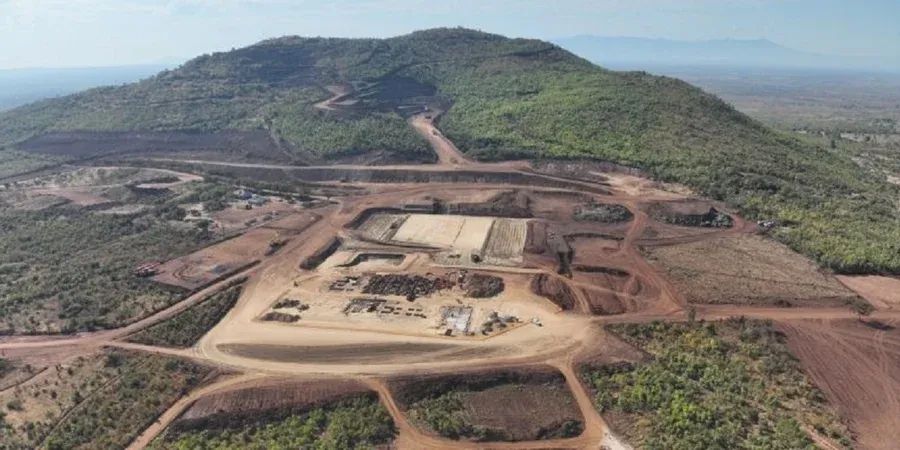
According to the consulting company Frost & Sullivan, Boguty is the world's largest open-pit tungsten deposit by tungsten trioxide resources. At the end of 2024, it ranked fourth among all tungsten deposits in the world, including underground ones, and has the largest projected concentrate capacity among individual mines.
Why "21-fold" is not the whole story
The growth figure looks impressive, but its causes are more prosaic. In the first half of 2025, the mine operated for only part of the period: commercial mining started in April, so a full half-year is being compared with an incomplete one. Tungsten concentrate prices, which rose, also played a role.
A rough estimate based on the company's data shows that the contribution of volumes themselves is not that large. Average concentrate output in the first half of 2026 was about 690 tonnes per month; in April–December 2025 — about 556 tonnes per month. The difference is about a quarter, whereas revenue grew more than 20-fold. This means a significant part of the jump is explained by the low base and prices, not only by expanded production. This also implies a risk: the profit of such a mine depends heavily on the tungsten price, and it is subject to sharp fluctuations.
Yuan instead of euro
The debt structure is also changing. In the first half of the year, the company raised $128.7 million under a three-year credit line of $174.8 million and fully repaid a euro-denominated loan. Now all bank debt is denominated in yuan, with a floating rate — the annual LPR (China's loan prime rate) plus 0.6 percentage points. Total loans decreased by 19.2% over the half-year. The statement does not specify who exactly the creditors are.
Whose company this is and who gets the profit
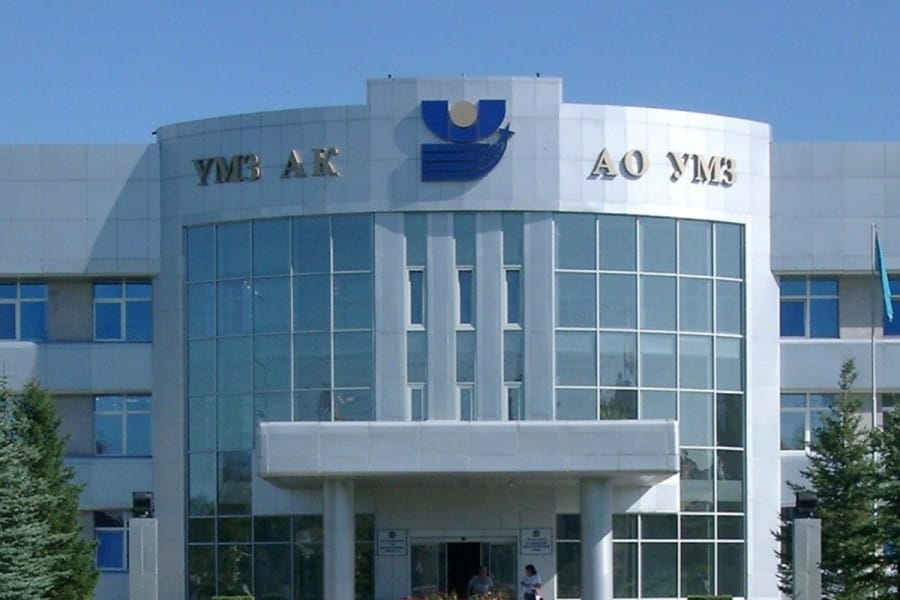
Jiaxin is a Chinese company. According to Astana International Exchange, it is registered in China, and in August 2025 it conducted a dual listing of shares in Hong Kong and Astana — the first IPO in Central Asia denominated in yuan. The company has been operating in Kazakhstan for about ten years and conducts mining at Boguty through Zhetisu Wolframy LLP. According to NBK, a significant portion of sales is oriented toward China.
Shareholders benefit directly from profit growth — for example, through the dividend of $0.24 per share. Kazakh investors could also participate in the offering, but with a small share: according to the plan announced in 2025, 1.3 million shares were offered on AIX versus 124 million in Hong Kong, that is, about 1%. What remains in the country itself is determined by taxes, jobs, and the depth of processing.
This is not the only project with Chinese capital in critical minerals. In Zhambyl Region, a Chinese company from Hong Kong plans to invest $30 million in fluorspar mining, and the project's revenue is forecast to reach $640 million. The topic of ownership structure has also been raised in the case of energy: according to an NBK investigation, new renewable energy projects are increasingly built and controlled by Chinese state energy holdings. The difference is important: Jiaxin is a public company whose shares trade on an exchange, not a state holding. But NBK's conclusion also applies here: the experts it interviewed agree that the presence of Chinese capital is not a problem in itself; the question is the terms on which it is allowed into the country.
Concentrate or deep processing
The main of these conditions for tungsten is processing. A representative of the Center for Trade Policy Development said that Kazakhstan's goal is not to export raw materials, but primary processing and localization of production. Boguty shows where the line currently runs: concentrate with a 65% tungsten trioxide content is produced from ore on site, meaning primary processing exists. The next stage — APT production — is still only on paper: the company is conducting design work, studying the market, and preparing a feasibility study, and the IPO funds allocated for this had not been used as of the end of June.
This stage is also important for the country's broader strategy. Kazakhstan has consistently spoken about moving from selling rare earth raw materials to processing them, and Boguty is one of the main practical examples of how this task is being addressed in the tungsten industry.
Author's conclusion
Jiaxin's figures are impressive, but they are best read together with the caveats: a low comparison base, high concentrate prices, and the dependence of profit on the commodity market. For Kazakhstan, this is good news — taxes and an operating production facility — and a reason not to relax. The company's profit belongs mainly to its shareholders, so the question of how much of the added value the country receives will be decided not by the half-year report, but by whether the link that currently exists only as a project will be built: APT production inside Kazakhstan.
Comments ()