State support for the agro-industrial complex is proposed to be assessed by returns: 150 of 245 projects are already operational
Public Council on Agro-Industrial Development discussed measuring returns on state support. The key question is not how much money was allocated, but what was built with it.
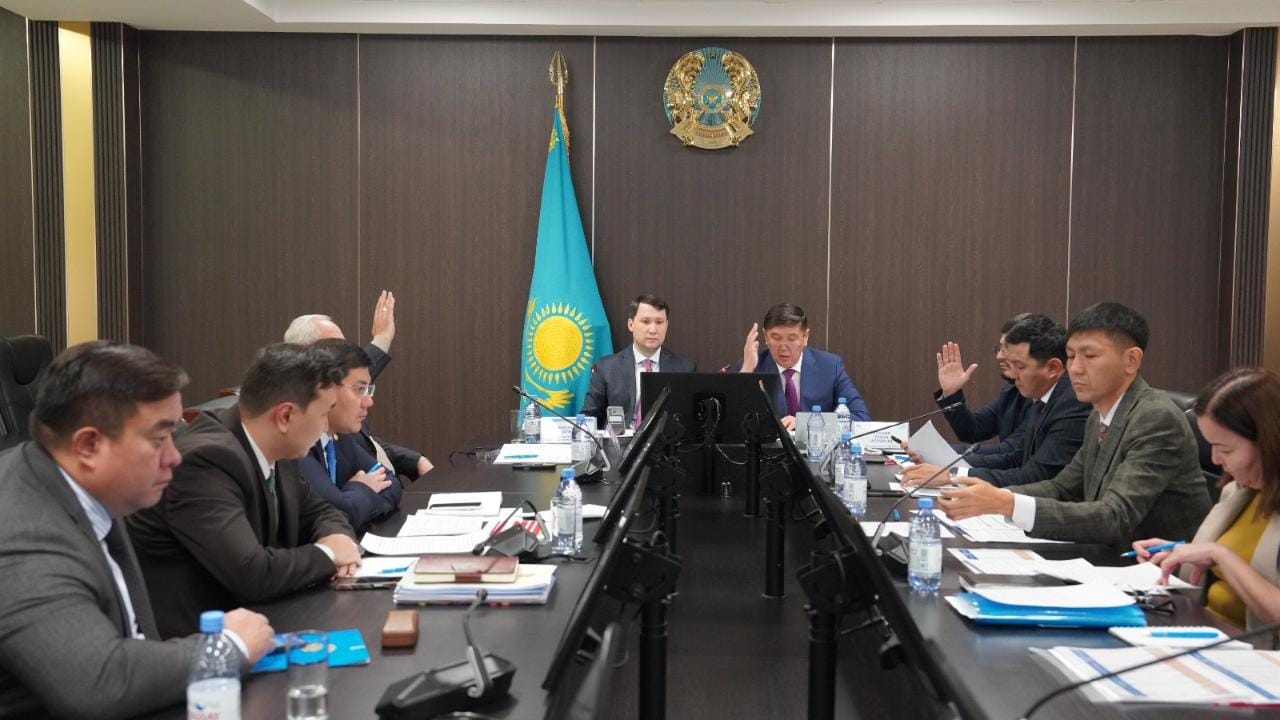
Part of the answer is already in the numbers: out of 245 financed projects, 150 are operating.
The essence in brief
- The 2026 roadmap provides for 161 projects in the agro-industrial complex with a total value of 1.3 trillion tenge; in addition, 13 investment agreements worth $3.2 billion have been signed.
- Under the program to replicate the North Kazakhstan Region's experience (soft loans at 2.5% per annum), 245 projects have been financed across 16 areas of the agro-industrial complex, of which 150 have been commissioned; more than 1,500 jobs have been created.
- In dairy farming, 97 farms were financed in 2023–2025, 71 of them are already operating, and milk production at them exceeds 460,000 tons; after all projects are implemented, the volume should grow to 600,000 tons.
- The physical volume index of gross output at agricultural enterprises rose from 85.1% in 2023 to 113.2% in 2025; food production for January–August 2026 reached 2.8 trillion tenge with an index of 112.9%.
What 1.3 trillion tenge means
Some media outlets write about 1.3 trillion tenge allocated for the development of the agro-industrial complex. But in the official statement from the Ministry of Agriculture, this is the total value of 161 projects included in the 2026 roadmap, not the amount of government spending. How this value is distributed between the budget, soft loans, and private investment is not disclosed in the official text. Separately, 13 signed investment agreements worth $3.2 billion are named, but it is unclear from the statement whether they are included in the same 161 projects. Moreover, a signed agreement is not yet money invested: only the actual launch of facilities will show the real return.
Loans at 2.5%: 61% of projects launched
The most specific data in the report concerns the program to replicate the experience of the North Kazakhstan Region. It involves soft lending for the creation and expansion of production facilities, and out of 245 financed projects, 150 have already been commissioned — about 61%. The remaining nearly 40% are still under construction or being launched, and no timeline for their commissioning is given. More than 1,500 jobs have been created, but the text does not specify whether this figure applies to all 245 projects or only to the 150 operating ones.
The largest block is dairy farming: out of 97 financed farms, 71 are operating (about 73%). Meat farming received noticeably less — 27 projects worth 33.8 billion tenge. Separately, the ministry notes that production growth is accompanied by the development of storage and processing, but it does not provide specific capacities.
Growth is calculated from a low point
The growth in the agricultural production indicator looks impressive: from 85.1% in 2023 to 113.2% in 2025. But it is worth considering that the starting point is below 100%, meaning that in 2023, judging by the index value, there was a decline. The value for 2024 is not given in the text, and the indicator itself is calculated only for agricultural enterprises, excluding household plots and farms. Therefore, 113.2% is not evidence of sustained growth across the entire sector, but one of the indicators that is better compared with data over several consecutive years.
The food industry indicator looks more reliable: for January–August 2026, food output reached 2.8 trillion tenge with a physical volume index of 112.9% compared with the same period last year.
Import substitution: where it is 80%, and where it is not
According to the ministry, for most basic products the domestic market is supplied with domestic goods at 80% or higher. Among the priority areas where import substitution still needs to be increased are sugar, poultry meat, and dairy products. It is telling that sugar is on this list: according to the Agency for the Protection and Development of Competition, in 2025 imports accounted for 70.4% of the domestic sugar market, and the planned self-sufficiency target of 68% was not achieved either in production or in sugar beet planting. That is, "80% and above" is an estimate for most goods, but not for those where dependence on imports remains the highest.
Aquaculture and what was left out of the picture
A separate block is devoted to fish farming: a register of 698 aquaculture entities has been formed, and starting in 2027, a module will appear in the E-Fish system for monitoring the sector, maintaining the register, and ensuring product traceability. This continues the Ministry of Agriculture's existing digital track, in which E-Fish tracks the movement of fish products from the reservoir to the consumer.
The agenda of the meeting also included the use of land resources and phytosanitary safety, but the published statement contains neither figures nor conclusions on these areas. It remains unclear what specific problems were named there.
Author's conclusion
The meeting's premise itself is correct: increased financing for the agro-industrial complex only makes sense when it turns into operating farms, jobs, and products on store shelves.
The Chairman of the Public Council, Yerzhan Nurbayev, formulated the task as follows: "not just to increase indicators, but to ensure qualitative and sustainable growth."
The data on the soft loan program — 150 operating projects out of 245 — shows that part of this work is underway. But the report still contains little that would allow the return to be verified independently: there is no breakdown of the 1.3 trillion tenge by source, no timelines for commissioning the remaining projects, and no results on land and phytosanitary issues. The real test by the end of the year will not be the number of signed agreements, but the actual launch of the 161 projects from the roadmap.
Comments ()