Britain prepares for food crises: Why climate is changing agricultural policy in developed countries
Climate change is no longer just an environmental issue but increasingly seen as a national security threat.
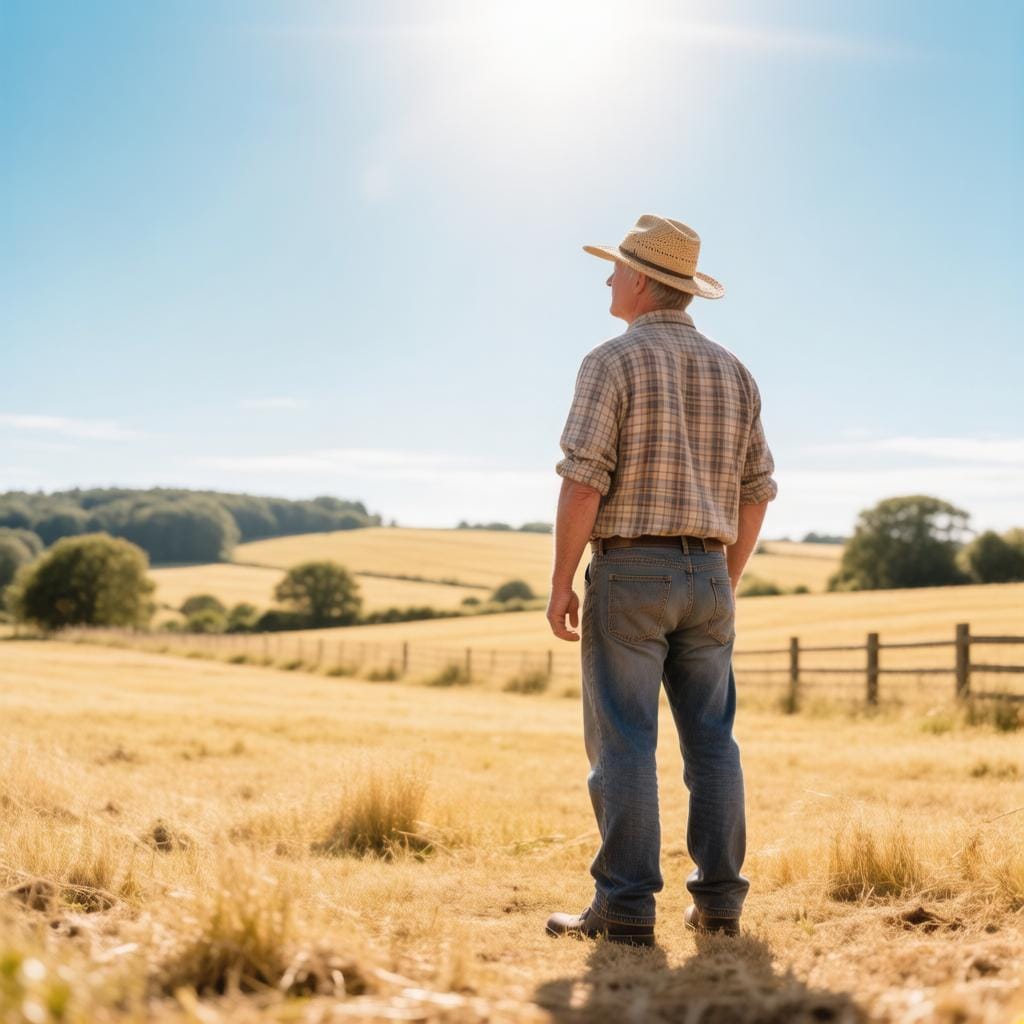
The United Kingdom, traditionally considered one of Europe's most resilient economies, has presented a new food security strategy in which it openly acknowledges for the first time: extreme weather, geopolitical conflicts, and environmental degradation can lead to food supply disruptions and price increases. As reported by The Guardian, British farmers themselves received the document without enthusiasm, stating that the government proposes ambitious goals but is not ready to provide the necessary funding to achieve them.
The Gist in Brief
· The UK has presented an updated plan to ensure food security.
· Climate change, international conflicts, and supply chain instability are named as the main threats.
· The government is betting on sustainable agriculture and adaptation to climate change.
· Farming organizations believe that without additional investment, implementing these plans is impossible.
· For Kazakhstan, this experience shows that food security is becoming a matter of state strategy even for developed countries.
Climate Becomes a Factor in Food Policy
In the new strategy, the British government notes that the familiar model of providing food no longer guarantees stability. While market fluctuations or local crop failures were previously considered the main risks, extreme weather events, soil degradation, and disruptions to international logistics now pose an increasing danger.
One example was the sharp spikes in vegetable prices following adverse weather conditions. For instance, the price of potatoes in the country rose by approximately 22%, serving as a clear example of how climatic anomalies directly impact consumer prices.
Betting on Sustainable Agriculture
The government proposes gradually changing the approach to farming. Key areas include increasing the resilience of agricultural production, restoring soils, using natural resources more rationally, and implementing environmentally friendly technologies.
To support the sector, it plans to increase funding for environmental land management programs to £2 billion per year by 2029. Additionally, £53 million is allocated for agricultural innovation, and another £30 million for projects that stimulate cooperation among farmers.
Farmers Demand Money, Not Strategies
Despite the announced support measures, the UK's largest agricultural associations met the document with criticism.
President of the National Farmers' Union of the UK, Tom Bradshaw, stated that the strategy correctly identifies the scale of the challenges but does not contain sufficient financial guarantees for producers. According to farmers, they are the ones bearing the main risks associated with climate change, while state support remains insufficient.
In other words, the debate is no longer about whether the climate threat exists, but about who should pay for adapting agriculture to the new conditions.
Why This Matters for Kazakhstan
At first glance, British problems seem far removed from Kazakhstan. However, the very causes of the crisis largely coincide.
Kazakh farmers also face droughts, unstable rainfall, land degradation, and the need to adapt to climate change. At the same time, agriculture remains one of the key sectors of the economy and a vital source of export revenue.
The peculiarity of the British experience lies elsewhere: even a country with a developed economy and high technological advancement already views food security as an element of national security.
For Kazakhstan, this could be an important signal. In the context of climate change, state support for the agricultural sector is increasingly becoming not a social measure, but a strategic investment in the resilience of the economy.
A New Global Trend
In recent years, similar approaches have begun to take shape not only in the UK.
The European Union, the United States, Australia, and international organizations are increasingly linking food security with climate adaptation, water resources, the development of plant breeding, and supply chain resilience.
In effect, global agricultural policy is shifting from the task of "producing more" to the task of "ensuring production stability under increasing risks."
Author's Conclusion
The British strategy highlights an important trend: agriculture is ceasing to be perceived solely as an economic sector and is becoming a matter of national resilience. If not long ago climate policy was mainly associated with reducing emissions, today the focus is on fields, farms, and food chains. For Kazakhstan, this is particularly relevant. The country is already feeling the effects of climate change, and its role as a grain exporter makes the resilience of the agricultural sector a factor not only of internal but also of external economic security. The sooner agricultural adaptation issues become part of a long-term state strategy, the higher the chances of maintaining competitiveness in the new climate reality.
Comments ()