Canada expands nuclear capacity and uranium production
Canada unveiled its first national nuclear energy strategy, outlining new reactor builds, expanded uranium mining, and supply chain reinforcement.
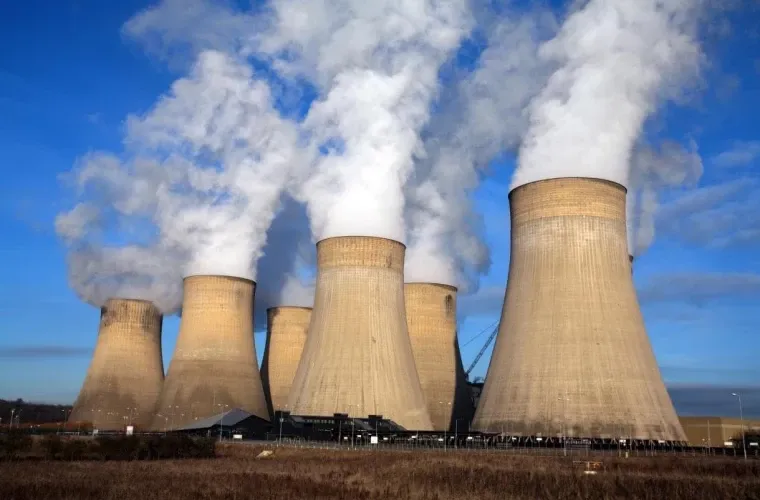
June 22, 2026 Canada has unveiled the first national nuclear strategy in its history. As reported by World Nuclear News, the document covers the construction of new reactors domestically, the export of nuclear technologies, expanding uranium mining, and the development of small modular reactors. The ambition is stated directly: to become an "energy superpower." For Kazakhstan, which is among the top three uranium producers and is discussing the construction of its own nuclear power plant, the Canadian document represents both a competitive challenge and a potential partnership.
The Gist
- The strategy is structured around four areas: building new reactors within Canada, exporting nuclear technologies, expanding uranium and nuclear fuel mining, and developing innovations including nuclear fusion.
- Goals for new construction: up to 10 large reactors domestically, with two under construction by 2035 and five in the planning stage by 2040. A Canadian microreactor must be demonstrated by 2035.
- Export goals: capture at least four new international markets for CANDU technology by 2040, and reach 6–10 countries new to nuclear power within 15 years.
- For uranium: double Canadian exports within 10 years by 2035, supported by new mining projects.
- For Kazakhstan, the world's second-largest holder of uranium reserves, Canada's plans mean increased competition in the fuel market, but also open opportunities for partnership: Canada is openly seeking allies to supply nuclear fuel to Western countries.
A Document Decades in the Making
Canada's Minister of Natural Resources, Tim Hodgson, presented the strategy as more than just an energy plan: "This is an industrial strategy, a pillar of our energy security, and a tool of foreign policy. It means high-quality jobs, a path to a clean energy system, and diversification of trading partners."
Canada builds on a real foundation: CANDU reactor technology — 26 operating worldwide, 17 of them in Canada itself; second place globally in uranium mining; recognized expertise in reactor modernization; and leadership in medical isotope production. Added to this is a geopolitical moment: 38 countries have already signed a declaration to triple nuclear energy capacity by 2050 — and the window of opportunity for technology and fuel suppliers is open right now.
Uranium as a Geopolitical Tool
The uranium agenda holds a special place in the strategy — and here the geopolitics are stated plainly. "Geopolitical instability has exposed the vulnerability of nuclear supply chains at every stage," the document states. The markets of the USA and Europe are "moving away from a hostile aggressor in favor of reliable players" — and Canada directly positions itself as a replacement for Russian uranium and enrichment.
To achieve this goal, the strategy provides for strengthening and securing the nuclear fuel supply chains for all reactors in Canada by 2032 and doubling Canadian uranium exports within 10 years by 2035, supported by new mining projects.
Canada's largest uranium company, Cameco — a global leader in mining and co-owner of Westinghouse together with the investment fund Brookfield — welcomed the strategy, emphasizing its central role in its implementation.
Small Modular Reactors: Betting on the Future
The strategy devotes significant attention to small modular reactors (SMRs): by 2035, at least one SMR must be operational or under construction outside the province of Ontario, and a Canadian microreactor must be demonstrated by 2035 and deployed in remote communities in the late 2030s.
For regulation, acceleration is planned: the target timeframe for federal regulatory review of nuclear projects is reduced to two years. Federal financing instruments — green bonds, participation by the Canada Infrastructure Bank, and government loan guarantees — must be formalized into a separate policy by April 2027.
The Kazakhstan Context
Kazakhstan ranks first in the world in uranium mining — about 43% of global production — and is in the top three for proven reserves. Canada's plans to double uranium export capacity mean increased competition in a market where Kazakhstan has traditionally held a dominant position, including through supplies to countries now moving away from Russian fuel.
At the same time, space for partnership opens up. Canada is seeking "reliable allies" in the nuclear fuel cycle. Kazakhstan has the resources but lacks uranium enrichment capabilities — precisely the link in the chain that the West is striving to build independently of Russia. Joint projects in uranium mining, conversion, and supply to Western buyers could become a point of convergence for the interests of both countries.
Finally, the very fact of Canada adopting a nuclear strategy with specific timelines and goals serves as a benchmark for Kazakhstan, where a 2024 referendum on a nuclear power plant yielded a positive result, but a detailed national nuclear strategy has yet to emerge.
Author's Conclusion
Canada has bet on nuclear energy as an industrial, export, and geopolitical strategy all at once — and has formalized this into a concrete document with measurable goals. For Kazakhstan, this is a dual signal: a competitor in the uranium market is getting stronger, but a partner interested in reliable supplies is also getting stronger. The question is whether Kazakhstan will manage to formulate its own nuclear strategy before the configuration of the global market is fixed without its participation.
Comments ()