Kazakhstan wants $10 billion for extending the Tengiz contract
The 40-year agreement signed back in 1993 expires in 2033. Talks on what comes next have been underway for a year.
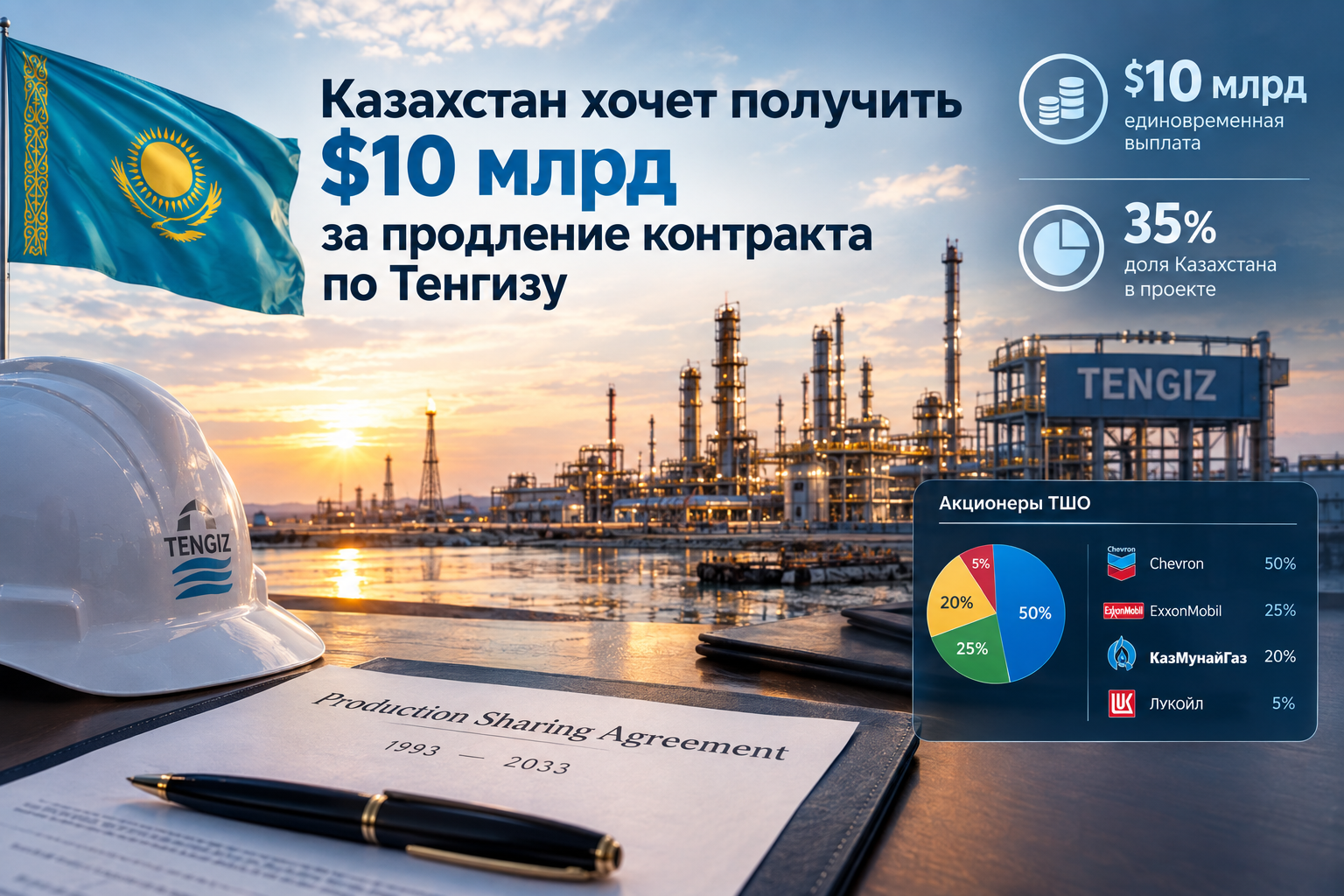
According to Bloomberg data, Kazakhstan has noticeably raised the stakes — it is demanding not only a large one-time payment, but also nearly double the share in the project.
The gist in brief
- According to Bloomberg, citing its own sources, Kazakhstan is ready to extend the agreement on the development of the Tengiz field after 2033, but expects to receive a one-time payment of about $10 billion from investors and to increase the state's share in the project from the current 20% to 35%.
- Negotiations on a possible extension are still at an early stage; officially, the Ministry of Energy of the Republic of Kazakhstan declined to comment on publications citing anonymous sources.
- Currently, the largest shareholder of Tengizchevroil (TCO) is the American Chevron (50%), followed by ExxonMobil (25%), Kazakhstan's KazMunayGas (20%), and Russia's Lukoil (5%).
- According to Bloomberg's assessment, Kazakhstan's negotiating position has strengthened amid the growing importance of Kazakh oil for the European market and general instability of supplies from other regions.
A year of negotiations without public details
The start of negotiations officially became known back in September 2025, when Chevron CEO Mike Wirth confirmed to Bloomberg that the company had begun working with the Kazakh government on extending the contract. It also became known at that time that earlier in 2025, President Tokayev had instructed the government to intensify negotiations on production sharing agreements, possibly on updated terms more favorable to the country. The current figures — $10 billion and 35% — are the first concrete parameters to leak into the public sphere over a year of negotiations, but they have only one source: Bloomberg's anonymous interlocutors, not an official statement from either side.
Why Kazakhstan has more leverage right now
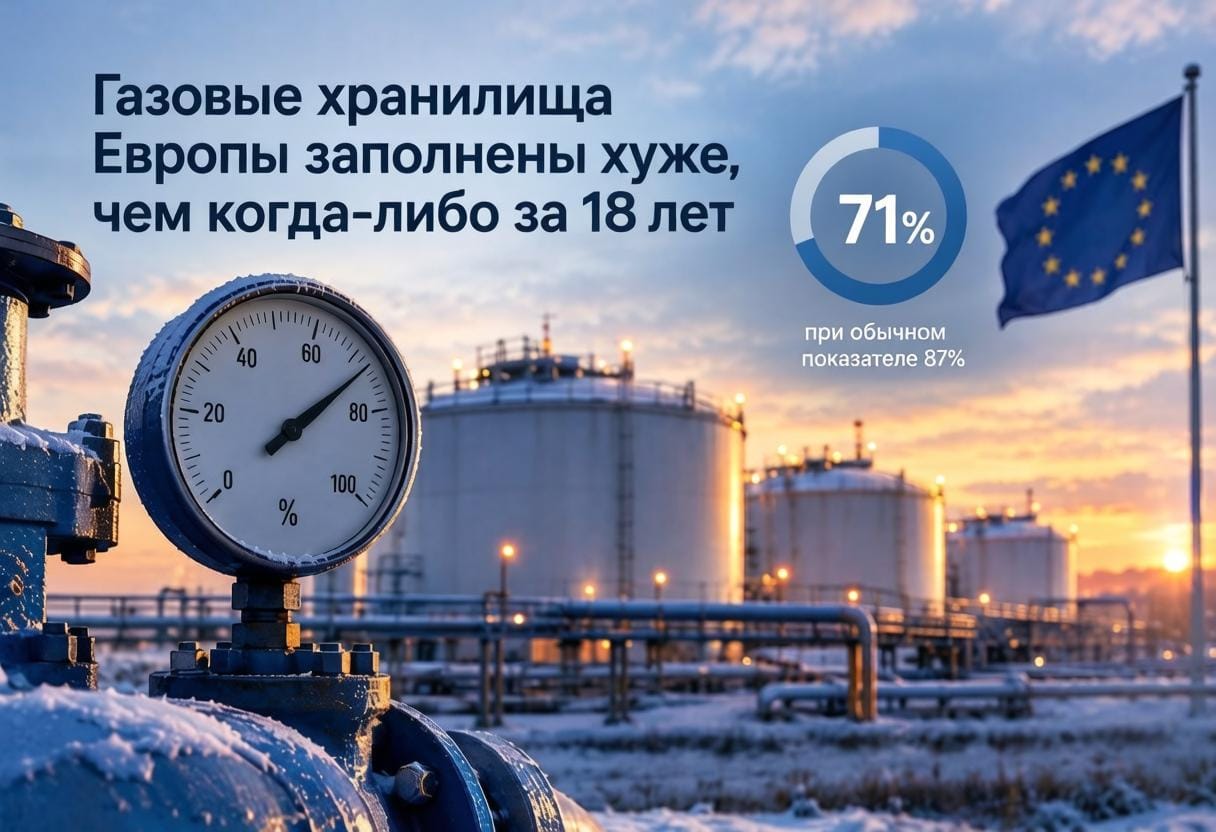
The key thesis from Bloomberg's analysis is the growing importance of Kazakh oil for Europe amid general supply instability. This directly continues what we recently examined: Europe is experiencing a period of structurally heightened energy vulnerability — gas storage facilities are filled worse than at any time in 18 years of observations, and according to an analysis of the world's largest oil importers, Kazakhstan turned out not to be among dependent buyers, but among major suppliers whose oil flows bypass vulnerable transport hubs like the Strait of Hormuz. For Chevron, the stakes are also high: according to Bloomberg, projects in Kazakhstan account for more than 10% of the company's proven reserves, and TCO generates the main cash flow — Kazakhstan provides about a quarter of Chevron's total global production. With such a balance of interests, the Kazakh side indeed has more room for negotiating terms than it would under a less tense geopolitical situation in energy markets.
Negotiations are taking place against the backdrop of environmental claims
It is telling that the discussion of new terms is unfolding in parallel with increased environmental oversight of the operator. In July 2026, the ecology department for the Atyrau region identified at Tengiz an instance of waste accumulation without the appropriate permit — TCO began a pre-trial appeal procedure, stating that it operates in strict compliance with issued permits. Even earlier, in April 2026, the company was fined 53.7 million tenge for excess emissions. Sources do not confirm a direct link between the environmental claims and the contract negotiations, but both processes are proceeding simultaneously and form the overall backdrop of relations between the state and the operator of the country's largest oil project.
The old contract determines more than just the extension terms
The 1993 agreement has already surfaced more than once in a similar context. We wrote that the new rule on the phased replacement of foreign specialists with Kazakh ones formally bypassed Tengiz, Kashagan, and Karachaganak — precisely because all three projects operate under subsoil use agreements concluded back in the 1990s, rather than under the modern model contract form. That is, the same outdated document simultaneously exempts Tengiz from new personnel requirements and becomes the subject of current negotiations on extension on fundamentally different terms. If the parties do indeed revise the agreement after 2033, it is logical to expect that the updated contract will also incorporate current requirements for Kazakh personnel — and not just financial parameters like the payment and participation share.
Author's conclusion
For now, the only source of concrete figures remains Bloomberg, citing anonymous interlocutors, and the Kazakh side officially neither confirms nor denies these terms — so $10 billion and 35% can be called a working, but not a final, negotiating position. The contract remains in force for another seven years, until 2033, so the parties have time both for further bargaining and for possible changes to the initial demands in one direction or another. The real indicator of the outcome of the negotiations will not be the current information leak, but the moment when one of the parties — the Kazakh government, Chevron, or one of the other TCO shareholders — makes an official statement about the extension terms, rather than leaving journalists with only anonymous comments from sources.
Comments ()