China returns to oil and gas. Why the new phase of the Belt and Road Initiative could be a game changer
In 2025, China hit a record $71.5B in Belt and Road engagement, shifting from buying resource stakes to building industrial infrastructure, securing engineering contracts, and establishing long-term production chains.
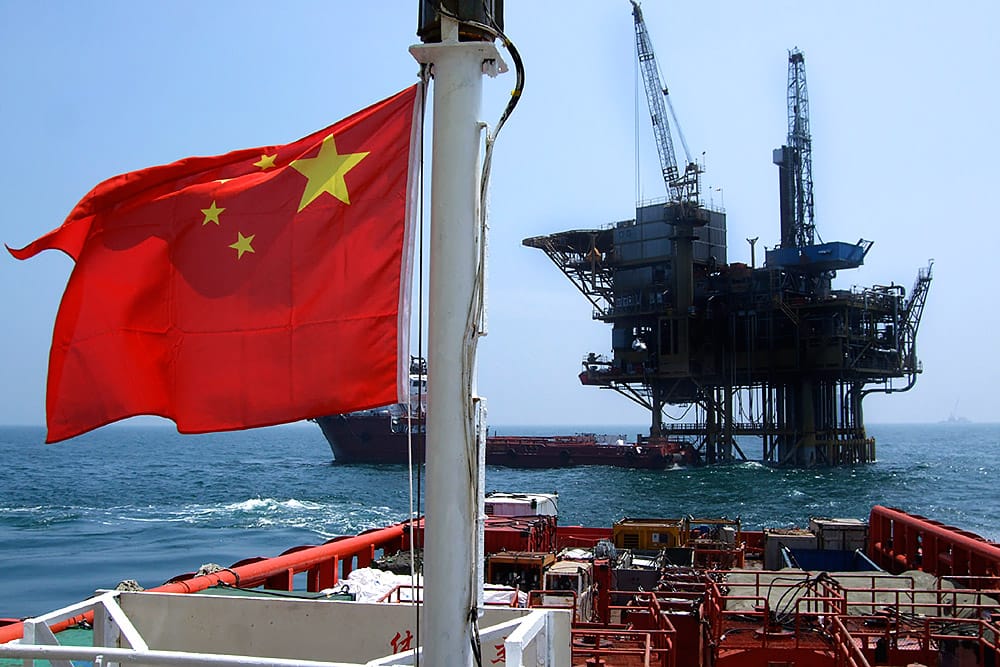
After several years of talk about a "green" transition, China has unexpectedly ramped up investments in oil and gas projects abroad. At first glance, this looks like a shift away from the climate agenda. As Dialogue Earth writes, a detailed analysis shows that Beijing is pursuing a much more complex goal: it is now less interested in extracting raw materials than in controlling the entire production chain — from the field to the finished product.
For Central Asian countries, including Kazakhstan, this transformation could open up new opportunities to attract investment, but at the same time carries risks of increased raw material dependence and competition for Chinese capital.
In Brief
· In 2025, China's energy projects in Belt and Road Initiative countries reached a record $93.9 billion.
· Oil and gas accounted for about $71.5 billion, or 74% of all energy deals.
· China is increasingly investing not in fields, but in processing complexes, pipelines, power plants, and industrial infrastructure.
· Central Asia remains one of the key directions of China's economic expansion.
· For Kazakhstan, this means both new investment opportunities and the need to compete for a place in new production chains.
China Changes Strategy
Ten years ago, Chinese companies were actively buying stakes in oil and gas fields around the world. The main task was to ensure their own energy security.
Today the situation has changed.
According to data from the Green Finance and Development Center, in 2025 China reached a record level of activity under the Belt and Road initiative. However, most of the new projects are no longer related to acquiring raw material assets, but to building industrial infrastructure around them. This includes petrochemical complexes, gas processing plants, power plants, pipelines, and industrial parks.
In other words, China seeks to profit not only from extraction but also from processing resources.
Why This Matters
This approach benefits several parties at once.
Partner countries gain factories, jobs, and the opportunity to develop their own industries. Chinese companies secure long-term contracts for construction, equipment supply, and technological support.
One of the largest examples is the Ogidigben gas industrial park in Nigeria, which last year accounted for nearly a third of the value of Chinese oil and gas projects in Belt and Road countries. The project combines gas extraction, processing, and the creation of an industrial cluster around energy infrastructure.
In essence, China is exporting not just capital, but its own model of industrialization.
The End of the "Small and Beautiful Projects" Era
After the pandemic, Chinese authorities repeatedly stated a shift towards the concept of "small and beautiful" — small infrastructure projects with limited risks.
However, the statistics for 2025 show the opposite trend.
The average cost of investment projects has risen to nearly $1 billion. The cost of construction contracts has also approached one billion dollars per project. This indicates a return of the large-scale infrastructure initiatives characteristic of the early years of Belt and Road.
In fact, Beijing is once again betting on megaprojects.
Where Does Kazakhstan Fit In
For Kazakhstan, this trend is particularly significant.
Central Asia remains one of the strategic regions of the Belt and Road initiative. Key transport corridors between China and Europe pass through Kazakhstan, and the country possesses significant reserves of oil, gas, uranium, and metals.
Notably, among the largest Belt and Road projects in 2025 were two metallurgical megaprojects in Kazakhstan with a total value of about $19.5 billion. This is one of the highest indicators of Chinese participation in the region's industry in recent years.
But the main question is not about the volume of investment.
What matters is the role Kazakhstan will play in the new model of Chinese presence: will it remain a supplier of raw materials or become a platform for deep processing and industrial production.
Opportunity for Petrochemicals
The most interesting prospects open up for the petrochemical sector.
If China is indeed betting on creating added value within partner countries, Kazakhstan could lay claim to new projects in gas chemistry, fertilizer production, polymers, and oil refining.
This looks particularly relevant against the backdrop of ongoing discussions about the need to move away from exporting crude oil and increase the output of higher value-added products.
However, realizing such a scenario will require a competitive investment environment and predictable conditions for large international projects.
But There Are Also Risks
Experts note that China's new oil and gas strategy coincides with the global energy transition.
Many projects being built today are designed for decades of operation. However, new carbon restrictions are already being introduced, including the European Union's Carbon Border Adjustment Mechanism (CBAM). In the future, this could reduce the competitiveness of products based on hydrocarbons.
For Kazakhstan, the risk is that some new production facilities may become tied to technologies and markets that will gradually lose appeal as climate policy tightens.
Furthermore, competition for Chinese investment is intensifying. In 2025, Africa became the largest destination for Chinese activity under Belt and Road for the first time, surpassing many traditional regions of presence.
Author's Conclusion
The growth of Chinese oil and gas investments does not mean Beijing is abandoning the energy transition. Rather, it is about a new phase of a global strategy in which China seeks to control not only resource extraction but also the entire industrial chain around them. For Kazakhstan, this is a window of opportunity: the country can attract investment in processing, petrochemicals, and industrial production. However, success will depend on whether the republic can integrate into new value chains, rather than remaining merely a supplier of raw materials for another cycle of industrial development.
Comments ()