China sets goal: wind and solar to account for over half of the country's installed power generation capacity by 2030
China aims to build an efficient low-carbon energy system. By 2030, solar and wind power are expected to exceed 50% of energy generation.
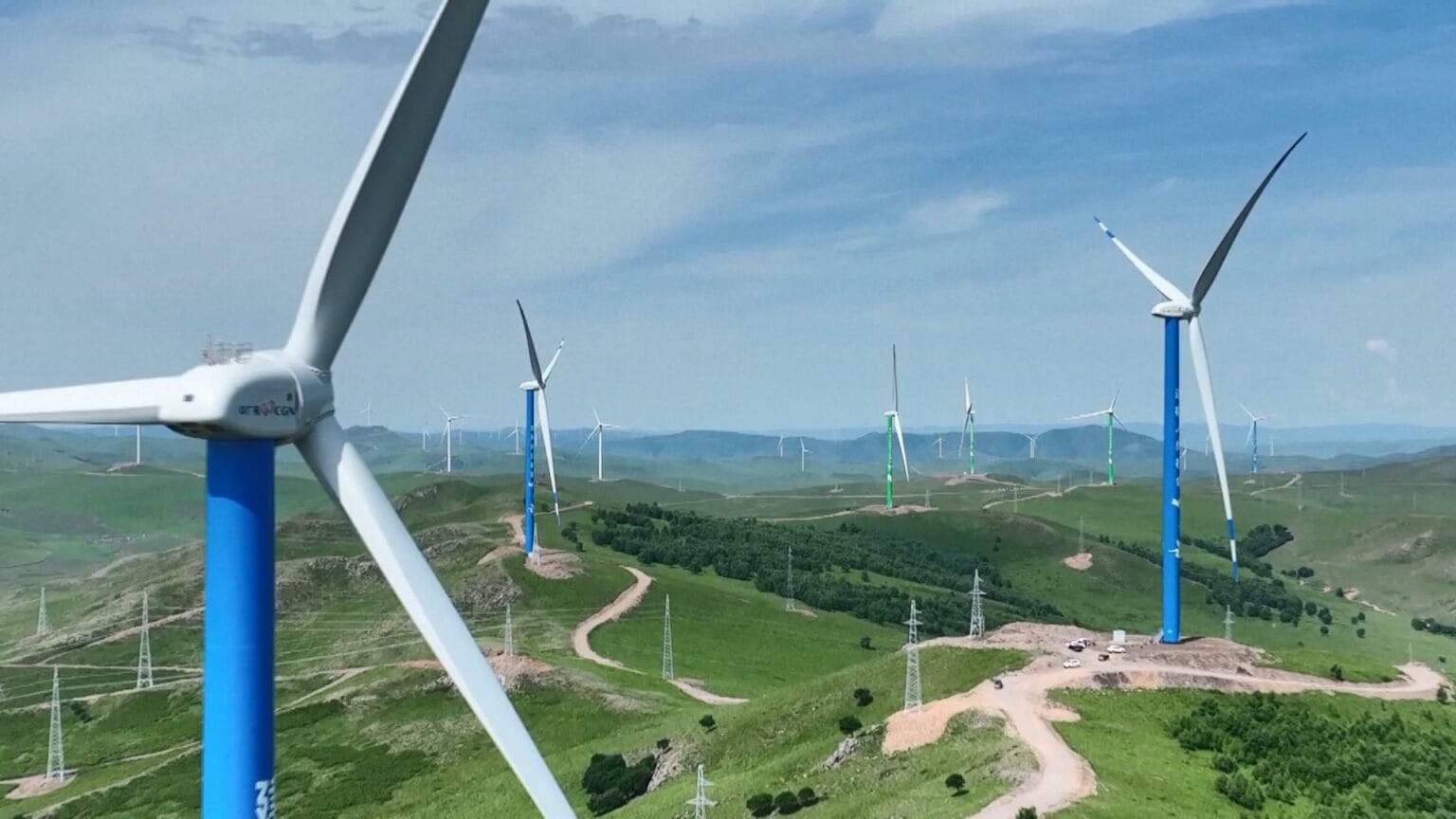
The National Development and Reform Commission of China and the National Energy Administration have published the energy development plan for the 15th Five-Year Plan period (2026–2030), reports Xinhua. The document sets ambitious targets: by 2030, wind and solar generation must exceed 50% of the country's installed capacity, and non-fossil sources must provide 50% of electricity generation. For Kazakhstan — China's main trade and energy partner in Central Asia — this is a direct signal about the direction of demand for energy resources and technology over the next five years.
The Gist
- By 2030, China aims to build a clean, low-carbon, safe, and efficient new energy system. The country's total energy production capacity will reach 5.8 billion tons of standard coal equivalent.
- Wind and solar generation will account for more than 50% of installed capacity — for the first time in the country's history, renewables will become the foundation of the energy system, rather than a supplement to it.
- Non-fossil energy sources will reach 25% of total consumption and 50% of electricity generation — also for the first time.
- Coal and oil consumption must peak and begin to decline. In parallel, China will continue to diversify its energy import channels.
- Key technologies and equipment in the energy chain must become self-sufficient — technological sovereignty in the energy sector is being elevated to a national priority.
The Five-Year Plan as a Turning Point
China is building the world's largest renewable energy sector — and the 15th Five-Year Plan is meant to solidify this status with a qualitative shift: renewables transition from a supplementary role to the foundation of the system. Surpassing the 50% mark for installed wind and solar capacity is a symbolic yet important milestone, signifying a structural change in the energy paradigm of the world's largest economy.
At the same time, the plan does not abandon coal and oil — it merely states that their consumption must "peak." This is a realistic stance: China cannot instantly abandon infrastructure built over decades, but it sets a vector where new investments go exclusively into clean generation.
Technological Sovereignty as a Second Priority
Alongside the climate agenda, the plan emphasizes technological self-sufficiency: key technologies and equipment in the energy chain must become "basically self-sufficient and controllable," and China's position in global energy technologies must be advanced.
This is not rhetoric: over the past decade, China has achieved a dominant position in the production of solar panels, wind turbines, lithium-ion batteries, and electrolyzers for green hydrogen. The Five-Year Plan solidifies this course, adding the requirement to create a unified national electricity market and unify pricing mechanisms.
The Kazakhstan Context
For Kazakhstan, China's energy plan has several dimensions. First, trade: as China increases its share of renewables and reduces dependence on fossil fuels, it will gradually change the structure of its energy imports. Kazakh coal, which has been supplied to China in significant volumes, will face declining demand in the long term. Kazakh uranium, on the other hand, will remain in demand — nuclear energy falls under the category of "non-fossil" sources, which are assigned a growing role.
Second, technology. Chinese companies — the world's largest manufacturers of renewable energy equipment — are actively entering the Kazakh market. Against the backdrop of a massive domestic construction program in China, competition for Kazakh projects among Chinese, European, and Middle Eastern players will only intensify — opening opportunities for the Kazakh side to negotiate localization terms and technology transfer.
Third, signaling. Kazakhstan itself is moving towards a target of 15% renewables in its energy mix by 2030. The Chinese plan, where this share exceeds 50%, is not a competitor but a benchmark: this is what energy transformation looks like when implemented by a country with the political will and investment resources to carry it out.
Author's Conclusion
China's Five-Year Plan is not a declaration of intent, but a management document with specific numerical targets for which government agencies are responsible. 50% renewables in installed capacity by 2030 is not a dream, but an engineering challenge backed by capital and a production base. For Kazakhstan, neighboring this transformation, the question is not whether it will happen — but whether the country will end up as a supplier of raw materials for China's energy system or a full-fledged participant in the region's new energy architecture.
Comments ()