Chinese company to invest $30 million in rare mineral mining in Zhambyl region
A mineral that rarely makes headlines turns out to be a quiet but essential link in producing far more hyped rare metals.
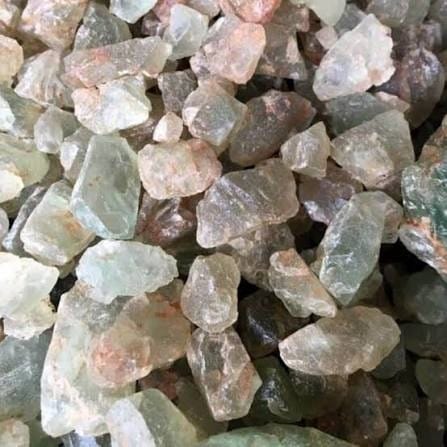
A project designed for a quarter-century ahead is being prepared in Zhambyl Region, Inbusiness.kz reports.
The gist in brief
- The company Hong Kong Link Technology Kazakhstan LLC plans to mine fluorite ores from the Taskainar deposit in Kordai District of Zhambyl Region — public hearings on the project are scheduled for mid-October 2026.
- According to the feasibility study, at a product price of $500 per tonne revenue from sales could reach $640 million, and net profit — $372 million with investments of approximately $30 million.
- Preparatory work is planned for 2027–2028, active mining will begin in 2029 with 50,000 tonnes of ore, and the mine and processing plant will reach maximum capacity of 300,000 tonnes per year by 2033 — at this level, mining will continue until the end of 2048.
- The total period of subsoil use will be 25 years; open-pit mining is planned to extract 5.7 million tonnes of ore, and the remaining balance reserves of the deposit are expected to be worked underground as part of a separate project.
Why fluorspar is needed
Fluorspar, or fluorite (CaF₂), is a raw material for the production of hydrofluoric acid, widely used in metallurgy and the chemical industry. A significant detail for the Kazakh context: it is hydrofluoric acid that is capable of dissolving rare metals and extracting them from stubborn, difficult-to-process minerals — that is, the development of domestic fluorite mining directly and more distinctively aligns with the Kazakh program of deepening the processing of periodic and rare metals, which does not exist as an isolated raw materials sector. This directly echoes the topic we have already written about regarding Kazakhstan's accession to the global technological alliance Pax Silica first in Central Asia , where Deputy Prime Minister Zhaslan Madiyev directly spoke about the country's aspiration to move beyond the framework of raw material suppliers and develop mineral processing within the country.
Combined mining and logistics
The main reserves of the deposit lie at depths ranging from 30–40 to 250 meters, which predetermined the combined method of development — the upper part by open pit, the lower part underground. At the first stage, development is planned with a single open pit. The project's logistics are tied to the Otar railway station, located 45 km from the deposit — concentrate from the processing plant will be delivered there by road, and then reloaded into railcars for shipment to metallurgical plants. The deposit's reserves were assessed back in the early 1970s in three variants of fluorite cutoff grade — 20%, 15% and 10%, with the lower threshold yielding a larger volume of ore involved at a lower concentration of the useful component.
Not the first fluorite in Kazakhstan
Taskainar already has an operating analogue within the country — fluorspar is mined by open pit at the Karadzhal mine of Kazatomprom's Ulba Metallurgical Plant, and the deposit itself is located in Abai Region on the territory of a former test site. A telling coincidence: hearings on the environmental aspects of the operations of this very already-operating mine are also scheduled for mid-October — that is, the Kazakh fluorite industry is undergoing two parallel stages of public discussion simultaneously, for both a new and an already-operating project.
Part of a broader picture of critical minerals
The Taskainar project logically continues what we have already examined with regard to Kazakhstan's mineral resource policy: the country is consistently expanding its portfolio of projects on rare and critical minerals — from tungsten, in the mining of which Kazakhstan has entered the top three world leaders, to the recent discussion of joint mechanisms for developing such deposits at the SCO conference in Moscow. The presence of Hong Kong capital in the project also echoes the already familiar theme of participation by foreign, primarily Chinese, investors in Kazakhstan's mineral resource sector — an issue that has been raised with regard to both renewable energy projects and recent negotiations on tungsten deposits.
Author's conclusion
The Taskainar project is a good example of how a mineral like fluorspar, relatively inconspicuous against the backdrop of more hyped rare metals, turns out to be a technologically necessary link for the development of the entire critical raw materials processing industry. The twenty-five-year planning horizon and the phased ramp-up to design capacity only by 2033 show that even with an outwardly modest investment of $30 million such projects are designed for decades ahead, rather than for quick returns — a typical feature of the mining industry, where years of preparatory work often pass from geological exploration to industrial mining.
Comments ()