COP17 in Ulaanbaatar enters decisive week of negotiations
Ministers and heads of delegations from nearly 200 countries arrive in Ulaanbaatar Aug 24–27 for the second, busiest week of the global desertification summit.
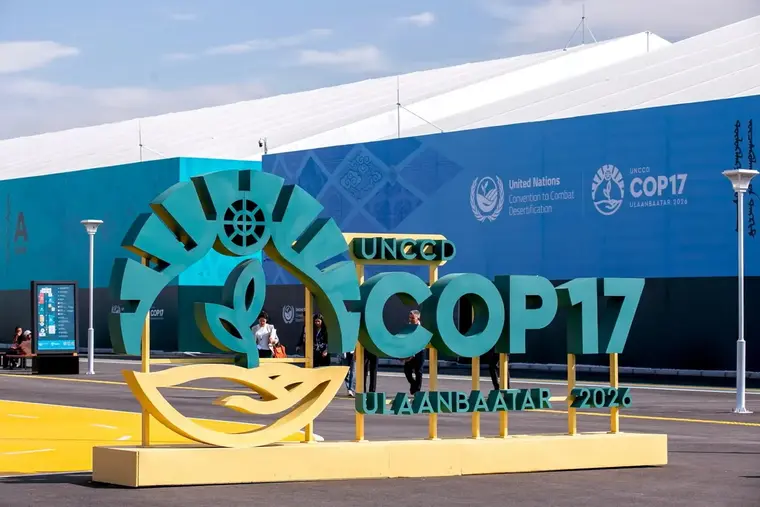
But Mongolia itself, the host of the forum, has an inconvenient parallel storyline: while the country chairs negotiations on land and water restoration, a dispute continues right on its doorstep over a dam that could reduce the water flow into Lake Baikal.
The gist in brief
- The second week of COP17 (24–27 August) is dedicated to a high-level segment with ministerial participation: 24 August is finance day, 25 August is water day, 26 August is land and people day with a focus on indigenous peoples, pastoralists, women and youth, and 27 August is food systems and soil health day.
- The general opening of the conference took place on 17 August with the participation of Mongolia's Prime Minister Nyam-Osoryn Uchral, while a separate opening ceremony for the high-level segment on 24 August was attended by the country's President Ukhnaagiin Khurelsukh, UN Deputy Secretary-General Amina Mohammed, and UNCCD Executive Secretary Yasmine Fouad.
- Uzbekistan and Tajikistan set up national pavilions and delegations at the conference, presenting their own initiatives — from land restoration to the preservation of glaciers and water resources.
- In parallel with the conference, Mongolia continues to promote the 315 MW Eg River (Egiin Gol) hydropower project on a tributary of the Selenga River, which provides about half of the annual water inflow into Lake Baikal; the final assessment of the project's impact on the lake is not expected until November 2026 — after COP17 has already concluded.
A packed agenda for the second week
The organizers have divided the days of the high-level segment by themes that accurately reflect the convention's priorities: financing land restoration, water security, the rights and interests of pastoralist and indigenous communities, food systems, and soil health. The conference is officially being held within the framework of the International Year of Rangelands and Pastoralists — 2026, proclaimed by the UN General Assembly on Mongolia's own initiative, which underscores its attempt to establish itself as the voice of nomadic pastoralist cultures on the international stage.
Central Asia at the conference
The region, which also includes Kazakhstan, is prominently represented at COP17. Uzbekistan has set up a national pavilion led by First Deputy Chairman of the National Committee on Ecology and Climate Change Obidjon Kudratov — its program includes bilateral meetings and thematic presentations on land restoration. The Tajik delegation, for its part, presented initiatives on preserving glaciers and water resources, emphasizing the need to further strengthen international and regional cooperation in combating land degradation. The active presence of regional neighbors logically continues the theme we have already examined: five Central Asian countries, together with FAO and the Global Environment Facility, launched a program to restore the Amu Darya and Syr Darya basins, and the World Bank simultaneously allocated $20 million for the CAWEC program to coordinate transboundary water management in the region, from which about 40 million people are expected to benefit — even before the conference in Ulaanbaatar began.
What happened in the first week
Formally, COP17 began on 17 August — with an opening ceremony, a cultural program combining traditional Mongolian music and dance, and speeches by officials.
Mongolia's Prime Minister Nyam-Osoryn Uchral in his welcome address linked the conference agenda to the country's national identity: "Mongolia is one of the last countries in the world where the nomadic way of life has been preserved. Nomadic pastoralism is a way of living in harmony with nature, not in opposition to it."
The first week, unlike the ministerial second week, consisted of technical and negotiation sessions — delegations and experts worked through substantive details on the topics of rangelands and pastoralism, drought resilience, water security, food systems, and soil health, preparing the groundwork for decisions to be agreed at the high level. No binding agreements are signed at this stage, following procedural logic — they take shape closer to the conference's conclusion on 28 August, based on the ministerial discussions of the second week.
The paradox of the summit host
The most unexpected storyline unfolds not in the negotiation halls, but 1,500 km away — on the Eg River (Egiin Gol), a tributary of the Selenga. Mongolia is considering building a 315 MW hydropower plant here, and the Selenga provides up to half of the annual water inflow into Lake Baikal. Environmentalists warn of the risk of seasonal flow redistribution, reduced sediment transport that forms the river delta, and disruption of migration routes for rare fish species, including the Siberian taimen. Mongolia and Russia have agreed on a joint scientific assessment of the project's impact: a scientific expedition started in 2025, and the final report for the two countries' intergovernmental commission, which will then also be sent to UNESCO, is expected only in November 2026 — meaning the decision on the project is being made almost in parallel with the summit dedicated to land and water restoration, but is in no way synchronized with its agenda.
Author's conclusion
The situation around the Eg River (Egiin Gol) does not make the summit in Ulaanbaatar any less significant — rather, it shows how difficult it is even for the host country to uphold its own agenda in practice when energy needs and obligations on transboundary water resources collide. For Kazakhstan, which is going through a similar dilemma on the Syr Darya and Lake Balkhash, the Mongolian example is further confirmation that international negotiations on land and water restoration almost inevitably outpace the speed at which countries themselves are willing to change national projects that have already been launched.


Comments ()