Cuba plunged into darkness for the third time in six months
On July 6, 2026, Cuba’s national power grid collapsed, leaving about 10 million people without electricity. It’s the third nationwide blackout this year and the eighth since late 2024.
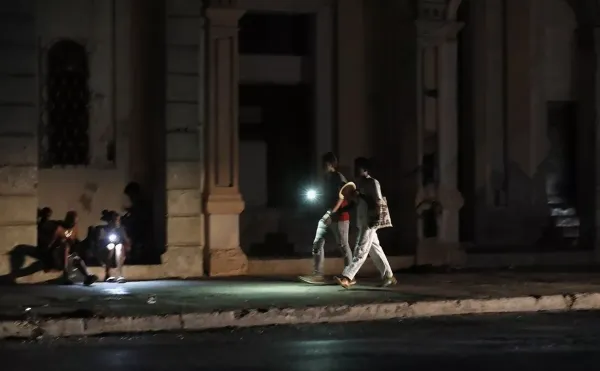
The island's fuel reserves are dwindling, and its power grid is collapsing amid an energy crisis triggered by the U.S. fuel blockade. Cuba is becoming a stark lesson in what happens to a country's energy system when fuel, money, and technology are simultaneously cut off.
The Gist
•The state electricity company UNE reported a "total disconnection from the national power generation system" and has launched an investigation into the causes, according to CNW.
•Cuba had already experienced rolling blackouts before the blockade — but their frequency accelerated sharply after the U.S. cut off oil supplies to the island in January. Since January, Washington has allowed only one oil tanker — from Russia — to enter Cuban ports.
•Scheduled power outages have already exceeded 30 hours straight in parts of Havana and 70 hours in some rural areas.
•Shortages of food, drinking water, and medicine are growing — the UN has warned of a humanitarian emergency. Transport on the island is virtually paralyzed, and some surgical operations have been postponed.
•Cuba has invested in solar energy, but renewable sources provide only about 10% of the country's energy balance.
How the Collapse Unfolded
Cuba's energy system relies on aging Soviet-era power plants that have not received proper maintenance for decades. They require fuel — fuel oil and diesel. Until January 2026, Venezuela was the main supplier. The Trump administration cut off Venezuelan oil shipments to Cuba in January, threatening tariffs on any country that sells or delivers oil to the island.
The result is predictable: without fuel, generators shut down, the load on the grid increases, and eventually the system fails. The Director of Electricity at the Ministry of Energy and Mines, Lázaro Guerra, acknowledged on state television that the fuel shortage "undoubtedly complicates the recovery process," without providing a timeline.
Geopolitics as a Tool of Pressure on the Energy System
Trump has pointed to the U.S. overthrow of Venezuelan President Nicolás Maduro and the installation of a Washington-friendly successor as a possible scenario for Cuba. Cuba has consistently rejected this scenario.
Cuban President Miguel Díaz-Canel accused the U.S. of attempting to "provoke social unrest by cutting off Cuba's access to fuel." The U.S. State Department responded by characterizing Cuba's reform initiatives as "superficial smoke signals" and stated that Trump expects "far more substantial economic and political reforms."
Meanwhile, in June, Cuba announced a package of liberal market reforms that would significantly reduce state control over the economy — the first such step in decades. Negotiations between the two sides continue, but Cuban Foreign Minister Bruno Rodríguez stated last week that there has been no progress.
The Sun Doesn't Save — Yet
Cuba has invested in solar energy as part of efforts to reduce dependence on imported fuel, but renewable sources currently provide only about 10% of the country's energy balance. This is catastrophically insufficient to compensate for the loss of thermal generation.
The Cuban case is a clear illustration of why the energy transition requires time and consistency: you cannot simultaneously lose traditional fuel and rely on renewables that have not yet reached the necessary scale.
Kazakhstan Context
Kazakhstan is not under sanctions and does not experience fuel blockades — however, the Cuban crisis contains several lessons relevant to any country with a centralized energy system.
First — diversifying energy sources is not a luxury, but an insurance policy. Cuba was mono-dependent on Venezuelan oil, and when that channel was cut off, there was no alternative. Kazakhstan is diversifying generation through renewables — and the Cuban example shows how strategically correct this decision is.
Second — the speed of the energy transition matters. 10% renewables during a total collapse of coal or gas generation is insufficient. This is why the Masdar wind farm under construction in the Zhambyl region, with 600 MWh of energy storage, is not just an environmental project but an element of systemic stability.
Author's Conclusion
Cuba is an extreme case where energy dependence on a single fuel source met geopolitical pressure. The result — 10 million people in the dark, a humanitarian crisis, and the complete paralysis of the country. This scenario is not universal, but the principle behind it stands: energy security is determined not only by the volume of generation but also by the diversity of sources, infrastructure resilience, and independence from external supplies. Kazakhstan is building this resilience — and the Cuban example explains why.
Comments ()