Cultivated meat is moving from laboratories to farms.
Future farms now grow cultivated meat without slaughter, shifting from lab experiments to full-scale production infrastructure.
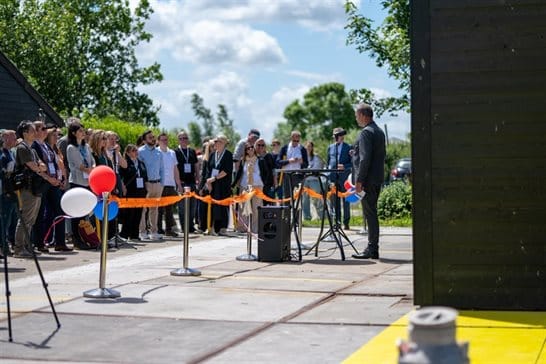
The Netherlands has opened the world's first farm for growing cells to produce meat without animal slaughter. The project could become an important milestone in the development of alternative protein sources and change the approach to food production in the coming decades.
In a Nutshell
• The Netherlands has launched the first farm for growing animal cells to produce meat.
• Cells are obtained without animal slaughter and used to create cultivated meat.
• Developers aim to reduce production costs and accelerate the commercialization of the technology.
• For Kazakhstan, this signals the beginning of a new technological transformation of the global meat market.
From Laboratories to Agriculture
Until now, most projects for producing cultivated meat have been developed in laboratories and research centers. The new facility in the Dutch town of Schipluiden is the first example of transferring the technology to a specialized farm format.
The essence of the technology lies in obtaining cells from living animals without slaughtering them. These cells are then used to grow muscle tissue in a controlled environment in special bioreactors. Developers believe this approach will make it possible to abandon keeping large livestock herds for producing part of the meat products.
Why Investors Are Betting on Cultivated Meat
The global protein market faces several challenges simultaneously. The planet's population continues to grow, demand for meat is increasing, and traditional livestock farming requires significant land, water, and feed resources.
Proponents of the technology claim that cultivated meat can reduce the environmental burden and cut greenhouse gas emissions. Additionally, production becomes less dependent on climatic factors, epizootics, and fluctuations in feed prices.
At the same time, critics point to the high cost of the technology and the lack of large-scale industrial production capable of competing with traditional meat on price.
What This Means for Kazakhstan
Kazakhstan remains one of the largest livestock markets in Central Asia and is betting on increasing exports of meat and deep-processing products. While cultivated meat does not yet pose a direct threat to the industry, the trend indicates the direction of development for the global food industry.
If the technologies become cheaper and enter the mass market, competition will no longer be only between meat-producing countries but also between different methods of obtaining animal protein.
For the domestic agro-industrial complex, this means the need to monitor the development of biotechnologies and consider possible changes in consumer preferences in export markets.
The Issue of Food Security
Experts are increasingly considering cultivated meat as one of the tools for ensuring food security in the context of climate change, water scarcity, and population growth.
The technology is still in its early stages of development, but the launch of the first specialized farm shows that the industry is gradually moving from scientific experiments to creating a full-fledged production infrastructure.
Author's Conclusion
The opening of the first farm for growing cells to produce meat demonstrates that the global food system is entering a new phase of technological change. Traditional livestock farming will retain its leading role in the coming years, but the development of cellular technologies could change the structure of the protein market just as renewable energy is transforming the global energy sector. For Kazakhstan, this is not so much a challenge of today as a signal of what the global food market could look like in the future.
Comments ()