Dismantling of Ignalina NPP costs more than planned — what the EU Court of Auditors says
Dismantling Soviet-designed graphite reactors proved far harder than Brussels expected a quarter-century ago.
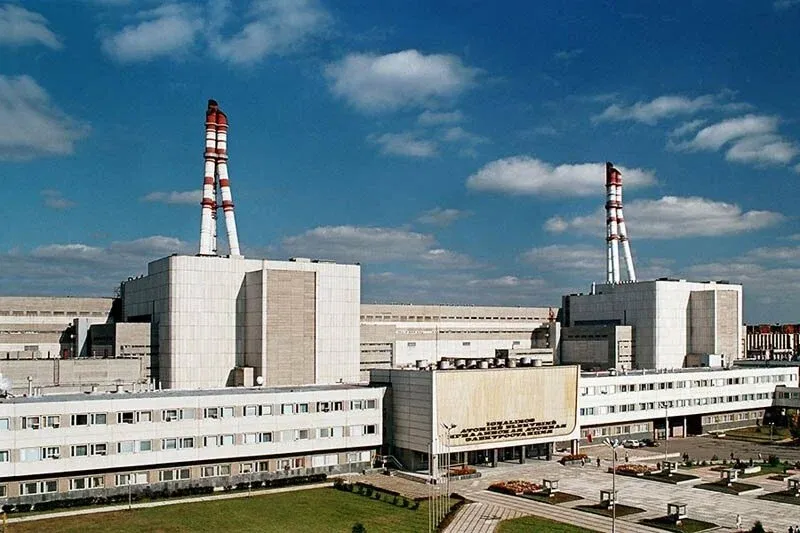
The completion date for work at Lithuania's Ignalina Nuclear Power Plant has already been pushed back three times and is now stated as 2050 — although initially the station was expected to be fully dismantled by 2029. Even the European Union's own Court of Auditors officially acknowledged: money on the project is not being spent as efficiently as planned.
The essence in brief
- The dismantling of Lithuania's Ignalina Nuclear Power Plant — the largest project of its kind in Europe — over two decades has shifted its completion dates from the initial 2029 to 2038, and under current long-term contracts, full completion of all work is now expected by 2050.
- Funding is growing from period to period: about €837 million in 2007–2013, €450 million in 2014–2020, €552 million in 2021–2027, and another €678 million has been requested for 2028–2034.
- Back in a special report in 2016, the European Court of Auditors warned that the work was falling behind schedule and exceeding the budget, and that part of the EU funds was being spent on maintaining the plant's personnel rather than directly on dismantling — the EU institution repeated this criticism in subsequent years as well.
- By 2026, the dismantling of the reactor channels of the first power unit has been completed, and the regulator VATESI has issued a permit for similar work on the second — the dismantling of the reactor cores, which we wrote about earlier, will begin at the end of 2026.
What has changed since summer
Since our July article about the upcoming dismantling of the RBMK-1500 reactor, the project has moved further: the dismantling of the reactor channels of the first power unit has been completed, and the Lithuanian regulator VATESI has issued a permit for similar work on the second unit. It is precisely the dismantling of the core — thousands of graphite blocks and process channels exposed to neutron irradiation for decades — that will begin at the end of 2026, and this still remains the largest unexplored stage of the entire project. But in parallel with the technical side of the issue, the financial side has become more noticeable — the very one that prompted a closer look into the topic.
A growing budget and shifting deadlines
Project funding is growing from one EU budget period to the next: about €837 million in 2007–2013, €450 million in 2014–2020, €552 million in the current 2021–2027 period, and another €678 million has been requested for 2028–2034 — the European Parliament at one point even insisted on increasing the EU co-financing share to 86% instead of the 80% proposed by the European Commission. The total estimated cost of fully dismantling the plant today is estimated at several billion euros. At the same time, the project was initially planned to be completed by 2029 — since then the deadline has already been shifted to 2038, and the latest long-term contracts for 48 individual decommissioning projects indicate 2050.
Criticism from the European Court of Auditors
The shifting deadlines did not go unnoticed by the European Union itself. In a special report in 2016, "EU Assistance Programmes for Nuclear Decommissioning in Lithuania, Bulgaria and Slovakia," the European Court of Auditors stated: since 2011, some progress had been made, but the most difficult work in controlled areas, including the reactor buildings themselves, was still ahead, and the completion date for dismantling in Lithuania had already been postponed by nine years — to 2038. The auditors also pointed out that part of the EU funds went to maintaining the plant's personnel rather than directly to dismantling work — the criticism concerned not only Lithuania but also similar projects in Bulgaria and Slovakia, although the funding volumes there are significantly more modest.
A lesson not only in engineering, but also in budgeting
We have already noted that the life cycle of a nuclear power plant does not end with the shutdown of its reactors. The criticism from the European Court of Auditors adds an important nuance to this: even with full transparency and support from the world's largest donor — the European Union — the actual costs of dismantling systematically exceed initial estimates, and the timelines stretch decades beyond plan. For countries just starting their own nuclear programs, this means that financial planning for decommissioning a plant cannot be treated as a formality calculated using a simplified "just in case" methodology — the Ignalina experience shows that even detailed international assessments can diverge greatly from reality over a horizon of several decades.
Author's conclusion
The dismantling of Ignalina is not a story about abuses, but a telling example of how difficult it is to calculate in advance the timelines and cost of unprecedented engineering projects, especially when it comes to the world's first experience of dismantling reactors of a specific type. The official criticism from the European Court of Auditors — about delays, cost overruns and the structure of expenses — is taken seriously by EU institutions precisely because it comes from the union's own independent financial control body, and not from outside observers. For the industry as a whole, this is a useful lesson: dismantling a nuclear power plant is not a technical formality after the end of operation, but a separate megaproject requiring no less careful planning than the construction itself.
Comments ()