Egypt builds the first energy storage systems plant in the Middle East and Africa
Egypt laid the foundation stone for a plant meant to solve one of renewables' biggest headaches: storing excess energy when the sun shines or wind blows but demand is low.
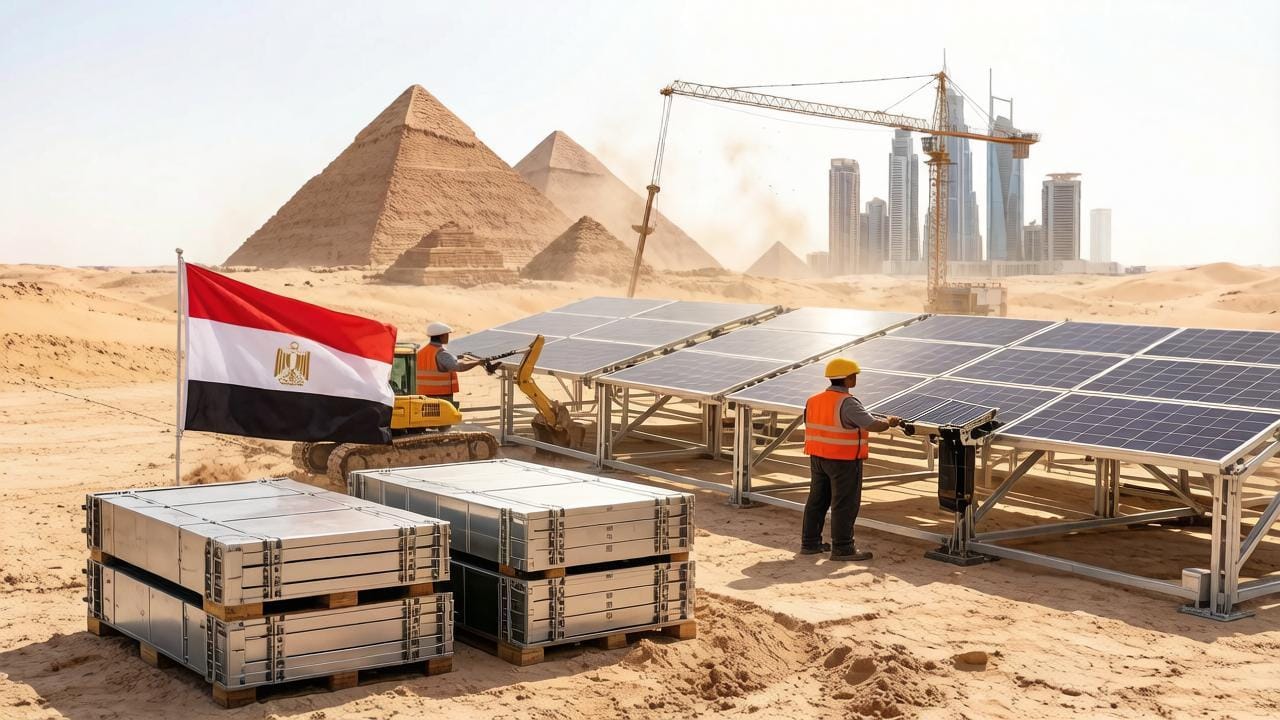
This is about the first specialized facility in the Middle East and Africa for manufacturing modern battery energy storage systems.
The gist
- Egypt's Minister of Industry Khaled Hashem took part in the foundation stone laying ceremony for the Sungrow Power Suez plant — the first specialized facility for manufacturing battery energy storage systems (BESS) in the Middle East and Africa.
- The plant is being built in the TEDA Egypt-China economic cooperation zone in Ain Sokhna and is expected to reinforce Egypt's course toward localizing advanced clean energy technologies.
- According to the minister, the project's industrial value is not limited to production capacity — the investment will also help train qualified Egyptian specialists and facilitate technology transfer; Hashem called on Sungrow to increase the share of locally sourced components.
- Construction and equipment installation are planned to be completed on schedule, with the plant's actual commissioning slated for the following year, 2027.
Why storage systems and not panels
Building a storage systems plant rather than yet another solar or wind farm is a telling choice of priority. We have already written about how a lack of sufficient energy storage can turn into a real problem: the bankruptcy of Portugal's largest solar plant, for instance, was largely caused by an oversupply of solar generation on the Iberian Peninsula collapsing wholesale electricity prices. Storage systems address precisely this issue — they make it possible to accumulate energy during periods of surplus generation and release it during peak demand, smoothing out the volatility inherent in solar and wind generation. According to Hashem, the plant should support Egypt's transition to clean energy, enhance the resilience of the national power grid, and increase its capacity to absorb a growing share of renewables precisely through modern storage solutions.
Part of the industrialization strategy
The project fits into the recently updated industrial strategy of Egypt's Ministry of Industry, which aims to build a more competitive industrial base and integrate Egyptian industry into global supply chains. Equipment and components for solar energy and other renewable technologies are specifically singled out in this strategy as a key "enabling industry" — that is, manufacturing that supplies inputs to a wide range of other industrial sectors. The plant's location is no coincidence: the TEDA economic zone in Ain Sokhna was created precisely for such projects to localize Chinese technologies on Egyptian soil, and Sungrow is one of the world's largest companies specializing in inverters and energy storage systems.
Why this matters for Kazakhstan
Kazakhstan faces the same structural challenge as Egypt — the need to develop storage capacity in parallel with the growth of renewable generation. The 1 GW wind farm being built in the Zhambyl region with the participation of the UAE's Masdar already includes an energy storage system of 600 MWh specifically to address the problem of unstable generation on site. However, the production of storage systems themselves has not yet been localized within Kazakhstan — unlike Egypt, which is betting not only on purchasing finished storage units but also on creating its own manufacturing base for them with the help of a Chinese partner. Given that the ownership structure and conditions for admitting foreign — primarily Chinese — capital into Kazakhstan's renewable energy sector have already been the subject of a separate analysis, the Egyptian example demonstrates one possible path — not merely attracting investment into turnkey plants, but securing the localization of critically important components such as storage systems, with clear requirements for local content share and technology transfer.
Author's conclusion
Egypt's choice — to build a storage plant first rather than yet another generating facility — demonstrates an understanding that further growth of renewables in the country will hit the same problem already faced by more mature markets like Spain and Portugal: an excess of generation without sufficient storage infrastructure creates more risks than it solves. The minister's demand to increase the share of locally sourced components is also a telling detail: from the very outset, Egypt is trying not simply to attract a foreign plant to its territory, but to establish conditions under which localization becomes part of the deal rather than a voluntary bonus from the investor.
Comments ()