El Niño has intensified since the start of the Industrial Revolution — what a new analysis showed
Powerful El Niño phases have become notably more frequent since the industrial era began, and the overlap with anthropogenic warming looks no coincidence.
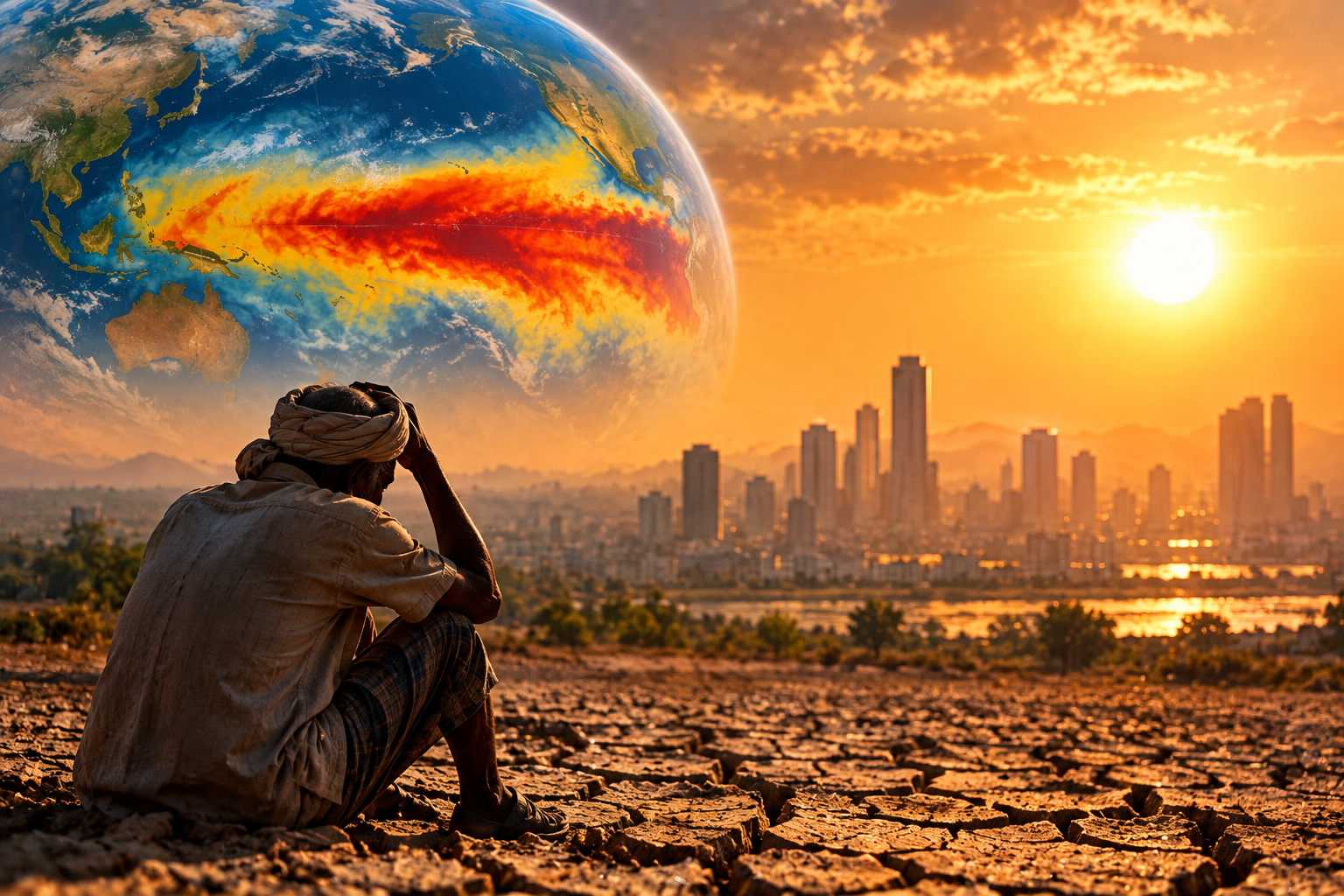
All season long, we have been watching the developing El Niño break records one after another. NOAA forecasts, fires, droughts, and floods on different continents — the chain of events looked almost continuous. A new study in the journal Science for the first time provides a long-term scientific basis for it, TechInsider reports.
The gist in brief
- An international team of scientists, having studied Galapagos coral skeletons spanning the last thousand years, found that strong El Niño phases have become significantly more frequent precisely since the start of the Industrial Revolution.
- The amplitude of temperature fluctuations associated with the phenomenon increased by 36.5% between 1990 and 2010 compared with the pre-industrial era.
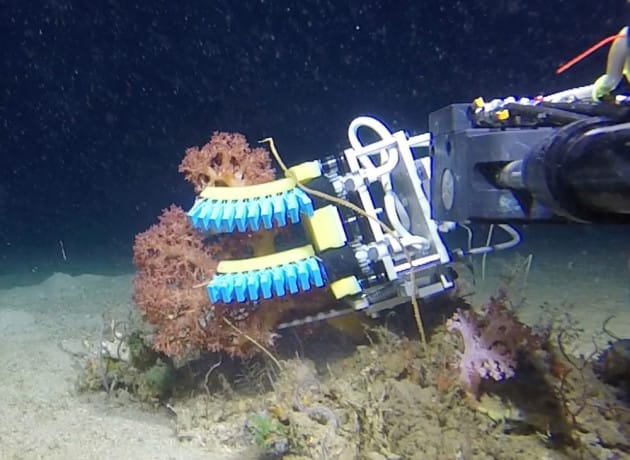
- Corals have become a rare source of data for centuries beyond the reach of direct instrumental observations — their growth records monthly changes in the oceanic environment, functioning as a natural climate archive.
- The result reinforces what we have been tracking all season: the El Niño forming in 2026, according to the NOAA forecast, has nearly a 69% chance of becoming the strongest in the history of instrumental observations.
How corals became a time machine
The main methodological problem climatologists have faced for decades is the simple lack of accurate data on ocean behavior before the 20th century: computer models still do not describe the complex interaction of the atmosphere and ocean beyond the era of satellite observations with sufficient precision. Corals from the eastern Pacific, where the El Niño phenomenon manifests most strongly, solved this problem in an unexpected way — their skeletons grow in layers that record monthly changes in water temperature and chemical composition, much like tree rings. Study co-author Julia Cole from the University of Michigan aptly described the essence of the method: corals give scientists a time machine for looking into the past, but they do not provide a time machine for looking into the future.
The same season — different consequences around the world
The scientific confirmation of the long-term intensification of El Niño fits well with what we observed this season almost in real time. We have already reported that NOAA has raised the probability of the current event reaching record strength to nearly 69%, and its consequences have already manifested in completely different ways across different continents: the African Development Bank estimated the damage to the continent's most vulnerable countries at $10–20 billion, climatologists warned of a record sea-level rise off the coast of California, and the destruction of Alpine glaciers this summer was directly linked by experts to the same climatic backdrop. In Indonesia, record forest fires fueled by El Niño broke out, shrouding several Southeast Asian countries in smog, while The New York Times warned that the same phenomenon could overlap with military conflicts and trade restrictions, creating a triple threat to the global food system. It is precisely the breadth of this list — from South American downpours to the Australian drought — that constitutes the essence of the El Niño mechanism: the same Pacific anomaly simultaneously triggers opposite types of disasters in different parts of the planet.
Author's conclusion
The value of the new study lies not in reporting something fundamentally new about the current season, but in explaining why this season turned out to be so packed with records in the first place. If strong El Niño phases have indeed become more frequent and intense precisely since the beginning of the industrial era, then the current record NOAA forecast is not a statistical fluke of a single year, but a natural continuation of a trend that scientists can now trace back over centuries. For everyone who has followed this story all summer — from the heat in Kazakhstan to the smog in Indonesia — this means one thing: such seasons are likely to become more frequent, not less.
Comments ()