El Niño or a "climate flickering"? Russia proposes an alternative hypothesis for climate change
Naked Science researcher proposes an alternative interpretation of El Niño’s role in modern climate change.
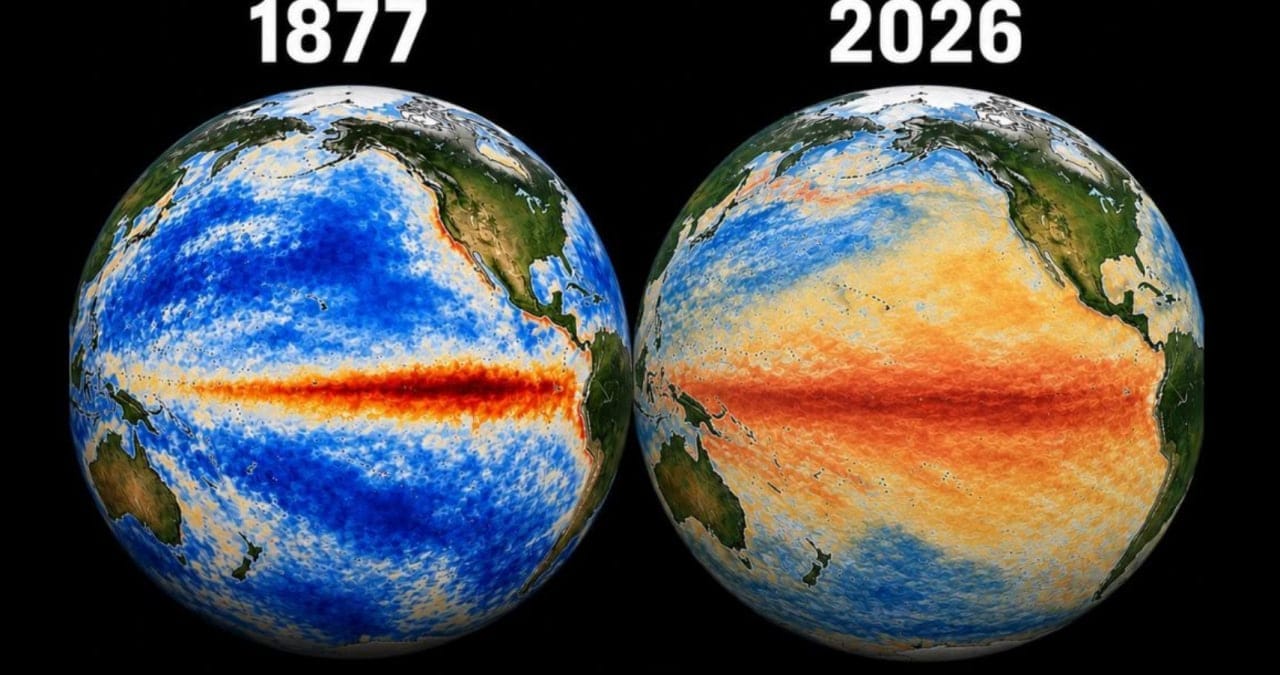
The Russian popular science portal Naked Science has published an article presenting an alternative hypothesis on the influence of the El Niño phenomenon on the global climate. The version presented is not the generally accepted scientific position, but represents one possible interpretation of climatic processes.
The Gist Briefly
· Naked Science has published an alternative hypothesis on the role of El Niño in modern climate change.
· The author believes that the impact of the current El Niño has barely manifested itself yet, and the main consequences may still lie ahead.
· In his opinion, expectations of a global crop failure due to El Niño may be exaggerated, although local crop losses are quite likely.
· Most climatologists still consider El Niño a natural climate cycle that amplifies the manifestations of global warming, but is not its primary cause.
An Alternative View on the Role of El Niño
In his publication, the author uses the concept of a "climate click" — a sharp transition of the climate system to a new state, caused by large-scale changes in the interaction between the ocean and the atmosphere.
In his view, powerful episodes of El Niño can act not just as short-term climatic events, but as unique triggers for longer-term changes in the global climate system. The author believes this can explain some sharp temperature jumps observed in different historical periods.
The article presents arguments based on the analysis of temperature records, oceanic processes, and past climate changes. The author emphasizes that he is offering an alternative interpretation of existing data.
Why the Current El Niño, According to the Author, Has Not Yet Manifested Itself
The author of the publication draws attention to a curious fact: despite numerous reports of record heat in Europe and other regions, the full impact of the current El Niño, in his opinion, has barely manifested itself yet.
He cites estimates from the World Meteorological Organization, according to which the climate phenomenon has only just begun to form, and its most noticeable impact on global atmospheric circulation is expected later. In other words, the author suggests not directly linking the current weather anomalies to El Niño, believing the main effects are still to come.
It is for this reason that the researcher believes the most serious climatic consequences of the current cycle still lie ahead.
At the same time, this view also remains part of his proposed interpretation. Most climatologists agree that El Niño develops gradually, but emphasize that the influence of individual weather anomalies is determined by several factors at once, not just this climate cycle.
Will There Be a Global Crop Failure?
Another idea from the author concerns the possible impact of El Niño on global agriculture.
The publication notes that forecasts of an inevitable global crop failure may be overly pessimistic. Analysis of previous El Niño cycles, according to the author, shows that global agricultural production usually did not decrease, but only grew more slowly than in favorable years.
He emphasizes that this refers specifically to global indicators. For individual countries, the consequences could be very serious. Droughts, heavy rainfall, or abnormal heat can significantly reduce the yield of certain crops and cause price increases on the world market.
What the Scientific Consensus Says
Most international climate organizations hold a different point of view.
According to modern scientific understanding, El Niño is a natural climate cycle in the equatorial Pacific Ocean that temporarily raises global temperatures and affects the distribution of precipitation, droughts, and other extreme weather events.
At the same time, most researchers consider the increase in greenhouse gas concentrations due to human activity to be the main cause of long-term global warming. In this model, El Niño is seen as a factor that amplifies an existing climate trend, rather than replacing it.
Thus, the Naked Science article presents an alternative scientific hypothesis that has not yet achieved the status of a generally accepted concept.
What This Means for Kazakhstan
For Kazakhstan, such scientific discussions have very practical significance. Regardless of which hypothesis proves most accurate, El Niño is traditionally considered one of the key factors capable of influencing precipitation patterns, the probability of droughts, the condition of pastures, and crop yields.
Even if the global crop failure, as suggested by the author of the publication in Naked Science, turns out to be less severe than many analysts expect, local weather anomalies can seriously change the situation in agricultural markets. A decrease in yields among major producers of grain, sugar, coffee, rice, or oilseeds inevitably affects world prices, and therefore impacts both Kazakhstan's export potential and the cost of certain food products.
Earlier, Hunn.kz already covered the El Niño topic in detail, reporting on the FAO forecast, according to which Kazakhstan is among the regions with increased agricultural risk due to possible droughts and unstable precipitation distribution. At that time, the editorial board also noted the difference in assessments between international experts and the position of Kazakh authorities regarding the possible consequences of the climate phenomenon, up to the Deputy Prime Minister denying the El Niño phenomenon itself.
Therefore, the publication by Naked Science should be viewed not as a refutation of existing forecasts, but as another scientific hypothesis that broadens the discussion about the nature of El Niño and the mechanisms of its impact on the climate. For farmers, the main question remains the same: what will be the impact of weather anomalies on crops, the feed base, and the situation on the global food market.
Author's Conclusion
The Naked Science publication is interesting primarily because it offers an alternative explanation for the role of El Niño in the modern climate system. While this hypothesis does not change the existing scientific consensus, it serves as a reminder that the climate remains an extremely complex system, many processes of which are still being studied. For the agricultural sector, something else is more important: regardless of the causes of climate anomalies, it is their consequences — droughts, changes in yields, and fluctuations in world food prices — that will determine the operating conditions for agriculture in the coming years.

Comments ()