FAO recognizes the risks of the SAT-1 foot-and-mouth disease threat in Asia
FAO confirms spread of new FMD serotype SAT1 in East Asia. South and Southeast Asia on high alert. FAO allocates $400,000 to combat the outbreak.
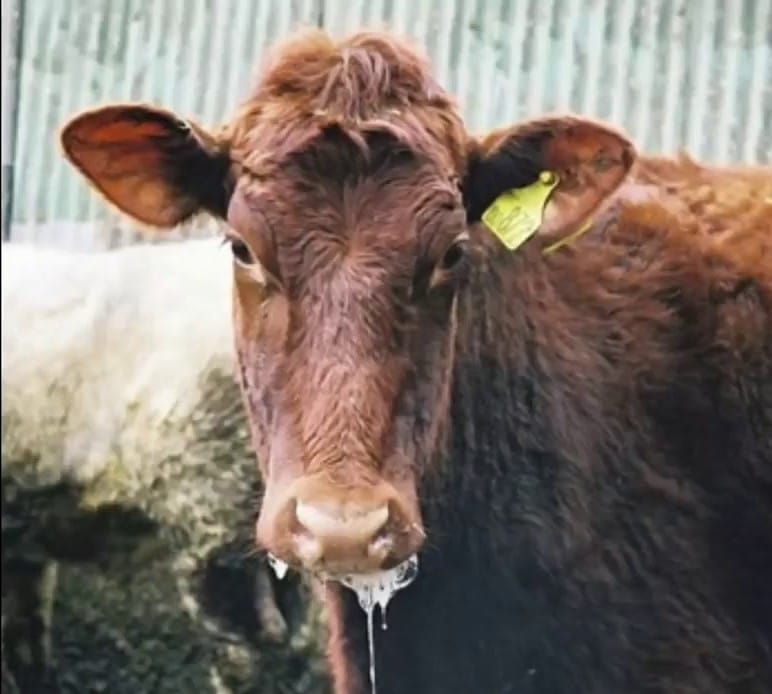
Since February 2026, Kazakhstan has been at the center of epizootic pressure that has been building gradually but steadily. The foot-and-mouth disease strain — "South African," which had never before reached Central Asia — has been confirmed on the country's borders from multiple sides simultaneously. Within the country, the same symptoms in different regions are called by different names: pasteurellosis, rabies, rhinotracheitis, "seasonal die-off." Anything but foot-and-mouth disease. The FAO has allocated emergency funding for seven countries in South and Southeast Asia. Kazakhstan is not on this list — even though the virus is moving further east precisely through its territory.
The Gist
- The SAT1 foot-and-mouth disease strain has been reported outside its historical range in Africa since early 2025, and by early 2026, it was confirmed in Russia, China, and — according to the FAO — in Central Asia. Kazakhstan is surrounded on all sides.
- The "AusylVak" vaccine used in Kazakhstan, according to experts, does not match the circulating strain — vaccinated animals continue to fall ill.
- Saiga antelopes, migrating across several regions without stopping at borders, have become a largely uncontrollable vector of spread. Animal carcasses are left on pastures — burial sites are no barrier.
- The concealment mechanism is similar in all countries of the region: admitting to foot-and-mouth disease means losing the WOAH veterinary status and closing external markets. Administrative logic prevails over epizootic reality.
- On June 17, 2026, the FAO announced the allocation of $400,000 to support Cambodia, Indonesia, Laos, Pakistan, the Philippines, Thailand, and Vietnam — countries in South and Southeast Asia. Kazakhstan and Central Asia are absent from this emergency program.
Timeline: How the FBRC Tracked the Epizootic
The editorial team of the Foundation Bureau for Corruption Investigation (FBRC) was among the first Kazakhstani media outlets to document the alarming picture.
February 2026. The FBRC draws attention to the large-scale slaughter of livestock in the Novosibirsk, Omsk, Sverdlovsk regions and the Altai Republic. Officially, Russian authorities cited pasteurellosis and rabies. But the protocol applied — destruction of all animals in the affected zone within a radius of up to 5 km from the outbreak, burning of carcasses, police checkpoints, refusal of independent testing — exactly replicates the procedure for combating foot-and-mouth disease.
March 2026. The FBRC recorded that veterinary statistics in Kazakhstan are classified as "For Official Use." A request to the Veterinary Control and Supervision Committee of the Ministry of Agriculture regarding the number of disease outbreaks and vaccination coverage was denied. In the Sanitary and Epidemiological Control Committee of the Ministry of Health, similar statistics on human brucellosis were found to be classified today.
First half of April 2026. Videos began appearing on social media from the West Kazakhstan Region, Kaztalovka District, near the village of Karaoba. The footage shows a saiga with a damaged mouth and profuse salivation. Doctor of Veterinary Sciences, Chairman of the public association "Veterinarians of the WKR" Gaisa Absatirov commented: fresh cases of effective signs characteristic of foot-and-mouth disease have been recorded precisely in the habitats and distribution zones of saigas in the WKR.
Second half of April 2026. Doctor of Veterinary Sciences Gaisa Absatirov wrote that Kazakhstan found itself at the very epicenter of the disease: the country is surrounded by states where foot-and-mouth disease is being registered — Russia, Kyrgyzstan, Turkmenistan, Uzbekistan, and China. The veterinary services of most of them are trying in every way to conceal the true epizootic situation, calling what is happening an "unknown disease," pasteurellosis, or rabies.
April 27, 2026. A report from the Siberian Interregional Directorate of Rosselkhoznadzor dated January 29, 2026, appeared in open sources. The document registers an outbreak of foot-and-mouth disease strain SAT1 in the Cherepanovsky District of the Novosibirsk Region: clinical indicators were identified in about 2,500 head out of approximately 10,000 animals. The identified strain — SAT1 — is not included in the vaccine being used. This same strain was previously identified in China's Gansu province and the Xinjiang Uyghur Autonomous Region — on the border with Kazakhstan.
Map of Epizootic Pressure: Four Fronts
The analytical resource geo.precisionagro.com visualized what the FBRC described in its texts: one disease, four names in different regions of Kazakhstan — pasteurellosis in the West Kazakhstan Region, rabies — then rhinotracheitis in Kostanay, rhinotracheitis in Atyrau (6,000 head, movement ban), seasonal die-off in Akmola. Everywhere the same symptoms. But not foot-and-mouth disease.
The global spread of SAT1, recorded by international organizations, looks even larger. Since 2025, SAT1 has spread rapidly: confirmed cases in Iraq, Kuwait, Turkey, Egypt, then — in Azerbaijan, indicating spread northward, towards the Caucasus. Continued transmission led to further cases in Lebanon, Israel, Cyprus, and Greece in 2025–2026.
At the FAO Conference for Europe (ERC35) in Dushanbe in May 2026, it was confirmed:
serotype SAT1 has been detected in Azerbaijan, Turkey, and Central Asia. Transboundary animals pose a risk for all of Europe and Central Asia. As a result, annual global losses from such diseases amount to between $50 and $330 billion.
Why SAT1 is More Dangerous Than Familiar Strains
Foot-and-mouth disease exists in seven serotypes. The fundamental issue with SAT1 is that immunity to one serotype does not protect against another. Most vaccination programs in regions where SAT1 has arrived are based on historically circulating serotypes O, A, and Asia-1, which do not provide cross-protection against SAT1 — animals remain susceptible despite routine vaccination. This risk is compounded by the limited availability of vaccines containing SAT1, gaps in medical surveillance, and differences in potential veterinary services.
This is precisely why Professor Absatirov directly stated that the drug used in Kazakhstan does not match the type and strain of the virus circulating in the outbreak zones. This means that even farms that have conscientiously carried out vaccination are not protected and may not be aware of it.
The expansion of SAT1 is driven by several interrelated factors: increased informal cross-border livestock movement, environmental pressure — droughts and land-use change enhancing transmission opportunities from wildlife into the country, and gaps in vaccination strategies.
The Saiga as an Epizootic Weapon Without Borders
The Saiga plays a special role in the Kazakhstani scenario — and this is where the situation goes beyond the standard epizootic pattern. The saiga, susceptible to foot-and-mouth disease, migrates hundreds of kilometers, crosses several territories within days, and recognizes neither quarantine zones nor border posts.
In professional chats and social media, we see video materials showing clinical signs in cattle and sheep. Mass mortality of calves is being recorded. Symptoms in saigas: fever above 40°C, salivation mixed with blood, ulcerative lesions of the oral cavity, widespread lameness, and high mortality — this is the classic acute form of foot-and-mouth disease.
Meanwhile, the infrastructure is failing: burial sites cannot cope with the increasing number of saiga carcasses. Untreated carcasses are additional sources of infection, accessible to scavengers, water, and wind.
The Concealment Mechanism: Why Everyone is Silent
There is a pattern that runs through this entire story — from Russia's Novosibirsk to Kazakhstan's Kaztalovka region. Wherever foot-and-mouth disease appears, the authorities' first impulse is opacity and information management. The disease is called by other names. Diagnoses are not disclosed. Independent experts are unheard.
The motive is the same worldwide: detecting foot-and-mouth disease means losing the WOAH status of a disease-free country. Russia obtained foot-and-mouth disease-free status in May 2025. Kazakhstan was granted this status in May 2026. Losing the status entails immediate consequences: closure of sales markets, cessation of meat and livestock product exports, reputational damage in the eyes of international partners. This is precisely where the line lies between managerial logic and the threat to livestock farming.
What the FAO is Doing — and Where Kazakhstan Fits in This Picture
The international community's response to the situation is already underway, but Kazakhstan features in it only to a limited extent.
On June 17, 2026, the FAO confirmed the spread of a new foot-and-mouth disease serotype in East Asia — main notifications came from China to Hong Kong and from Mongolia in May 2026. Countries in South and Southeast Asia are moving into high-alert mode: regions lack immunity to the new serotype, and the vaccines in use are ineffective against SAT1.
The FAO emphasizes: foot-and-mouth disease causes global economic damage of $11.3 billion annually. The livestock sector provides livelihoods for over one billion people.
Nevertheless, the FAO directed emergency $400,000 to Cambodia, Indonesia, Laos, Pakistan, the Philippines, Thailand, and Vietnam. Following the FAO regional conference in Dushanbe in May 2026, three main problems for Central Asia in this quarter were identified: "One Health" has not been fully implemented; transboundary diseases remain a serious risk; and there is a shortage of personnel, funding, modern technology, and public attention.
What Specifically Needs to Be Done
Dr. Gaisa Absatirov formulated a list of necessary measures:
immediate isolation of sick saigas and bloodless slaughter using the drug ditilin; identification of sites for new burial grounds; creation of specialized teams for carcass collection and disposal; provision of an effective vaccine matching the circulating strain to the region; organization of a compensation program for affected livestock owners.
To this should be added a systemic level: identification of the virus strain circulating in Kazakhstan's outbreak zones, involving international reference laboratories; opening of veterinary statistics; a request to the Santiago Network and the FAO for medical support; development of a joint plan with Europe, China, and Central Asia for monitoring saiga populations as epizootic vectors.
Author's Conclusion
Kazakhstan found itself at the center of the epizootic ring not because it lacked information — the FBRC and independent experts publicly documented what was happening since February 2026. The problem lies elsewhere: managerial logic overpowered veterinary reality. While countries call foot-and-mouth disease pasteurellosis, the virus moves according to its own laws — along saiga trails, trade routes, and unprotected pathways. The price of silence is measured not only in lost livestock, but also in closed external markets — which Kazakhstan has not yet lost, but risks losing once the diagnosis ceases to be a secret.



Comments ()