Forecast for Winter 2026
What will winter be like for farmers in Kazakhstan’s south, north, and east? Agricultural insights from Kirill Pavlov.
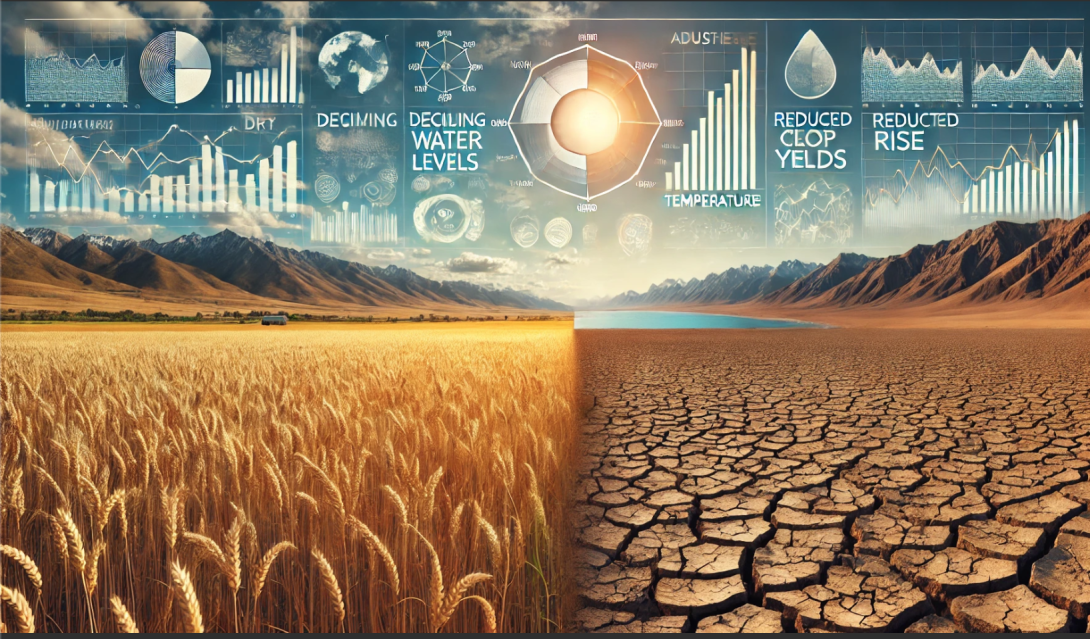
Most likely, the winter of 2025-2026 in the south will be mild with little snow, while in the north it will be slightly colder than usual, in the west colder but dry, and in the east with low temperatures and heavy snow. There are several factors indicating this.
For example, there is not too little, but not too much rowan berries this year. And nature does not strain or generate excess resources if there is no need. Rowan has many berries when the winter is harsh and it is difficult for birds to find food.
Another example is onion skin. If the winter in the south is harsh, then to increase the chances of storage, nature generates dense layers. What about it, friends from Zhambyl, can you confirm? I am told the skin is thin.
But these are all signs, while we rely on scientific data. For instance, a report from the U.S. Oceanic Service has been released, which clearly states:
In October–December 2025, the probability of neutral ENSO decreases (~49–62%), La Niña increases to ~31–41%, El Niño remains <12%
What does this give us in practical terms? A drop in temperature over the Pacific Ocean inevitably alters the entire circulation of the planet.
A powerful hot front will press on Afghanistan, and there will be no precipitation in the south during winter. The winter will be warm with little snow. Diseases will not freeze out, nor will locust egg masses.
La Niña also brings warming to the mountains, meaning there will be catastrophically little water in the 2026 season. Very high risks for the harvest. Bankers can already start preparing safe deposit boxes for early potato producers. Those who can irrigate and grow a crop will hit the jackpot. I think there is every chance to see potatoes at 2000 tenge or higher in the spring.
Western Kazakhstan will experience a severe drought, worse than in 2025, despite a colder winter. The winter is expected to be slightly harsher than usual.
Saiga, if any survive by the end of winter, will increasingly move back to their old lands, which have been taken over by farmers. Farmers' tears will be as believable as official sources — not at all.
The east is expected to experience severe frosts and heavy snowfall. Livestock farmers need to stock up on feed in advance and with a reserve.
In the north, with this La Niña, precipitation is expected in late autumn and early winter — when it is not needed. It will be difficult to harvest sunflowers. Winter crops will likely thrive again, which is logical with abundant early snow in autumn. But it is not certain; overall, snow is expected to be even less than this year.
And there is a threat of prolonged thawing, meaning risks for early spring sowing in 2026. As for whether it will even make sense to cultivate dryland crops in the north — I will say closer to the end of autumn.
But all of this is not certain; trust only official sources. And don't forget to share the link to the post in the building chat.
Comments ()