Shardara received more water than expected — Kazakhstan's water diplomacy worked
As summer 2026 sets European river-shrinking records, Kazakhstan quietly but intensively pursues its own water diplomacy.
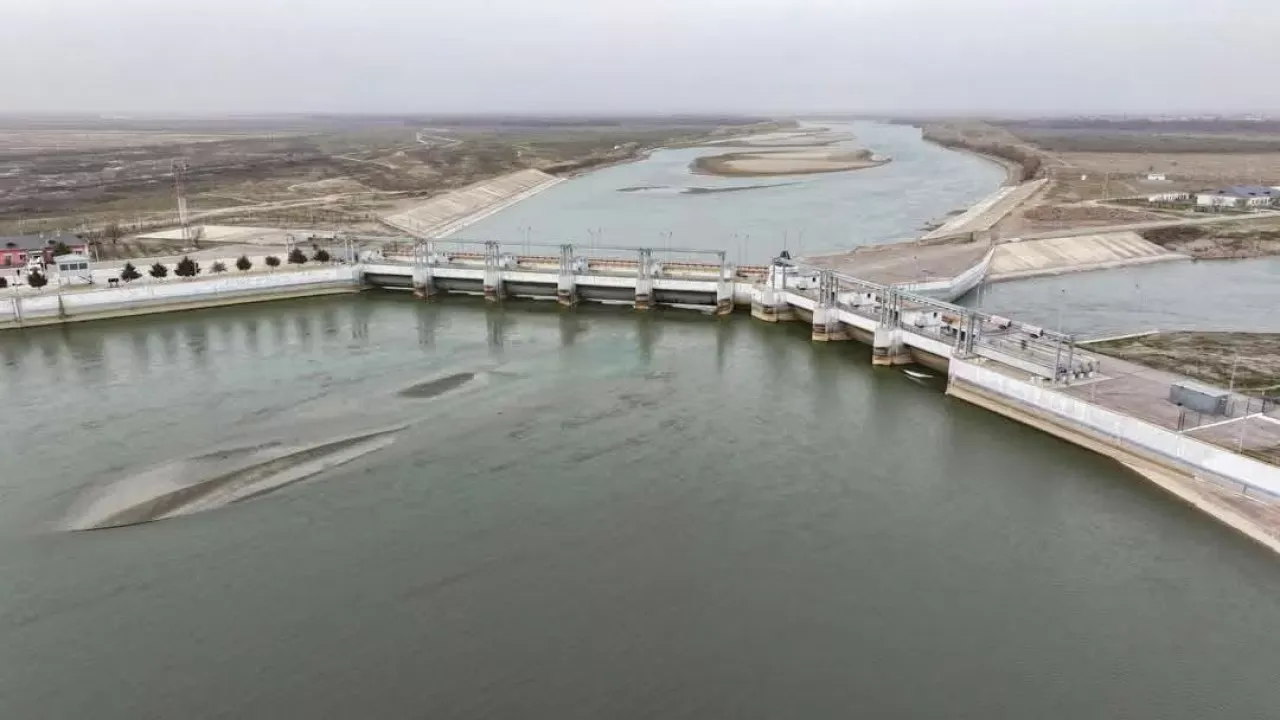
Since the beginning of the year, the country has held 38 negotiations with neighboring states on the management of transboundary water resources — and the result is already visible at a specific reservoir, the Ministry of Water Resources and Irrigation reports.
The gist in brief
- Since the beginning of 2026, Kazakhstan has held 38 negotiations with neighboring states on transboundary water resources — 27 with Central Asian countries, and another 11 with China and Russia.
- Operating regimes for the Toktogul Reservoir and the Uch-Kurgan HPP were coordinated with Kyrgyzstan and Uzbekistan, the Bahri Tojik reservoir and water supply via the Dostyk Canal with Tajikistan and Uzbekistan, and water supply regimes along the Shu and Talas rivers were coordinated twice with Kyrgyzstan.
- The volume of water that entered the Shardara Reservoir during the current vegetation period exceeded forecast figures.
- In early August, the first Department of Water Diplomacy in Kazakhstan was established under the Ministry of Water Resources; another 33 meetings are planned by the end of the year, including the creation of a joint Kazakh-Uzbek commission.
A busy negotiation schedule
The distribution of negotiations shows where Kazakhstan's main interests in the water sector are concentrated: almost three-quarters of the meetings (27 out of 38) were with Central Asian countries, with which Kazakhstan shares the basins of the Syr Darya, Shu, and Talas rivers, while the remaining 11 were with China and Russia, where the country's other transboundary rivers originate.
As the ministry clarifies, Kazakhstan coordinated the operating regime of the Toktogul Reservoir and the Uch-Kurgan HPP with Kyrgyzstan and Uzbekistan for the current vegetation period. With Tajikistan and Uzbekistan, the operating regime of the Bahri Tojik reservoir and water supply via the interstate Dostyk Canal were coordinated.
Shardara received more water than expected
This is a notable turnaround against the backdrop of what was happening with the reservoirs of the Syr Darya cascade quite recently: the 2026 quotas for the Syr Darya had to be cut by almost half precisely because of insufficient filling of the cascade's reservoirs in the previous season. Now the ministry reports that the volume of water entering the Shardara Reservoir during the current vegetation period exceeded forecast figures — a direct result of the coordinated operating regimes of the Toktogul Reservoir upstream. This does not eliminate the structural water deficit in the region, but it shows that intensive negotiations with neighbors can improve specific indicators within a single season.
Department of Water Diplomacy
To coordinate all this work, a Department of Water Diplomacy was established under the Ministry of Water Resources in early August — the first such unit in Kazakhstan's history.
The agency explained its tasks: "The department will coordinate Kazakhstan's participation in standing interstate commissions on transboundary water bodies, support negotiations with partner states, and participate in the preparation and implementation of interstate agreements in the water sector."
The very emergence of a dedicated departmental unit, rather than an ad hoc working group, indicates that the intensity of negotiations in recent months is not a temporary campaign but a new permanent format of work.
What lies ahead
By the end of 2026, the ministry plans to hold another 33 meetings.
"By the end of the year, 33 meetings are planned, including on the creation of a Joint Kazakh-Uzbek Commission, which will become a permanent mechanism for implementing the intergovernmental agreement on joint management and rational use of transboundary water bodies. Also planned are the approval of reservoir operating regimes in the Syr Darya River basin for the inter-vegetation period, joint work with colleagues from the Russian Federation on compiling a water management balance in the basins of transboundary rivers, and other measures," First Vice-Minister of Water Resources and Irrigation Nurlan Aldamzharov outlined the key tasks.
A separate step was the ratification of the agreement signed back in 2025 between Kazakhstan and Uzbekistan on the joint management of transboundary water bodies — the legal foundation on which the newly established bilateral commission now relies.
Author's conclusion
Behind the phrase "water diplomacy" lies a quite measurable result — water that actually reached the Shardara Reservoir beyond the forecast. This shows that for Kazakhstan, negotiations with neighbors on transboundary rivers are no longer an episodic response to a crisis like last year's quota cuts, but have become systematic, institutionally entrenched work with its own departmental unit and a busy schedule of meetings for years ahead.

Comments ()