Georgia builds 360 MW total capacity hydropower plants for energy independence
Georgia is building several hydropower plants at once to tackle its long-standing seasonal electricity shortages.
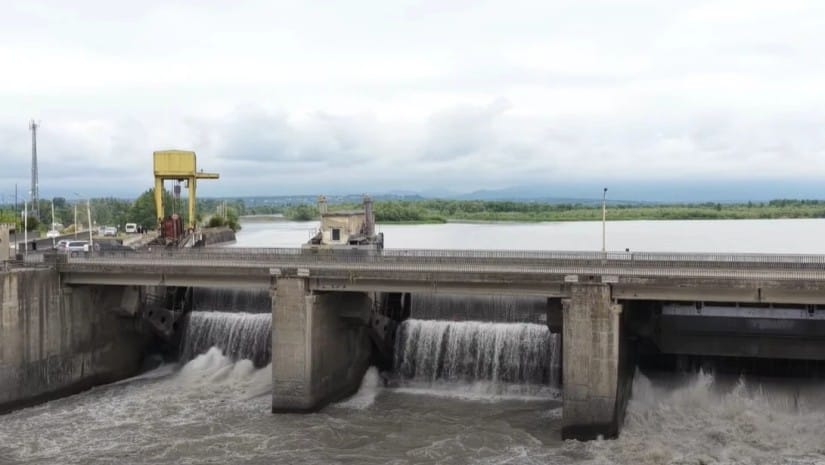
Investments in facilities already under construction exceed half a billion dollars — and this is only part of a far more ambitious ten-year plan.
The gist
- Hydroelectric power plants with a combined capacity of 360 MW are simultaneously under construction in Georgia, with project investments exceeding $500 million; some of the plants are already entering the final stage of construction.
- The goal of the long-term strategy and the government's ten-year plan is the country's full energy self-sufficiency by 2036; hydropower already accounts for 70–80% of all electricity generation in Georgia.
- The key problem of the sector is seasonality: in spring and summer, the country fully covers domestic demand and even exports electricity, while in winter, due to reduced water resources, it has to import electricity and rely on gas-fired thermal power plants.
- In addition to facilities already under construction, HPPs with a total capacity of over 1,000 MW and an estimated investment volume of $1.7 billion are at the feasibility study stage.
The seasonality problem and its solution
Georgia's Minister of Economy Mariam Kvrivishvili linked the development of the energy sector directly to the country's strategic security: "The development of the energy sector is of paramount importance for our country. This importance, of course, goes beyond simply strengthening the economy and also affects energy security."
The key engineering challenge that the new projects address is smoothing out the seasonal fluctuation in generation. Conventional run-of-river HPPs depend on the current water flow in the river, so in winter, when water resources are depleted, generation drops sharply. Plants with reservoirs solve this problem differently — they accumulate water during periods of high flow to use it precisely in winter, when the deficit is most acute. A telling example is the "Stori" HPP cascade in Kakheti (25 MW) and "Stori-2" (12 MW) with a combined capacity of 37.6 MW and an estimated annual output of 208 million kWh, whose connection to the unified power grid is scheduled for the end of this year.
Parallel grid modernization
The construction of new generation capacity in Georgia is accompanied by an equally important, though less visible, effort — strengthening the domestic power transmission networks. The Ministry of Economy is incorporating into its strategy the construction and modernization of substations and transmission lines, which should ensure the integration of new generating capacities into the grid and improve the overall stability of the power system. This is a common but not always obvious detail of such national energy programs: new plants alone are not enough if the transmission infrastructure cannot accept and distribute the additional output.
Why this matters for Kazakhstan
Georgia's approach — building small and medium-sized hydroelectric plants in parallel with larger projects, relying on existing water infrastructure where possible — resonates with the direction Kazakhstan is also developing. We have already written that the country has identified 32 water management facilities for the phased construction of small HPPs, seeking to obtain additional generation through the existing reservoir infrastructure. The difference in scale is significant — Georgia is betting on hydropower as its primary source (70–80% of generation), whereas for Kazakhstan this technology remains an auxiliary direction alongside coal, nuclear, and other renewable generation — but the very logic of converting existing water facilities into a source of additional energy is being applied in both countries simultaneously.
Part of a broader hydropower wave
The Georgian construction drive is not an isolated regional case but part of a far larger transformation currently unfolding across several post-Soviet countries. In Central Asia, Kyrgyzstan, Kazakhstan, and Uzbekistan are jointly advancing the construction of the Kambar-Ata-1 HPP with a capacity of 1,860–1,880 MW on the Naryn River — a project worth $4–6 billion that had been stalled since Soviet times and gained new momentum only after the countries agreed on joint financing and share distribution. In parallel, Tajikistan continues the construction of the Rogun HPP, which upon completion with a capacity of 3,600 MW will become the largest hydroelectric plant in the region, while Kyrgyzstan has separately begun construction of the Kazarman HPP cascade — one of the largest energy projects in the country's history of independence. If ten years ago the region's main focus was on operating the Soviet energy legacy, today several countries — from the Caucasus to Central Asia — have almost simultaneously embarked on creating a new generation of hydropower infrastructure.
Author's conclusion
Georgia's strategy demonstrates a consistent, phased approach to achieving energy independence — not a one-off megaproject but a multitude of parallel construction sites of varying scale, complemented by grid modernization and the resolution of the specific engineering problem of seasonality through reservoirs. But the Georgian case is also interesting because it fits into a much broader picture: from the Caucasus to Central Asia, countries in the region have almost simultaneously taken on the large-scale renewal of hydropower infrastructure that had remained in the shadow of the Soviet legacy for decades. The goal of Georgia's full energy self-sufficiency by 2036 looks ambitious, but it rests on the same logic as Kambar-Ata-1, the Rogun HPP, or Kazakhstan's small HPPs — turning water from a source of regional disputes into a foundation for long-term joint investments.
Comments ()