Global gas demand hit a record 4.2 trillion cubic meters in 2025.
Global natural gas market hits record highs for the second straight year—demand, supply, and LNG trade volumes all set new peaks.
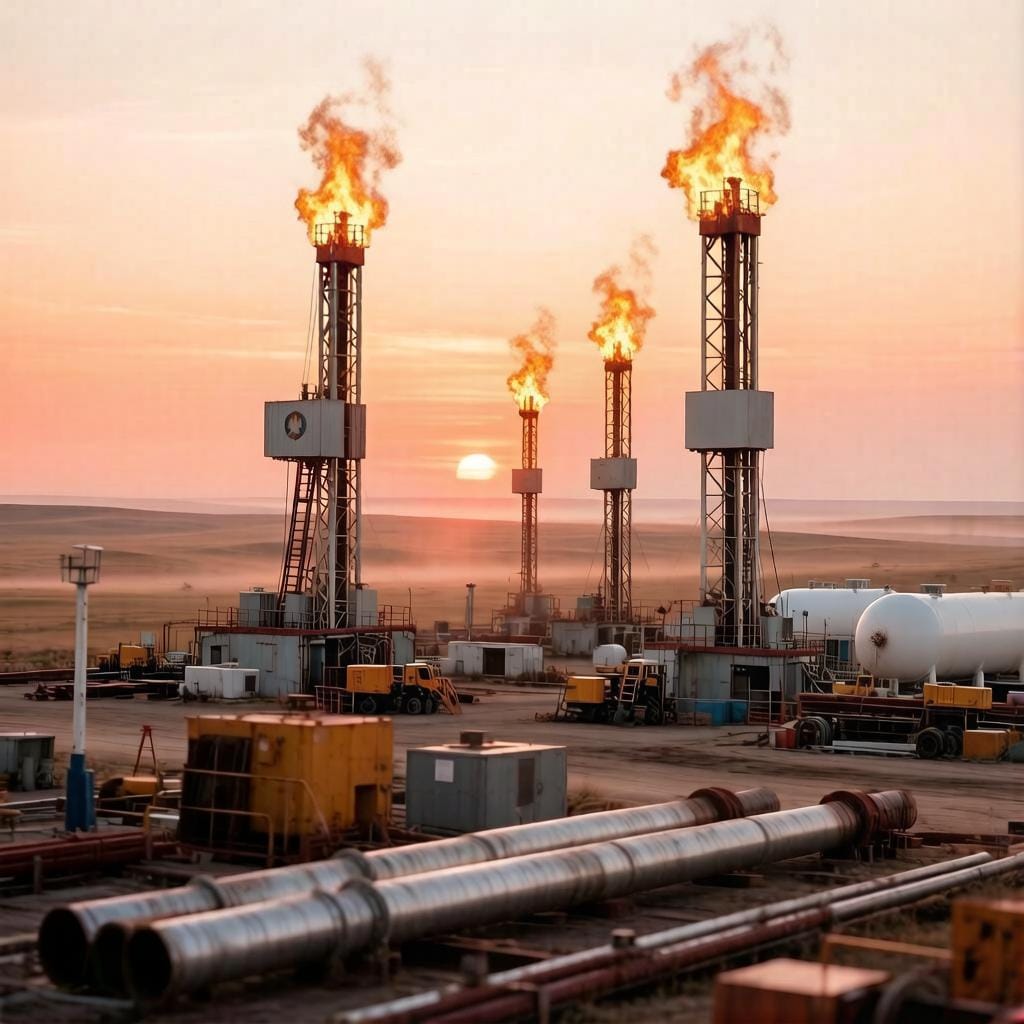
A fresh industry report shows that even amid the accelerated transition to renewable energy, gas remains one of the main energy sources for the growing global economy.
The gist in brief
- Global demand for natural gas grew by 1.7% in 2025 and reached a record 4.202 trillion cubic meters — according to the "Global Gas Report 2026," prepared by the International Gas Union (IGU) and Snam.
- At the same time, both gas supply (4.147 trillion m³, +52 billion m³) and global trade in liquefied natural gas (LNG) reached record levels — more than half of Europe's LNG imports were supplied by the United States.
- The main increase in demand came from Asia — +25 billion m³, of which 64% was driven by the power sector and residential/commercial consumption, primarily in East and Southeast Asia.
- According to the report's authors' forecast, after a record 2025, global gas demand in 2026 may decline slightly — by approximately 7 billion cubic meters.
Who drove demand growth and at whose expense
The geography of demand growth is telling: Asia accounted for the bulk of the increase, with nearly two-thirds of that growth coming not from industry but from the power sector and residential consumption — meaning gas is increasingly replacing other energy sources in the everyday power supply of the region's growing economies. The report separately highlights Turkey, where gas demand grew by 4 billion cubic meters over the year — a notable figure for a country that has long been building its own strategy of diversifying energy sources among coal, gas, and renewables.
LNG record and the role of the US
Global trade in liquefied gas grew in parallel with demand, setting its own historical maximum. The structure of European imports is telling: more than half of the LNG arriving on the continent was supplied by the United States — a figure reflecting the reorientation of the European gas market after years of reducing dependence on pipeline supplies from Russia. For gas-exporting countries overall, this means the LNG market has firmly established itself as an independent and growing segment of global energy, rather than a temporary alternative to pipeline gas.
Why the 2026 forecast is more modest
The projected slight decline in demand in 2026 is not so much a signal of crisis as of natural fluctuation around an already achieved high level: 2025 turned out to be so strong that even maintaining demand at roughly the same level in 2026 would mean cementing the record rather than falling back to the lower figures of previous years. Such dynamics are typical of mature, saturated markets — rapid quantitative growth gradually gives way to smoother fluctuations around a new, higher baseline level.
Why this matters for Kazakhstan
Record global gas demand creates a favorable backdrop for Kazakhstan's gas industry, which is going through its own phase of expansion. The gas industry development program envisages increasing the resource base by 10% by 2029, and the key source of growth in marketable gas should be the construction of new gas processing facilities at the country's largest fields — Karachaganak and Kashagan — capable of delivering around 7.5 billion m³ of additional marketable gas per year. With growing global demand and record LNG prices, such projects gain additional economic momentum: the higher global demand, the more profitable it becomes to direct additional gas volumes not only to the domestic market but also to exports.
Author's conclusion
The simultaneous record in demand, supply, and LNG trade shows that the global gas market in 2025 went through not a crisis but a phase of sustained expansion — despite regular predictions of the imminent decline of fossil fuels amid the energy transition. For countries like Kazakhstan, which are ramping up their own gas processing and export potential, this means the window of favorable market conditions remains open — although the projected slight decline in demand in 2026 already serves as a reminder that such records cannot last forever.

Comments ()