Horses go to China and Afghanistan, sheep to Uzbekistan. Kazakhstan increased livestock exports by 1.7 times.
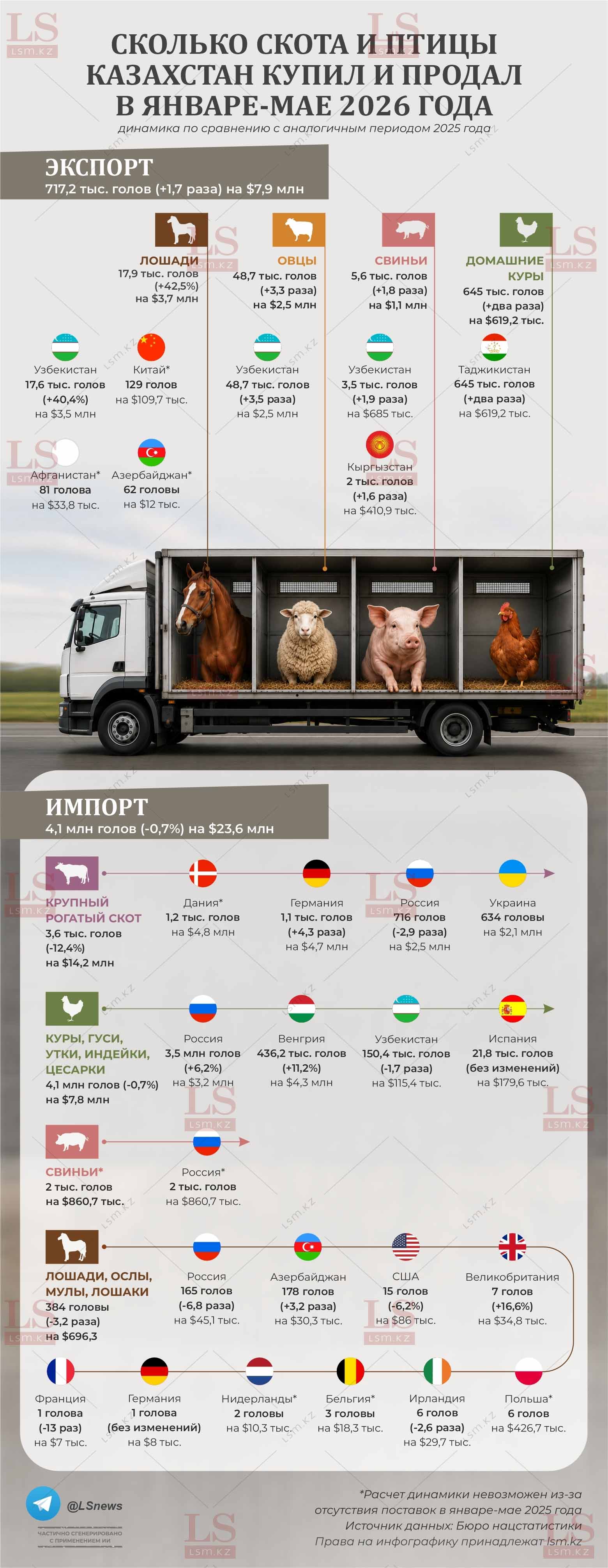
Kazakhstan exported 717.2K head of livestock and poultry worth $7.9M in Jan–May 2026, up 1.7x year-on-year.
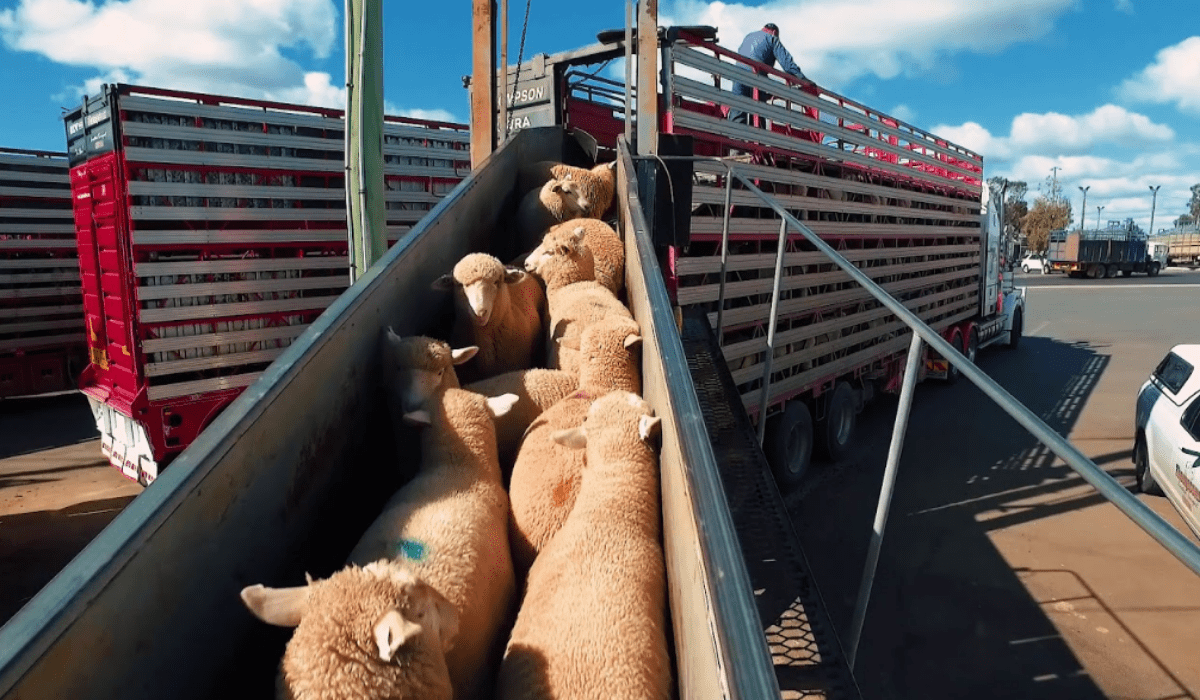
According to lsm.kz, the main growth drivers are chickens to Tajikistan and sheep to Uzbekistan. At the same time, livestock imports have declined — the country is gradually becoming a net exporter of live animals.
The gist
- Livestock and poultry exports grew 1.7-fold — 717,200 head worth $7.9 million. The main item is chickens (645 thousand head, a 2-fold increase), all shipped to Tajikistan.
- Sheep exports grew 3.3-fold — 48,700 head, with the entire volume purchased by Uzbekistan.
- Horse exports grew by 42.5% — 17,900 head. The main buyer is Uzbekistan (17,600), with small batches sent to China (129 head), Afghanistan (81), and Azerbaijan (62).
- Imports of livestock and poultry declined by 0.7% — 4.1 million head. Kazakhstan imports mainly day-old chicks from Russia, Hungary, Uzbekistan, and Spain.
- Cattle imports declined by 12.4% — to 3,600 head (Denmark, Germany, Russia, Ukraine). Horse imports fell 3.2-fold — to 384 head.
Who Kazakhstan sells to and what
The export structure reflects the demand of its closest neighbors. Tajikistan takes chickens — the country is expanding its poultry industry and needs day-old chicks. Uzbekistan is actively purchasing several species at once: sheep (+3.5 times), horses, and pigs. This aligns with the growth of Uzbek livestock farming and the overall increase in trade turnover between the two countries.
The appearance of China and Afghanistan on the list of buyers of Kazakh horses is an interesting detail. The volumes are still small (129 and 81 head respectively), but the very fact that these markets are present indicates a broadening geography.
Imports are declining — but chicks are still needed
Despite export growth, Kazakhstan remains a major poultry importer — 4.1 million head of day-old chicks for flock reproduction. The main supplier is Russia (3.5 million), followed by Hungary (436,200) and Uzbekistan (150,400). This is a structural feature of the poultry industry: producing broilers and eggs requires a constant supply of breeding birds, which Kazakhstan does not yet produce in sufficient volume.
Cattle imports are declining — which is logical given the restrictions on beef exports and the focus on saturating the domestic market.
Author's conclusion
The 1.7-fold growth in live livestock exports is a signal that Kazakh livestock farming produces more than the domestic market consumes. Uzbekistan is becoming the main buyer — for sheep, horses, and pigs alike. The next step, which state policy has been talking about in recent months, is to export not live livestock but processed products with higher added value.

Comments ()