HOW DRINKING WATER IS POLLUTED IN ASTANA
Astana's tap water has long failed to meet required standards. We investigate what's wrong with the capital's water supply.
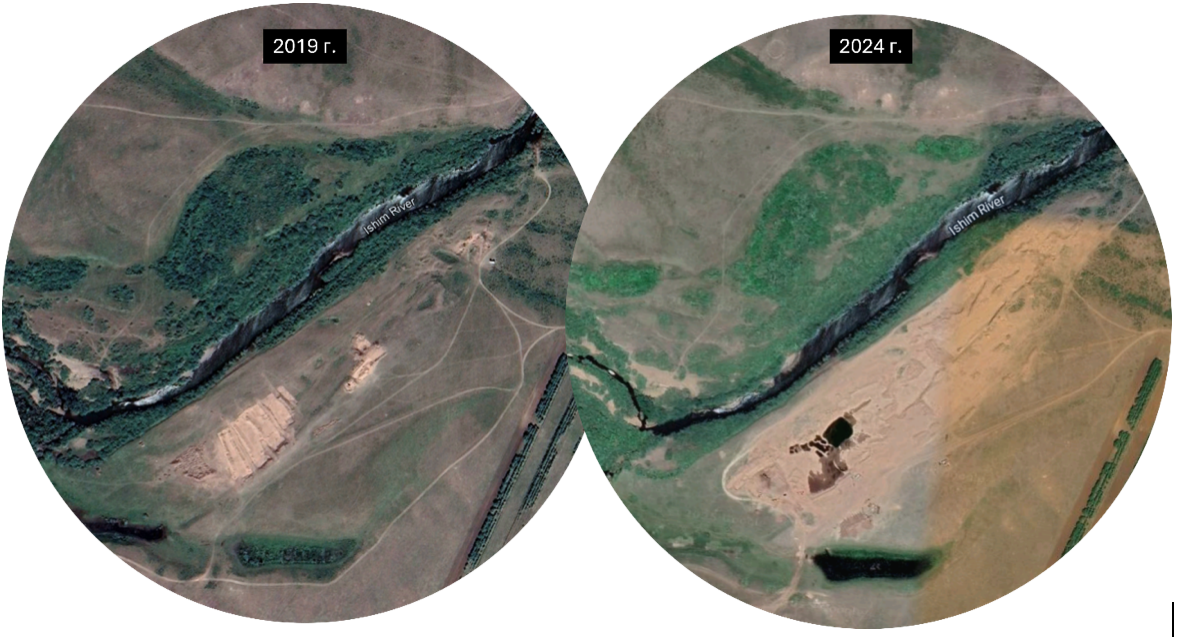
Recently, the Information Bureau published a report that the water quality in the Vyacheslav Reservoir, which supplies drinking water to Astana, has deteriorated to Class 4. Such water can only be used for irrigation or technical purposes and is not suitable for drinking.
Then the Ministry of Water Resources and Irrigation responded, claiming that the samples were taken from the wrong place or using the wrong system — in short, that the testing was done incorrectly. After that, I immediately wanted to go and take water samples for an independent analysis.
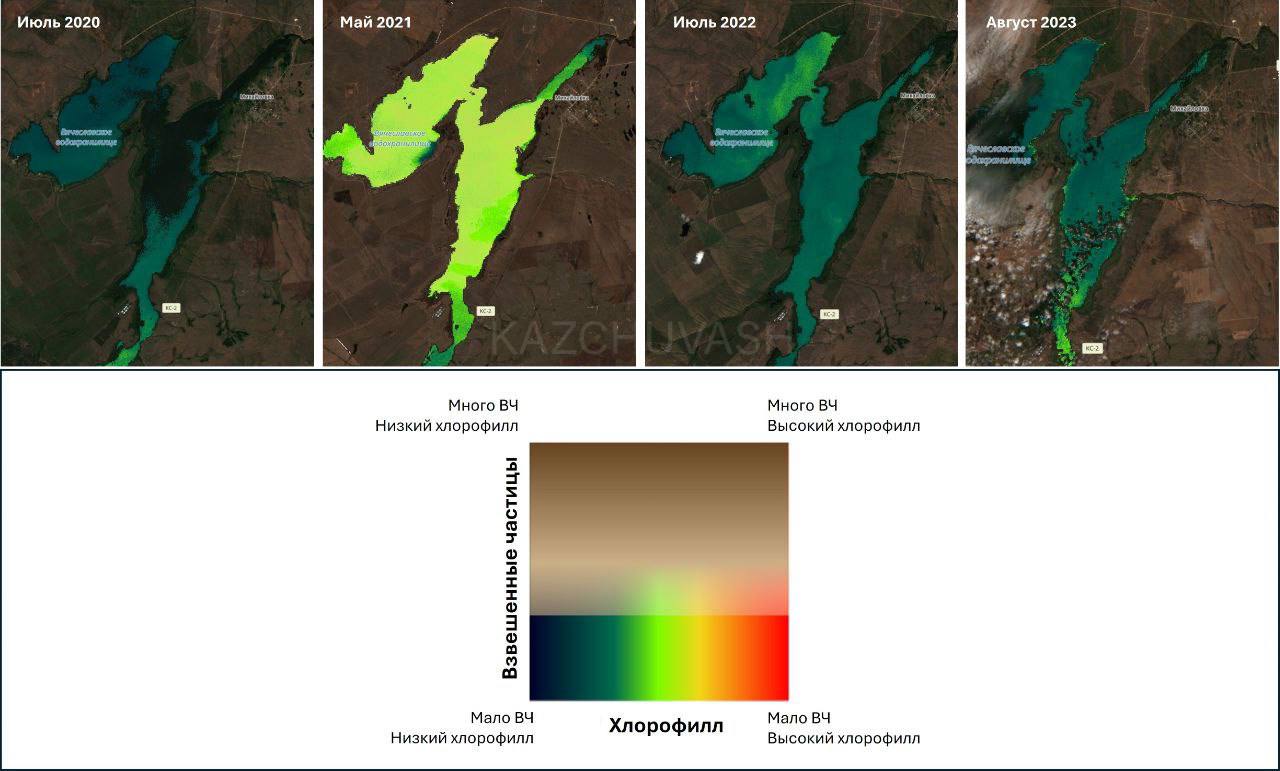
First, we decided to see what satellite images would show. And after viewing them, the desire to go for water samples grew even stronger. A basic analysis of tap water for mineralization levels shows a particle content of about 250 ppm. The optimal level for drinking is 100. 250 is already the level of low-mineralized water. But the thing is, the Vyacheslav Reservoir is not a mineral spring, so let's try to understand what minerals are there and what consequences this might have.
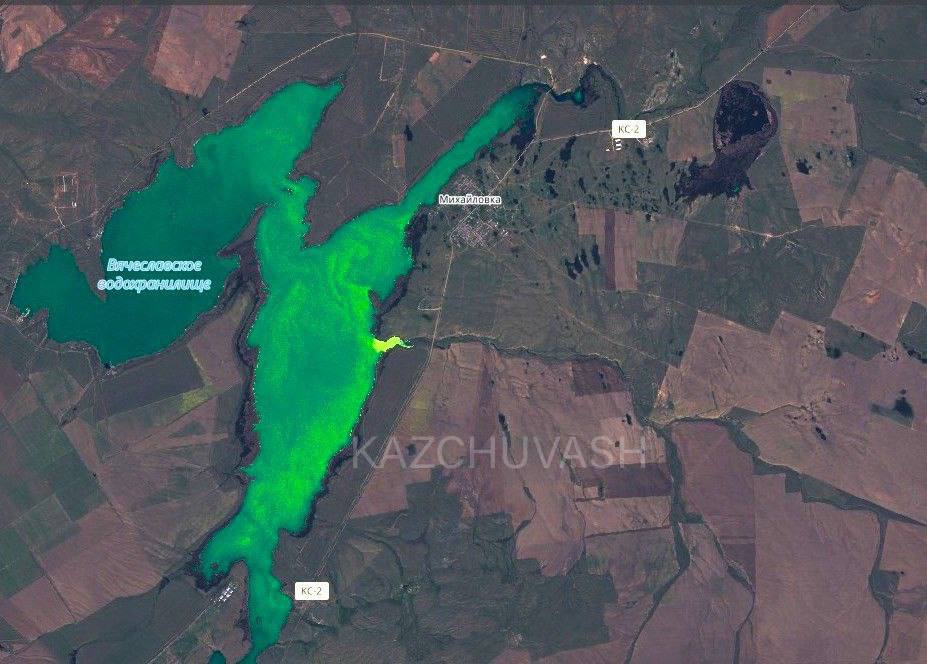
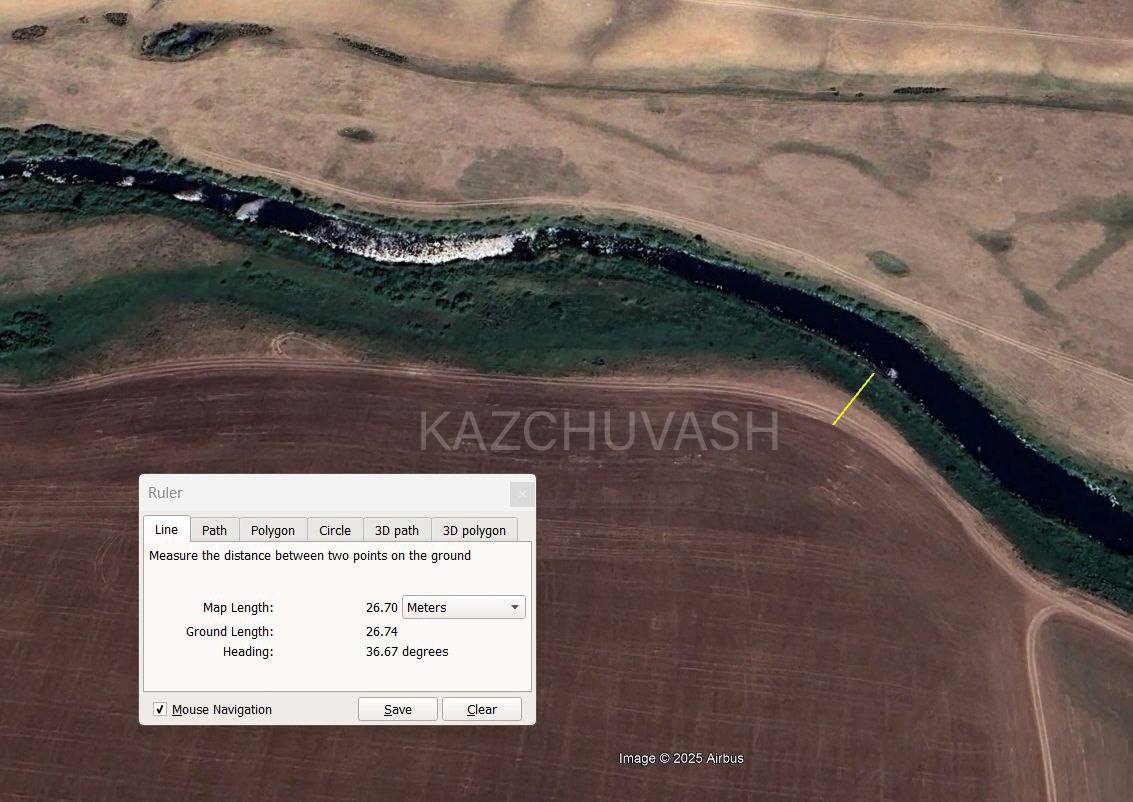
On the satellite images, suspended particles and chlorophyll are highlighted in bright green. They are very active in the area where a small river flows into the reservoir (on the right). And along this river, and other small tributaries feeding into it, upstream — there are huge plowed fields. In some places, at a distance of about 25 meters from the river. It must be understood that meltwater and rainwater wash all the chemicals used for treatment from the fields and deliver them directly into the reservoir. Last year's floods made this several times worse.
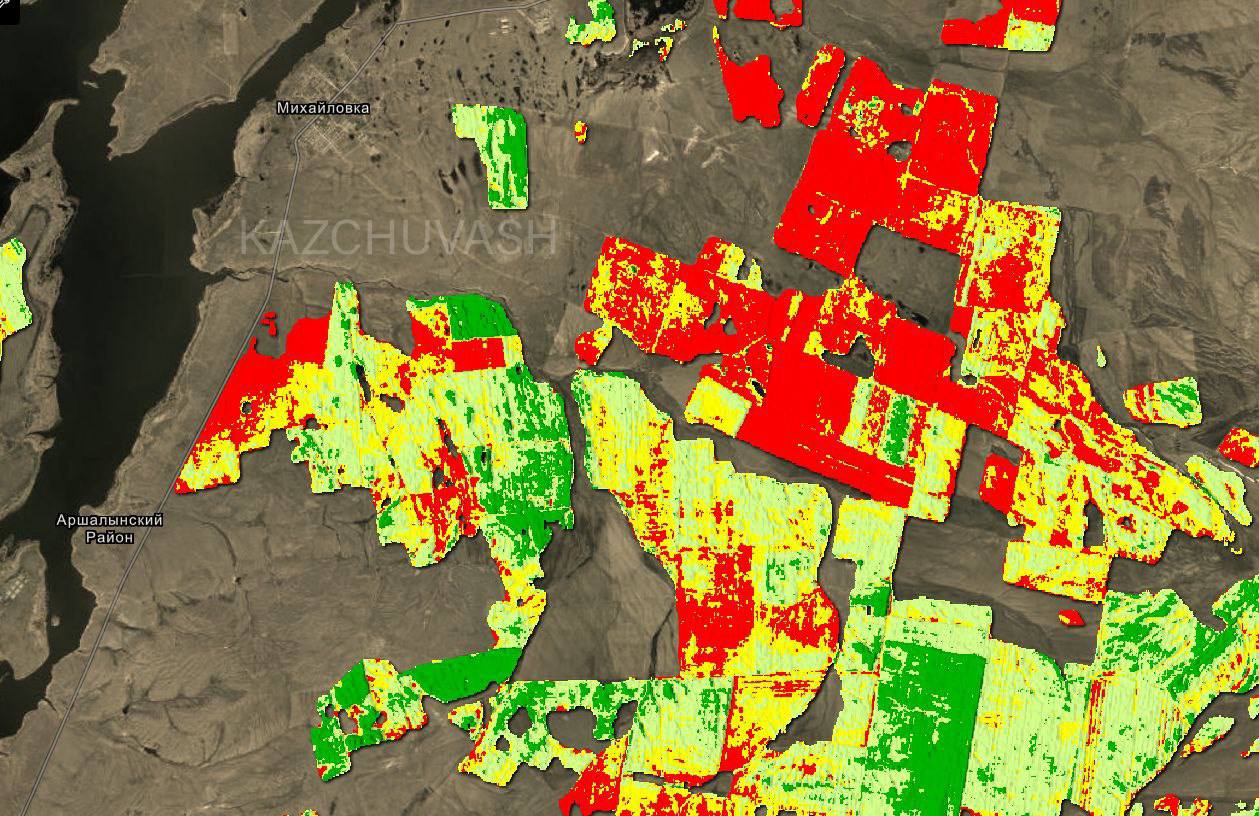
Nitrogen fertilizers are the most widely used in agriculture, and chlorophyll loves nitrogen. As a result, the runoff of organic matter and fertilizer residues causes eutrophication — rapid algae growth and a drop in oxygen levels in the water to critical levels (3.5-4.2).
It is important to note that the fields are located in close proximity to the water; there is no water protection zone anywhere nearby. However, there are fences and barriers — you cannot drive up to the water. It was not possible to take samples in that location. But such barriers will not stop the water, and it will wash away everything that farmers spray and pour onto the land.
Without delving too deeply into agrochemistry, let's look at the main substances used in agriculture in these areas and the consequences of their entry into the human body.
Glyphosate — cell mutation, endocrine system disruption. Destroys aquatic systems, can accumulate in fish and other aquatic organisms.
Nitrate (Saltpeter) — cancers of the gastrointestinal tract. Causes eutrophication — water blooms and rapid algae growth (as mentioned above), while killing fish.
Ammonium phosphate — increases water acidity, can disrupt kidney and cardiovascular system function. Causes eutrophication, fish die, and the water becomes undrinkable.
Insecticides — from weakened immunity and nervous system damage to cancer and infertility.
Herbicides (2,4-D (phenoxyacetic acid), tribenuron-methyl, dicamba) — when entering the body, they damage the liver, affect hormonal balance, and cause cell mutations.
If we continue like this, no matter how many filtration stations Kassymbek installs, it will be useless.
By the way, an investigation was published on FBRK — WHO exactly is contaminating the water in Astana — who owns these huge fields.
Comments ()