Hunger is becoming a new global threat. The UN is sounding the alarm for 13 countries at once.
A new FAO-WFP report warns of worsening food crises in several regions, with 13 countries facing severe hunger in the coming months.
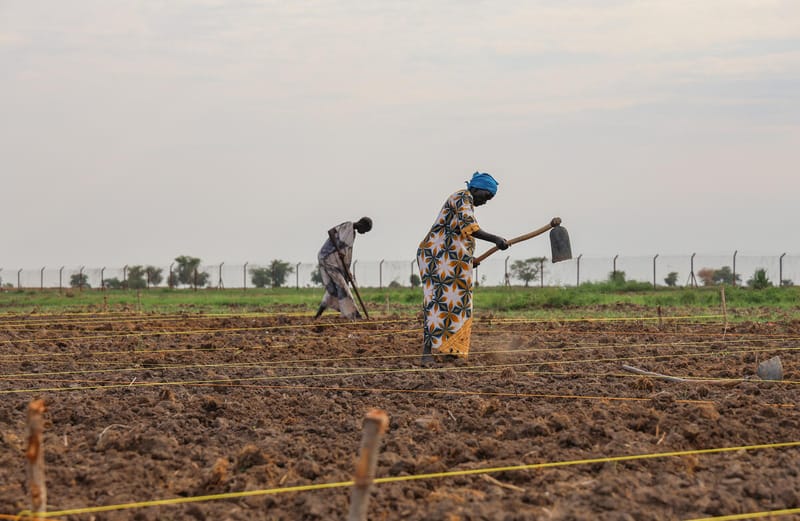
The Food and Agriculture Organization of the United Nations (FAO) and the World Food Programme (WFP) published a new "Hunger Hotspots" report: acute food insecurity is expected in 13 countries between June and November 2026. Sudan, South Sudan, Yemen, and Palestine remain the most critical areas. At the same time, funding for food assistance has fallen by 59% between 2022 and 2025 — to levels not seen in nearly a decade. For Kazakhstan, a major grain exporter, the situation has a direct strategic dimension.
The Gist
- FAO and WFP have identified 13 countries and territories where food insecurity is expected between June and November 2026. Sudan, South Sudan, Yemen, and Palestine are recognized as the most critical zones in terms of the scale and severity of the crisis.
- Nigeria has entered the highest concern category for the first time: around 34.8 million people will face acute food insecurity from June to August 2026, including 15,000 in Borno State at catastrophic levels.
- Four hotspots — Sudan, South Sudan, the Gaza Strip, and Somalia — face the risk of famine at some point in 2026 or are expected to retain this risk during the forecast period.
- Conflict remains the primary driver of hunger, affecting 12 out of 13 hotspots.
- As of June 2026, only about one-third of priority food security funding needs have been met — forcing extremely difficult decisions.
Sudan: The World's Worst Food Crisis
Sudan remains the world's worst food crisis: the risk of famine in parts of Darfur and South Kordofan is expected through early 2027. Earlier this year, nearly 20 million people faced crisis-level hunger or worse.
The risk of famine has been identified in 14 areas of North Darfur, South Darfur, and South Kordofan through September 2026 and is expected in 13 areas during the harvest period through January 2027.
The Global Picture: Numbers That Cannot Be Ignored
318 million people were already facing crisis-level hunger or worse; in 2026, this is double the pre-pandemic level. Over the past decade, acute hunger has doubled, and for the first time in the report's history, two famines have been declared simultaneously — in parts of Gaza and Sudan.
In many hotspots — Sudan, South Sudan, Yemen, Palestine, Nigeria, and Somalia — overlapping conflicts, climate shocks, and macroeconomic pressures continue to worsen acute food insecurity.
WFP's Acting Executive Director Carl Skau warned: "The warnings in this report cannot be ignored. Conflicts, shocks, and disasters are forcing families to make impossible decisions about who eats and who goes to bed hungry. Without action now, millions more will face worsening hunger levels."
Funding Has Collapsed — At the Worst Possible Time
What is particularly alarming is not just the scale of the crisis itself, but its combination with a sharp decline in funding. Support for food assistance, emergency agricultural programs, and nutrition in crisis zones fell by 59% between 2022 and 2025 — to levels not seen in nearly a decade.
FAO and WFP called on governments and donors to immediately increase support. FAO noted that emergency agricultural support remains one of the most effective ways to help families continue producing food and reduce dependence on aid.
The Kazakhstan Context
For Kazakhstan, which is among the world's top ten wheat exporters, the global hunger crisis is not an abstract humanitarian issue. Countries on the hotspot list — Yemen, Somalia, Sudan — are historically or potentially markets for Kazakh grain. Sustained demand for food in crisis zones creates both export opportunities and reputational responsibility: as hunger grows, the role of major grain-producing countries in ensuring food availability becomes politically significant.
At the same time, the reduction in humanitarian program funding means that WFP procurement mechanisms — the largest buyer of grain for humanitarian aid — will operate under tight budget constraints. Kazakh exporters and the Ministry of Agriculture should consider this dynamic when formulating their export strategy.
Author's Conclusion
The FAO and WFP report captures a troubling paradox: the crisis is escalating while aid funding is falling. The window to prevent the worst-case scenarios is narrowing — and, according to the report's authors, it is still possible to act, but only with immediate measures. For a world that produces enough food for everyone, this is primarily a question of political will and resource allocation — not capability.
Comments ()