IEA: Global funding for energy innovation is slowing — but the battle for batteries is just heating up
IEA's "State of Energy Innovation 2026" report: US R&D budget fell by 8%, hydrogen projects face delays.
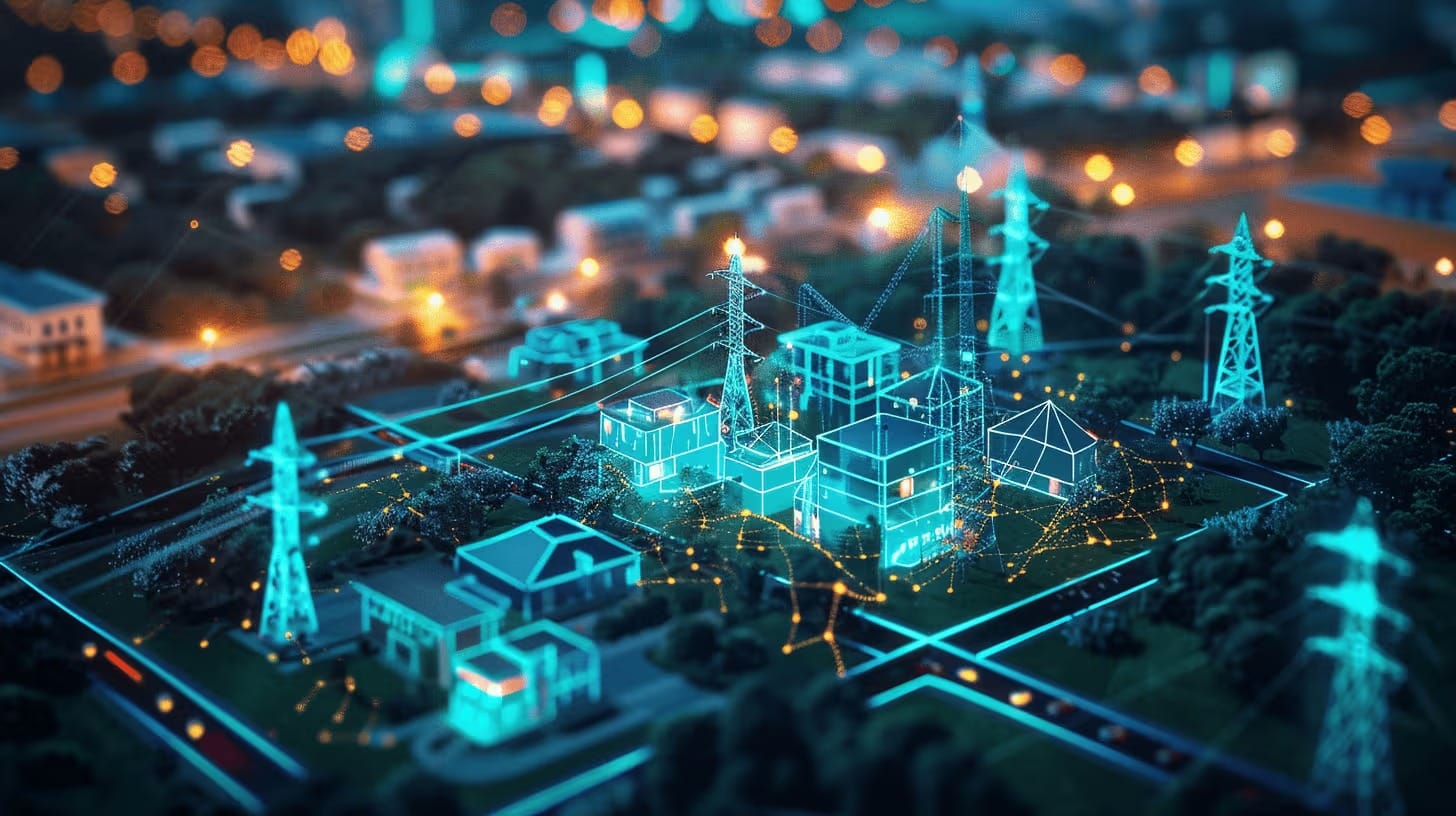
The International Energy Agency published the second edition of its report "The State of Energy Innovation 2026." The picture is mixed: on one hand, record technological activity, with more than 150 significant breakthroughs in a year. On the other hand, government funding for R&D is shrinking, hydrogen projects are delayed, and venture capital in the energy sector has been flowing towards AI for the third consecutive year. For Kazakhstan, which aspires to be a link in the new technological chain, the IEA report is an accurate map of where money and investor interest are concentrated today.
The Gist in Brief
- In the IEA expert survey, 80% of respondents ranked energy security among the top three drivers of innovation in 2025 — above affordability, emissions, and economic efficiency.
- Global government spending on energy R&D in 2025 decreased by 2% to $55 billion. The U.S. energy R&D budget fell by 8% in 2025.
- Venture capital investment in energy startups has declined for the third consecutive year, reaching $27 billion in 2025. AI's share of venture funding rose to nearly 30%, while the energy sector's share shrank — large non-specialized funds are shifting from energy to AI.
- The share of energy storage in total energy patents reached an unprecedented 40% in 2023 — no other energy technology has ever held such a share.
- China filed twice as many international patent applications in energy in 2023 as in 2020 — double the number filed by the US, Japan, or Europe combined.
Security Over Price — A Paradigm Shift
The main shift identified by the report is the changing motivation for innovation. The context of energy innovation is now moving towards competitiveness and security. Many 2025 policies, including the US Genesis Mission and the proposed EU Competitiveness Fund, promote technological strength for economic competition and energy security — which could boost technologies for critical minerals, nuclear energy, electricity grids, and domestic energy resources.
This is a fundamentally different logic from the climate agenda that dominated just a few years ago. Countries are no longer investing in energy innovation solely to reduce emissions — they are doing it for independence from external suppliers and geopolitical stability.
Government Money Works — But There's Less of It
The IEA report provides compelling historical evidence for public investment: floating LNG (FLNG) plants, initially funded by European governments in the late 1990s, will account for more than one-eighth of global LNG capacity by 2030 — up from zero a decade ago. Lithium-ion batteries also began with government funding in the 1970s: the first patent was funded by the UK government in 1981.
The economic impact of such investments is enormous: cost-benefit estimates typically show that the economic returns from government energy R&D are several times — and sometimes a hundred times — greater than their cost. The most comprehensive retrospective assessments of long-term US programs showed benefits to the US economy at least three times greater than the costs.
However, it is precisely at this moment that government funding is beginning to decline. Total government spending on energy R&D in IEA countries is about 0.05% of GDP — significantly below the 0.1% seen after the oil shocks of the 1970s.
The Battery Revolution in Patents
The most telling indicator of the energy future is patent statistics. The share of energy storage in total energy patents rose to 40% in 2023, and preliminary data suggests it will continue to grow in 2024–2025. This reflects the strategic importance of batteries for modern energy security, industrial policy, and grid infrastructure amid rising global electricity demand.
Meanwhile, the balance of power in this technological race is shifting rapidly: in 2010, Japan filed half of all patents for cathode materials; by 2022, its share had fallen below 10%. Over the same period, China's share grew from 4% to nearly 40%.
Regional Picture: China Surges Ahead, US and Europe Hold Their GroundChina's drive for innovation is evident in funding, patenting, and technological achievements. Higher spending by Chinese companies on energy R&D accounts for nearly all the growth in global corporate energy R&D over the past decade — they now provide 60% of corporate R&D in the energy sector and infrastructure.
The US remains an energy innovation superpower: nearly 50% of global venture funding for energy in 2025 went to American startups — more than in 2024. Yearly achievements include the largest solid-state thermal battery, more reliable geothermal drilling, and improvements in lithium-ion batteries with reduced nickel and cobalt content.
Europe is gradually approaching 0.1% of GDP on energy R&D, and European startups received 25% of global venture funding for energy in 2025 — up from 15% five years ago.
Nuclear Fusion: On the Threshold, But Not at the Goal
50 years after the IEA began supporting international cooperation in nuclear fusion, major experimental breakthroughs were achieved in 2025 at government facilities in China, France, Germany, the UK, and the US — with the participation of consortia from over 30 countries. Fusion startups have attracted $10 billion since 2020 — more than 5% of all venture funding for energy.
Nevertheless, the report's authors remain cautious: despite recent attention to designing the first integrated fusion power plants, the fuel cycle and materials are not yet ready for scaling.
Kazakhstan Context
The IEA report captures exactly the logic that Kazakhstan has just entered by signing the Pax Silica agreement: energy innovation today is measured not by the climate agenda, but by criteria of security and supply chain competitiveness. Kazakhstan, with its reserves of critical minerals, finds itself in an advantageous position precisely when the world is reorienting towards technologies that require the raw materials the country has in abundance — for batteries, semiconductors, and energy storage.
The patent shift towards energy storage is particularly significant: for Kazakhstan, which is actively developing renewable energy with integrated storage systems — such as the Masdar wind farm project in the Zhambyl region — this confirms that the country has chosen a technologically sound direction that aligns with the global trend, rather than following an outdated generation model without storage.
The decline in venture funding for energy startups in favor of AI is a warning signal for Kazakhstan's investment attraction policy: competition for capital between energy and AI infrastructure will only intensify, and the country needs to clearly define which specific energy niches it aims to specialize in.
Author's Conclusion
The IEA report paints a picture of the energy world where climate rhetoric gives way to the rhetoric of security and competitiveness — but the fundamental technologies remain the same: batteries, storage, critical minerals, grids. Money continues to flow into this area, merely changing its source and distribution logic. Kazakhstan, possessing the raw material base for precisely these technologies, has a rare window of opportunity — but it is open only as long as the country does not miss the moment when raw materials need to be turned into processing, rather than simply exported.
Comments ()