Is the Amu Darya shallowing, Uzbekistan's Ministry of Water Resources responded
Uzbekistan's Water Ministry responded to social media reports of the Amu Darya drying up, saying river flow persists and lower water levels in some areas in September-October are seasonal.
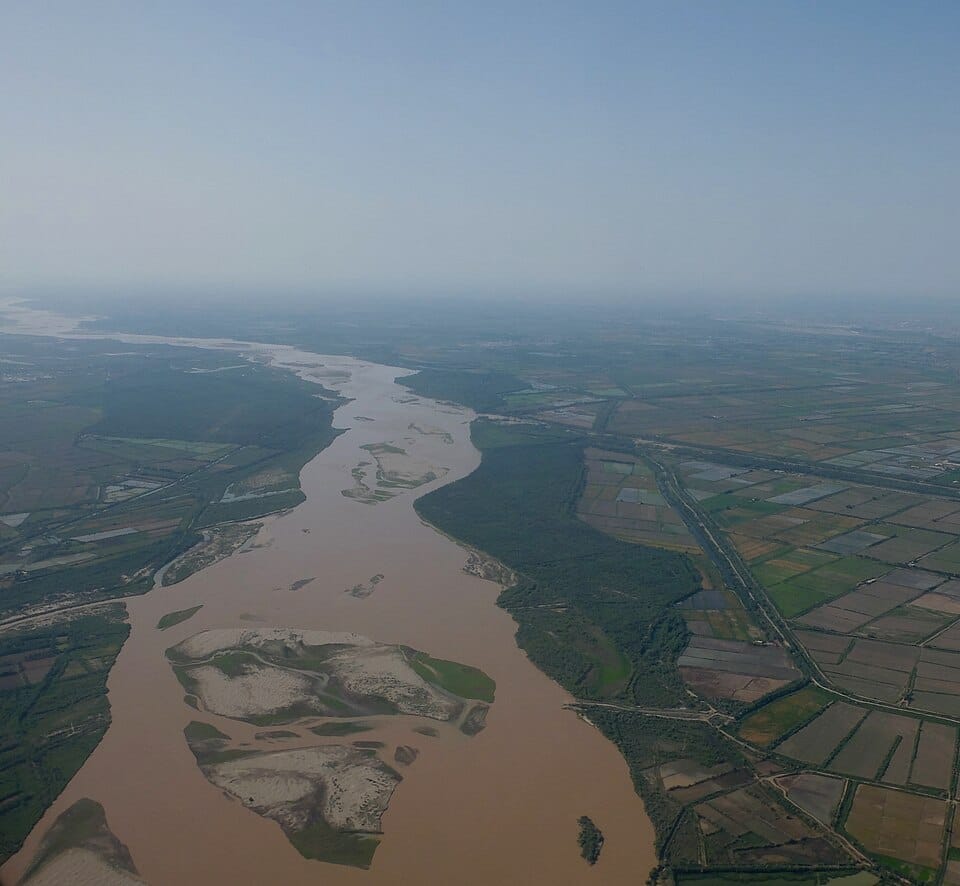
According to the ministry's data as of October 9, in Termez, where the river enters Uzbekistan, the water level is higher than last year, while at Kerki the flow rate is lower, reports Uzdaily.
The gist in brief
- The Ministry of Water Resources of Uzbekistan considers the decline in water level and flow rate in September and October to be a seasonal hydrological process.
- After the end of the vegetation season, reservoirs accumulate water for the next year.
- In Termez, the water level is 239 cm, 27 cm higher than in the same period of 2025.
- At Kerki, the flow rate is 499 m³/s, 63 m³/s less than a year earlier.
What the ministry said
The agency's press service noted that the water flow in the Amu Darya persists. According to it, the flow rate has indeed decreased in certain places, but this is a normal picture for autumn: when the vegetation season ends, water consumption for irrigation drops, and reservoirs in the upper part of the basin begin to store reserves for the next year. The name of the agency's representative is not given in the statement.
The Amu Darya is formed by the confluence of the Panj and Vakhsh rivers, which originate in the mountains of Tajikistan and Afghanistan. The Kafirnigan is named as one of the major tributaries. The Nurek Reservoir is located on the Vakhsh, in the upper part of the basin.
What figures were cited
The data is given as of October 9, 2026.
- Nurek Reservoir in Tajikistan: inflow is 408 m³/s, release is 320 m³/s, water volume is 10 billion 540 million m³. That is, more water comes in than goes out, and the reservoir continues to fill.
- Termez: river level is 239 cm, 27 cm higher than in the same period last year.
- Kerki: flow rate is 499 m³/s, 63 m³/s less than a year earlier. By my calculation, this is approximately 11% below last year's value.
What was not explained
The ministry explains fluctuations during autumn by the seasonal decline, but does not say why at Kerki the flow rate is lower than last year, while in Termez the level is higher. The two measurement points may behave differently because water level and flow rate are different indicators, but this is not analyzed in the statement. There is also no data for other sections of the river or for a longer period.
What this means for Kazakhstan
The Amu Darya does not flow through the territory of Kazakhstan, but it empties into the Aral Sea, which the countries of the region share among themselves. Seasonal fluctuations of the river are one thing, while a long-term decline in flow is another. According to an international study that hunn.kz wrote about, since the middle of the last century the flow of the Amu Darya in its lower reaches has decreased by 77%, and at Kerki by 22%. The authors attribute this primarily to water withdrawal and the expansion of irrigation, rather than to climate. The comparison there is with the period 1931-1950, so it is not comparable with the ministry's annual data.
Five countries of the region, including Kazakhstan, in August launched a program to restore the basins of the Amu Darya and Syr Darya worth $30 million from the Global Environment Facility, which is being implemented by the FAO. Kazakhstan itself is restoring its part of the Aral Sea: under the project "North Aral Sea and Modernization of Irrigation Systems", the first phase provides for 133 measures, with the main work planned to be completed in 2030. Currently, the North Aral Sea holds about 23.4 billion m³ of water versus 18.9 billion m³ at the beginning of 2022, and the goal is 34 km³.
Author's conclusion
The ministry's response relies on the seasonal decline, and the figures for Termez support it, while those for Kerki show a decrease compared with last year. To understand how much the autumn picture differs from the usual one, data over several years are needed, which are not in the statement.

Comments ()