Jordan reveals 80-year uranium reserves and plans to profit not from ore but from technology
Jordan announced proven uranium reserves of 42,000 tons — enough to fuel future nuclear plants for 80 years.
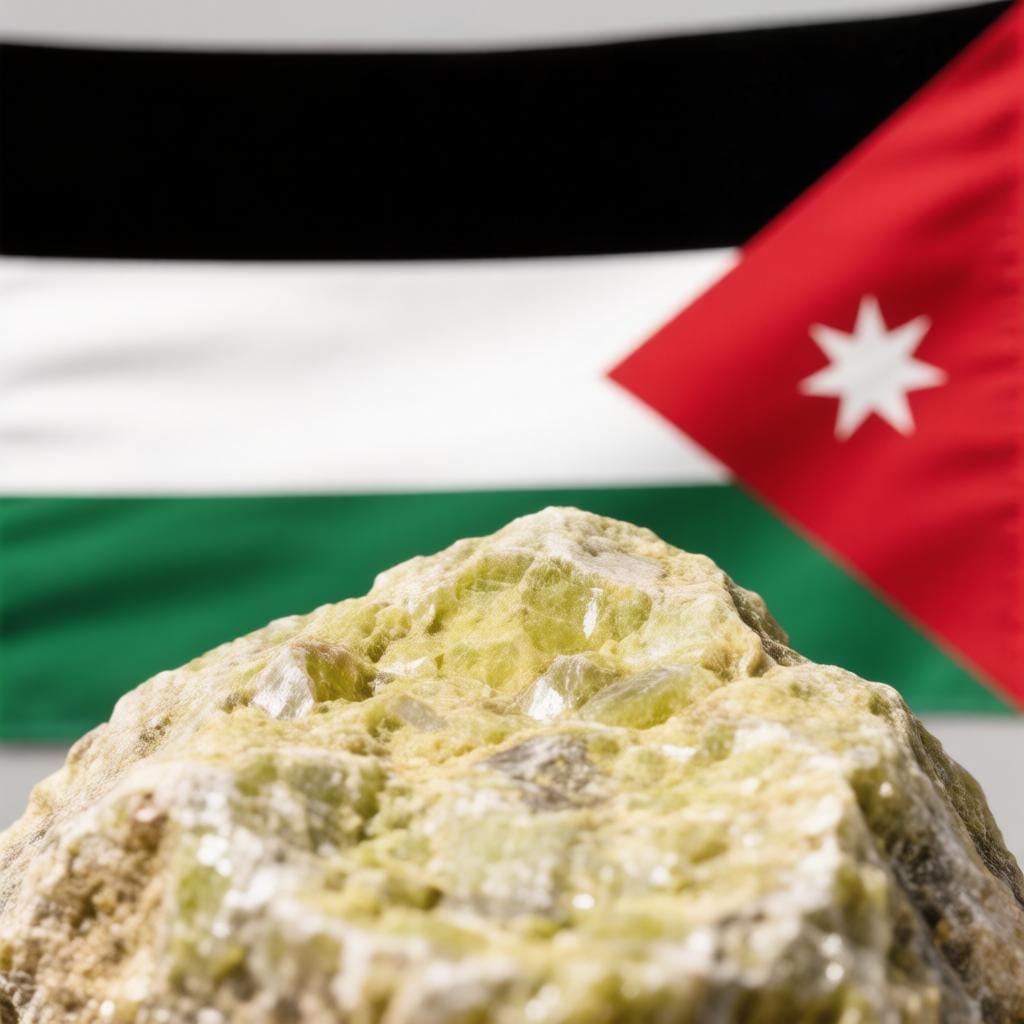
Over the past four years, global uranium prices have risen from $18 to $86 per pound, transforming Jordan's deposits from a promising asset into an economically attractive project, writes the publication Atomic Energy 2.0. But Amman's ambitions extend far beyond simple mining: the country intends to develop nuclear technologies, including neutron implantation for the semiconductor industry. For Kazakhstan — the world's largest uranium producer — the emergence of a new player with a similar strategy of "not selling raw materials" deserves close attention.
The Gist in Brief
- The Chairman of the Jordan Atomic Energy Commission (JAEC), Dr. Khaled Toukan, announced proven uranium reserves of 42,000 tonnes — enough for 80 years of operation for the country's future nuclear power plants.
- Jordan has already processed 1,500 tonnes of uranium ore, yielding 150 kg of uranium concentrate ("yellowcake"). The target is 500 tonnes of uranium per year.
- Global uranium prices have risen over 4 years from $18 to ~$86 per pound — making Jordanian projects economically viable.
- Jordan is not limiting itself to mining: plans include neutron implantation for the semiconductor industry and the construction of nuclear power plants to reduce dependence on imported energy sources.
- The country's strategy is not to sell raw materials, but to create added value through strategic partnerships in high-value stages of the nuclear cycle.
Why Now Is No Coincidence
Jordan did not just discover its uranium reserves yesterday. The country has been studying the deposits for decades, but low uranium prices made mining unprofitable. At $18 per pound — the level at which the market stood for most of the 2010s — Jordanian uranium was of interest to geologists, but not to investors.
The price increase to $86 per pound is the result of several factors: a global renaissance of nuclear energy, Western countries moving away from Russian uranium fuel, and the emergence of a declaration to triple nuclear capacity by 2050, signed by 38 states. In these conditions, 42,000 tonnes of Jordanian uranium have turned from a geological fact into a strategic asset.
Beyond Ore: Neutron Implantation and Semiconductors
The most unconventional part of Jordan's plans is its move into adjacent technologies. Khaled Toukan mentioned neutron implantation as a direction opening up prospects for Jordan in the semiconductor industry.
Neutron implantation (or neutron transmutation doping) is a technology where silicon crystals are irradiated with neutrons in a nuclear reactor to precisely control their electrical properties. This is one of the key processes in the production of power semiconductors used in electric vehicles, wind turbines, and industrial electronics. Research reactors built for "peaceful atom" simultaneously become production infrastructure for high-tech industry.
This is a fundamentally different logic from simply "mining and selling uranium."
The Kazakhstan Context
The parallels with Kazakhstan are obvious — and instructive. Both countries have significant uranium reserves and declare intentions to move beyond raw material exports. Kazakhstan produces about 43% of the world's uranium and within the framework of Pax Silica and its industrialization program declares ambitions in processing critical minerals and participating in high-value stages of the nuclear cycle.
The Jordanian case shows: competition in the uranium market is intensifying not only in terms of production volume, but also in technological depth. Countries that master neutron implantation, enrichment, or fuel pellet production gain market leverage unavailable to simple ore suppliers. For Kazakhstan, which ranks first in production but is still limited in processing, the Jordanian example is an additional argument in favor of accelerating the technological transition.
Author's Conclusion
Jordan is entering the uranium market at the most opportune moment — and is doing so with the right strategy: not just to mine, but to build a technological ecosystem around nuclear competencies. The growing number of countries declaring similar ambitions is shaping a new competitive environment — where the winner is not the one with the most ore, but the one who knows how to create greater value from it. Kazakhstan, sitting at the top in production, needs to seriously answer the question: what exactly is the country selling to the world — uranium or technology?
Comments ()