Kashagan. The $4.9 billion fine has still not been paid. Will there be criminal prosecution?
Kazakhstan's Justice Ministry sent NCOC Managing Director Giancarlo Ruiu an official warning of administrative and criminal liability for non-payment of an environmental fine.
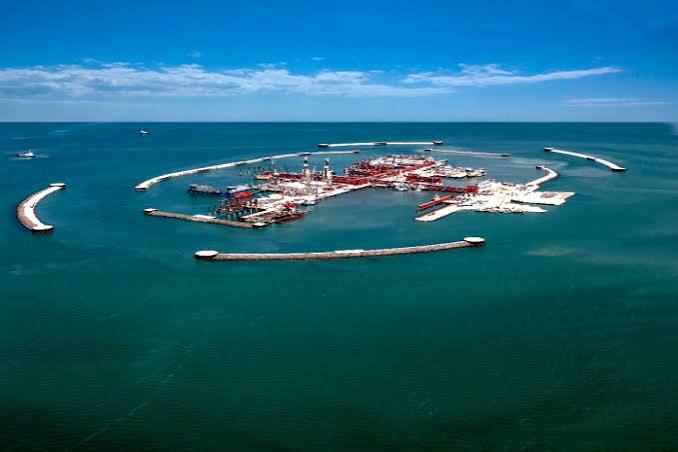
The deadline set by the Kazakh side — July 20, 2026 — has expired. A fine of 2.3 trillion tenge ($4.92 billion) was imposed back in 2023 for violating sulfur storage regulations. NCOC has not paid it. The conflict between Kazakhstan and the international oil consortium has entered a new phase, Reuters reports.
The Gist
- Kazakhstan's Ministry of Justice has warned NCOC Managing Director Giancarlo Ruiu of "administrative and criminal liability for non-compliance" with the fine payment requirements.
- NCOC and its contractors reject the fine and the underlying allegations. The case is currently being heard in international arbitration in Washington. The consortium stated that the fine cannot be collected while arbitration proceedings are ongoing.
- The NCOC consortium includes Shell, Eni, TotalEnergies, and ExxonMobil, as well as France's Total and China's CNPC. Kashagan is Kazakhstan's second-largest oil field.
- Kashagan produces about 430–450 thousand barrels per day. It is unclear how possible measures against NCOC might affect production.
- A number of critics and international oil majors accuse Kazakhstan of "resource nationalism." Astana rejects these accusations.
Timeline of the Standoff
The conflict over Kashagan is not new. As we previously reported, the Ministry of Justice set NCOC a deadline of July 20, 2026 back on July 14 to pay the environmental fine. Deputy Minister of Justice Daniel Vaysov stated that if payment was not made, Astana would take enforcement measures.
The deadline has passed. The fine has not been paid. Now the Ministry of Justice has moved to the next step — a personal warning to the head of NCOC about criminal liability.
According to a document reviewed by Reuters, Kazakhstan warned Giancarlo Ruiu of "administrative and criminal liability for non-compliance" with the requirements.
NCOC's Position: Arbitration Blocks Collection
NCOC maintains a consistent position: the consortium rejects the fine and the underlying allegations. The case is being heard in international arbitration in Washington. The consortium insists that the fine cannot be collected while the arbitration proceedings are ongoing.
This is a standard legal strategy in international investment disputes: move the case to international arbitration, which has jurisdiction over disputes under production sharing agreements, and seek a suspension of enforcement pending a decision. NCOC expects the arbitration to either overturn the fine or significantly reduce its amount.
What's Behind the Fine
The environmental fine was imposed in 2023 for violating sulfur storage regulations — sulfur being a byproduct of processing Kashagan oil, which has a high hydrogen sulfide content. Vast quantities of solid sulfur have accumulated at open-air sites at the field. This is not only an environmental problem — polluting the air, soil, and the Caspian Sea — but also a violation of the terms of the production sharing agreement.
For Kazakhstan, securing payment is fundamentally important: a precedent of large international consortia ignoring environmental fines creates a systemic risk for the entire oil industry.
'Resource Nationalism' or Sovereign Right?
A number of critics and some international oil majors accuse Kazakhstan of "resource nationalism" — an attempt to increase control over the oil industry through legal pressure. Astana rejects these accusations.
Objectively, the situation is more complex. On one hand, Kazakhstan is indeed consistently tightening control over the operating conditions of foreign oil companies — this is evident in claims against Kashagan, Karachaganak, and other major projects. On the other hand, the violation of environmental standards in sulfur storage is documented, and the demand for payment of the fine falls within the sovereign right of the state to enforce its own legislation.
Author's Conclusion
The warning of criminal liability to the director of NCOC is not just a legal document. It is a signal that Kazakhstan is prepared for further escalation if international arbitration does not yield quick results. It is unclear how possible measures against NCOC might affect production at Kashagan, which produces nearly half a million barrels per day. This is the very question that restrains Astana from taking extreme measures — and is simultaneously the consortium's main leverage in this standoff.

Comments ()