Kazakh farmers could earn up to $40 per tonne of CO₂
In Kostanay, a seminar showed farmers concrete figures on turning soil care into extra income.
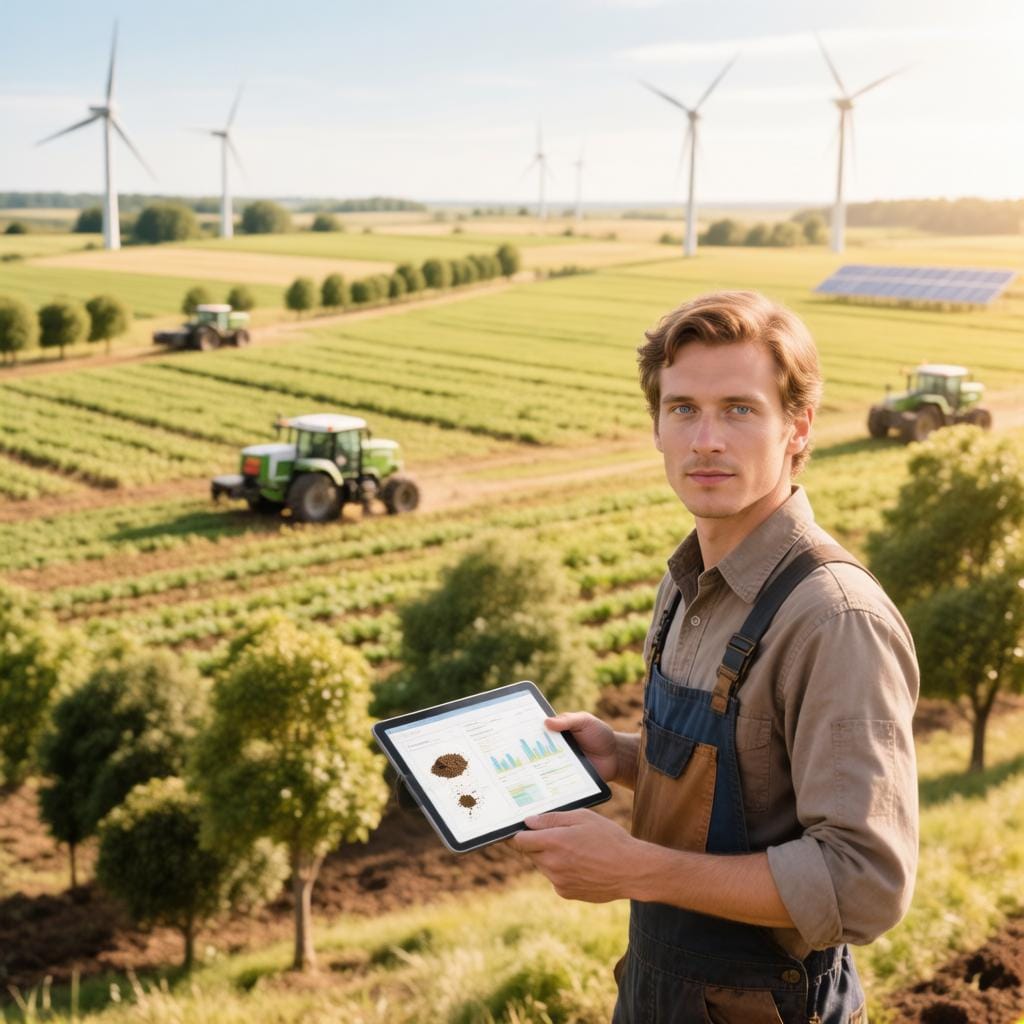
This is not about an abstract climate agenda, but about a very tangible market — international carbon units that global corporations are willing to pay for, reports inbusiness.kz.
The gist of it
- Kazakhstani agricultural producers can earn from $15 to $40 per tonne of CO₂ equivalent for switching to technologies that preserve and accumulate carbon in the soil.
- Minimum tillage allows sequestering 0.5–1.2 tonnes of CO₂ per hectare per year, cover crops add another 0.3–0.8 tonnes, and retaining crop residues can store up to 3 tonnes per hectare; Kazakhstan's arable land is capable of absorbing from 18 to 45 million tonnes of CO₂ annually.
- Projects are certified under the international Verra standard (methodology VM0042) — the farmer only needs accurate digital field boundaries and their management history for three years, while drilling soil cores, laboratory analysis, and auditing are handled by specialized operator companies.
- The first pilot project has already been launched on 20,000 hectares at Asyl Farms in the North Kazakhstan Region; nationwide, over 5 million hectares are planned to be involved in similar projects.
A climate threat turned into a market opportunity
For farmers in Kazakhstan's grain belt, climate change is no longer a forecast but direct financial losses. Steppe lands are warming by 0.22°C every decade, moisture availability during the growing season could decline by another 8–17% by 2050, and severe droughts that cut yields by 20% or more now recur every 3–5 years instead of the previous, rarer cycles. Regenerative agriculture — minimum tillage, cover crops, mulching with crop residues — simultaneously addresses both the climate and economic challenges: it preserves moisture and fertility in arid conditions and creates a measurable, sellable climate effect.
How carbon monetization works
Advisor to the CEO of the ECOJER association Ramazan Zhampiisov compared the market's prospects to a commodity already familiar to farmers: "A carbon unit could become as understandable a commodity for farmers as wheat. You adopt conservation technologies, the soil accumulates carbon, and foreign companies buy that result."
The architecture of a Verra-standard project consists of 10 steps — from the initial farm assessment to final verification — but according to the executive director of the association, Kuanysh Baltabaev, very little is required from the farmer himself.
"The farm itself only needs to keep accurate records and follow the chosen agricultural technology. The economic effect comes from several factors: reducing mechanical tillage cuts fuel, repair, and machinery costs, while soil condition improves at the same time; and if the climate result is confirmed, the farm receives additional income from selling carbon units," explains Kuanysh Baltabaev.
All the technically complex stages — drilling soil cores to a depth of up to 45 cm, laboratory analyses to ISO standards, brokerage on exchanges — are handled by specialized operator companies, not the farmer himself.
An already working pilot and next steps
The scheme has not remained theory: in the North Kazakhstan Region, a carbon project covering 20,000 hectares has already been launched at Asyl Farms — extensive soil core sampling has been carried out, cover crops are being introduced, and data is being prepared for submission to the international registry. In parallel, another technical solution is being considered: specialists from China have presented a soil conditioner technology that improves soil structure without deep plowing, which is now planned to be tested and adapted to Kazakhstan's climatic conditions. Nationwide, according to other sources, over 5 million hectares of agricultural land could ultimately be involved in climate projects.
Part of a broader picture
Interest in carbon markets in Kazakhstan is not growing in isolation but against the backdrop of several parallel processes. The country is following its own Strategy for Achieving Carbon Neutrality by 2060, and Kazakhstani exporters of metals and other carbon-intensive goods are increasingly feeling the impact of the EU's Carbon Border Adjustment Mechanism (CBAM) — a topic we have already raised in the context of localizing green energy. In this sense, regenerative agriculture works on two fronts simultaneously: it reduces the future carbon burden on the export products of the entire economy and directly protects soil fertility, which is also addressed by the law on soil protection adopted in the country, which introduces a mandatory land passport and a unified soil monitoring system.
Author's conclusion
The idea of making money from carbon may seem unusual for a Kazakhstani farmer, but the logic of the seminar in Kostanay is telling: technologies that reduce erosion and preserve moisture in an arid climate turn out to be economically beneficial on their own, and carbon units are an additional, not the only, incentive for adopting them. The real test of the concept will not be the seminar itself, but whether the Asyl Farms pilot project receives certification in the international registry and how many actual dollars reach the Kazakhstani farm — until then, all calculations of $15–40 per tonne remain potential, not guaranteed income.
Comments ()