Kazakhstan goes to Vietnam: rice husk as raw material for energy and ferroalloys
Kazakhstan has shown interest in a project to process agricultural by-products in Vietnam.
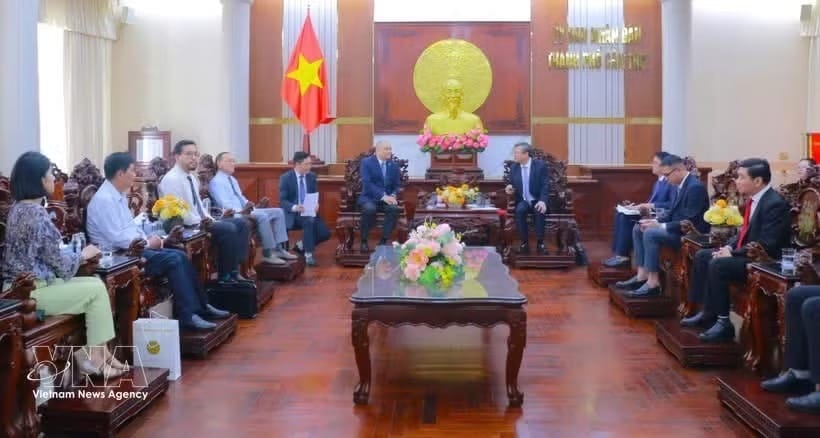
The Embassy of Kazakhstan in Vietnam is launching an active investment campaign in the Mekong Delta. According to the Vietnam News Agency, within a few days — two visits to two provinces: Can Tho and Dong Thap. The proposal is the same: to build an integrated industrial complex for processing 1 million tons of rice husks per year into electricity and anti-corrosion ferrosilicon alloy. There is enough raw material — the Mekong Delta produces 4.6 million tons of paddy rice annually, the by-products of which are currently mostly burned or discarded.
The Gist
- The Ambassador Extraordinary and Plenipotentiary of Kazakhstan to Vietnam, Kanat Tumysh, held working meetings with the authorities of Can Tho (July 16) and Dong Thap (July 18) regarding the creation of a rice husk processing plant.
- The proposed processing volume is 1 million tons of rice husks per year. The processed products are electricity and high-value-added anti-corrosion ferrosilicon alloy.
- The technology is from Kazakhstan. Production launch is planned for 2027. The investor plans to attract local specialists in chemistry, energy, and metallurgy.
- In Can Tho alone, rice is grown on 700,000 hectares, producing 4.6 million tons of paddy rice, and there are 136 processing enterprises.
- Both provinces welcomed the project. Can Tho authorities agreed to move towards signing a memorandum of understanding, appointed coordinators, and instructed a review of land planning.
Why Rice Husk is a Resource, Not Waste
The Mekong Delta is one of the world's largest rice-growing regions. In Can Tho alone, rice is grown on 700,000 hectares, with an annual production of 4.6 million tons of paddy rice. Milling rice produces husks — about 20% of the grain's weight. For Can Tho, this potentially means 900,000 tons of husks per year.
Currently, most of this raw material is either burned directly in the fields — causing air pollution and CO₂ emissions — or sold at a low price for animal feed or as fuel for brick kilns. The Kazakh investor's technology offers a fundamentally different path: gasification or pyrolysis of the husks to generate electricity, alongside the production of ferrosilicon — an industrial material used in metallurgy and the production of special alloys.
What Was Proposed to Each Province
In Can Tho, the emphasis was on the stability of raw material supply: the Kazakh side stated that the main priority is to ensure a reliable supply channel for rice husks from the rice-growing provinces of the delta. The city authorities responded constructively: they agreed to move towards an MoU, appointed the city's Department of Foreign Affairs as the coordinator, and instructed a review of land planning for the project.
In Dong Thap, the project also found support. Issues concerning the transportation of raw materials and the plant's electricity supply are being simultaneously worked out — without a stable power supply in the initial period, production cannot be launched.
Kazakh Technology in an Asian Context
An interesting inversion: a country without rice and without tropical rivers brings technology for processing rice waste to a region that produces rice on a scale Kazakhstan has never known. Where does Kazakhstan get this competence?
Apparently, this refers to biomass gasification and ferrosilicon production technologies, which are being developed in Kazakhstan within the context of the metallurgical industry and industrial waste processing. Kazakhstan is among the major producers of ferrosilicon — a material used in steel production. Applying this competence to the processing of agricultural biomass is a quite logical diversification.
Why Does Kazakhstan Need Vietnam
The ambassador's visit to the Mekong Delta provinces is not a random diplomatic gesture. It fits into the context of the strategic partnership between Kazakhstan and Vietnam, established in May 2025 during the state visit of General Secretary of the Communist Party of Vietnam Central Committee To Lam to Astana. During that visit, the parties agreed to develop cooperation in agriculture, energy, and transport — it is precisely this trio of areas that Ambassador Tumysh is promoting in the Mekong Delta.
For Kazakhstan, exporting technology to Southeast Asia is a new direction, fitting into a broader ambition to become not just a raw material supplier, but a technological partner for developing economies. Against this backdrop, the project in the Mekong Delta is a kind of pilot: if it works, the model could be replicated in other rice-growing regions of Asia.
Author's Conclusion
Rice husk is a waste product produced in millions of tons that is burned or left to rot. The Kazakh investor proposes turning it into electricity and ferroalloy — products with a fundamentally different value. For Vietnamese farmers, this means additional income from what they previously considered garbage. For Kazakhstan, it is an export of technology to a place with the raw materials and market for it. If the project launches in 2027, it will become one of the first examples of Kazakh technological export to Southeast Asia.
Comments ()