Kazakhstan has a serious competitor in the uranium market.
The global uranium market is bracing for a major new player to enter the scene.
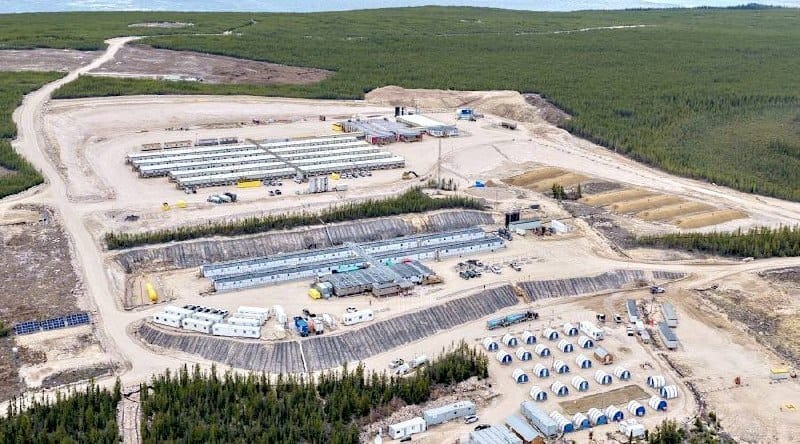
NexGen Energy has begun construction of the Rook I mine in the Canadian province of Saskatchewan — a project that, in a few years, could single-handedly produce more than a third of what Kazakhstan, the world's leading uranium producer, currently extracts in a year.
The gist
- NexGen Energy Ltd has started construction of the Rook I uranium mine at the Arrow deposit in Saskatchewan; the project is scheduled to take four years and is expected to reach production of about 30 million pounds (11,500 tonnes) of uranium per year.
- For comparison: Kazatomprom, including its associated enterprises, produced 13,291 tonnes of U3O8 in the first half of 2026, with 27,500–29,000 tonnes planned for the full year — meaning a single Canadian mine could, in a few years, produce more than a third of Kazakhstan's current annual output.
- The measured and indicated resources of the Arrow deposit stand at about 98,700 tonnes of U3O8, but uranium here will not be extracted using cheap in-situ leaching as in Kazakhstan, but rather by conventional underground mining at depths of 300–700 metres — a considerably more expensive method.
- The project has already attracted interest from mining giant BHP, which controls 5% of global uranium supply; NexGen expects to raise about $1 billion for the mine's construction.
Scale of the new mine
The Arrow deposit, discovered by NexGen back in 2014, is considered one of the world's largest high-grade uranium deposits — probable reserves of 92,200 tonnes of U3O8 at an average grade of 2.37% are economically viable to extract even at current uranium prices, with a further 31,000 tonnes classified as inferred resources. At the same time, the annual production volumes NexGen plans indicate that the deposit, despite its impressive total reserves, will be mined at a fairly intensive pace.
Different production costs
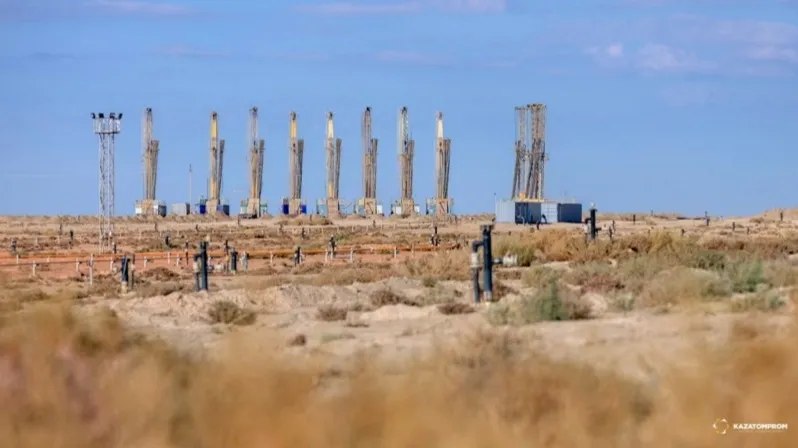
The key technological difference between the new Canadian mine and the Kazakh model is the extraction method itself. Thanks to the geological characteristics of its deposits, Kazakhstan uses in-situ leaching (ISL) — the cheapest industrial method of uranium extraction, which has largely secured the country's cost leadership. Rook I will be developed using the conventional long-hole stoping method with two shaft systems — an inherently more expensive approach. This means the Canadian project may not withstand direct price competition with Kazakh uranium in the short term, but amid possible fragmentation of the global uranium market due to geopolitics and rising logistics costs, Rook I's output could find demand on the American market — traditionally important for Kazatomprom — simply for reasons other than price.
Interest from major players
The scale of attention to the new mine shows that the market takes it seriously. Mining giant BHP, which derives about 5% of global uranium supply as a by-product of the Olympic Dam copper mine in Australia, is in talks with NexGen and has already purchased a large land parcel adjacent to the project. To finance construction, NexGen is considering various options — from prepayment agreements with utility companies to debt financing and direct equity participation. In the same region of Saskatchewan, other companies are also advancing new mine construction — Denison Mines and Paladin Energy — while Canada's largest producer Cameco extracted 3,900 tonnes of uranium in the first half of 2026 at its operating mines Cigar Lake and McArthur River/Key Lake. As early as 2024, forecasts emerged that Canada could overtake Kazakhstan and become the world leader in uranium production.
Why this matters for Kazakhstan
Kazakhstan remains the unquestioned leader in global uranium production — more than a third of world output at a fraction of the cost thanks to in-situ leaching technology. Growing demand for Kazakh uranium is already tangible: for example, France tripled its purchases of Kazakh uranium in 2026 and became the top buyer. But the emergence of large, albeit more expensive-to-mine, deposits like Rook I in Canada — a country with a politically stable reputation and status as a reliable partner for Western energy companies — could over time reshape the market structure, especially if geopolitical fragmentation truly forces buyers to choose suppliers not only by price. The forecast of a peak in Kazakh uranium production in the early 2030s means the window for increasing the country's market share is not unlimited.
Author's conclusion
Rook I is not an immediate threat to Kazakhstan's leadership: the cost difference between in-situ leaching and conventional underground mining is large enough for Kazakh uranium to remain price-competitive for many years to come. But BHP's interest and the activity of several Canadian companies in the same region show that major capital is betting on diversifying uranium sources — not only for economic reasons but also geopolitical ones. For Kazakhstan, this is a signal that its current leadership in the uranium market needs to be strengthened not so much through price as through long-term contracts and a reputation as a reliable supplier, while competitors are only building their first shafts.
Comments ()