Kazakhstan has been promoting the idea of an international water organization under the UN for almost a year
At the SCO Plus summit in Beijing, President Tokayev again urged the creation of a UN-backed International Water Organization.
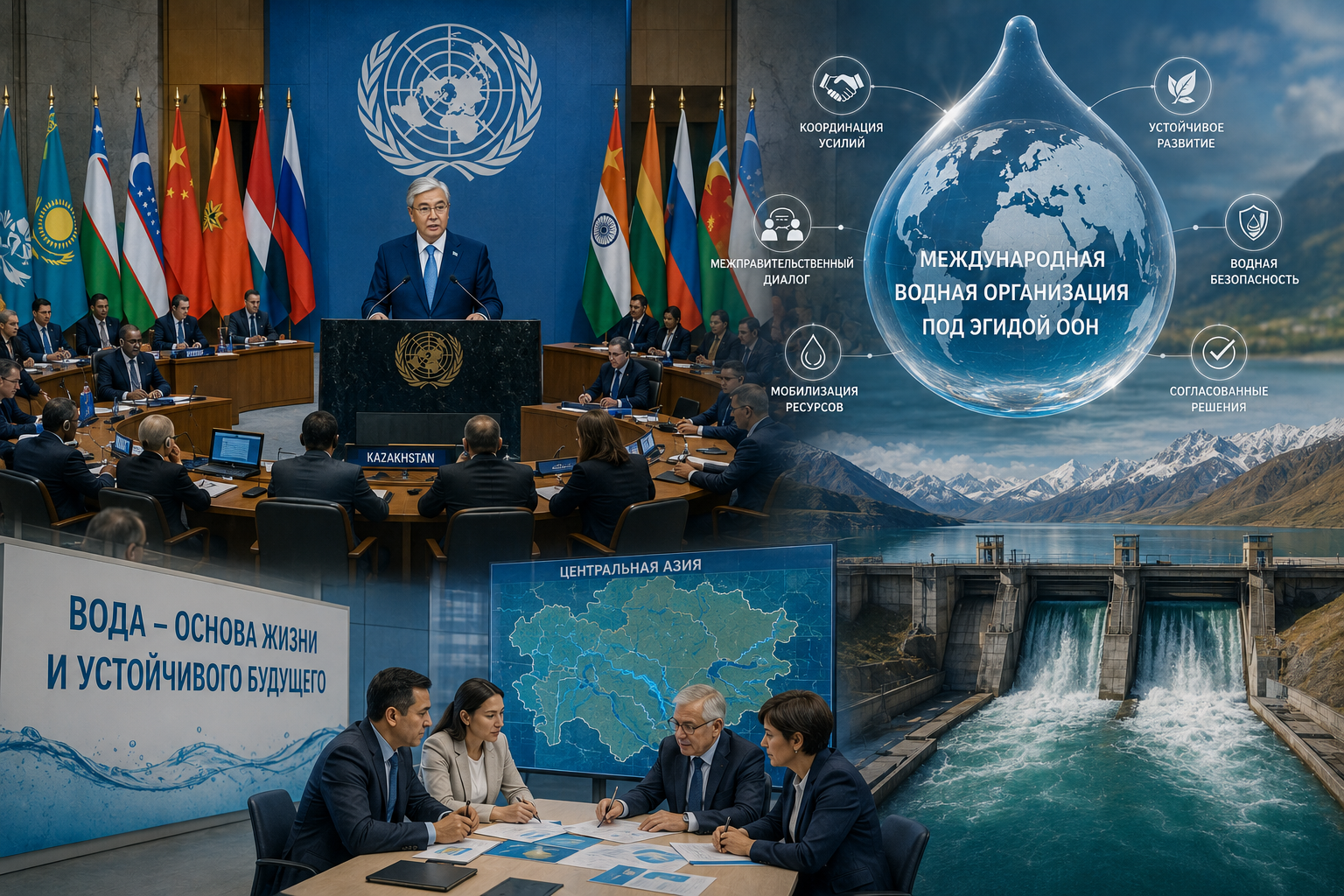
At first glance, this is just another diplomatic statement among many at a major forum. But this is far from the first or the main statement by Kazakhstan on this topic — the country has been promoting this idea on international platforms for almost a year.
The gist in brief
- At the "SCO Plus" summit, President Kassym-Jomart Tokayev again called for the creation of an International Water Organization under the auspices of the UN, which would coordinate the efforts of dozens of disparate UN structures dealing with water issues, Zakon.kz reports.
- The concept was first voiced in December 2025 at an international forum in Ashgabat and at the "Central Asia — Japan" summit in Tokyo, and in April 2026, separate consultations on the initiative were held in Astana with the participation of the UN Secretary-General's Special Representative for Water Resources, Retno Marsudi.
- According to UN global water commissions and the World Bank, by 2030 global demand for fresh water will exceed available supply by 40% — and Eurasia, including the basins of Central Asia, is at the epicenter of this pressure.
- A regional complement to the global initiative should be the SCO Center for Water Problems Analysis — Tokayev counts on the support of the organization's member states in creating both structures.
A year of diplomatic work, not a one-off statement
The chronology shows that the Beijing address is merely the latest point in a consistent campaign. The idea was first voiced in December 2025 on two platforms at once — an international forum in Ashgabat and the "Central Asia — Japan" summit in Tokyo. Then, in April 2026, Kazakhstan organized separate consultations in Astana on the creation of an international water organization, which were attended by Retno Marsudi — the UN Secretary-General's Special Representative for Water Resources. The initiative was also presented directly at UN headquarters in New York, described as an open invitation to an inclusive dialogue on improving the coherence and accountability of global water governance. The speech at the "SCO Plus" summit is another, but not the first and clearly not the last, step in this campaign.
"Kazakhstan has come forward with an initiative to create an International Water Organization under the auspices of the UN. Its task is not to duplicate existing mechanisms, but to coordinate efforts, ensure ongoing intergovernmental dialogue, mobilize resources, and develop agreed solutions," Tokayev said in Beijing.
Why fragmentation is a real problem
Tokayev's argument about the fragmentation of global water governance rests on a concrete institutional picture: dozens of UN structures deal with water issues in one form or another, but none of them has a comprehensive mandate that would allow it to coordinate the efforts of all the others. This is a structural problem, not a rhetorical device — water simultaneously affects food security, energy, health, and climate policy, and each of these areas within the UN system is handled by separate, loosely connected agencies.
The scale of the problem itself — water bankruptcy
The figures behind the initiative are striking: according to estimates by UN global water commissions and the World Bank, humanity has already disrupted the global water cycle, and by 2030 demand for fresh water will exceed available supply by 40%. Economists who took part in the April consultations in Astana used an even more alarming phrase — the "era of water bankruptcy." It is telling that Eurasia — with the basins of Central Asia, the Himalayas, and the Arctic — is named the epicenter of this pressure: glacier degradation, population growth, and outdated water infrastructure converge precisely in this region.
The connection with Kazakhstan's own water diplomacy
The initiative to create a global organization grows logically out of the practical experience Kazakhstan has already accumulated at the regional level. We have previously written that the country has conducted 38 negotiations with neighboring states on transboundary water resources since the beginning of 2026, and 498 people have already been sent abroad for training in the water sector since 2023. In parallel, Kazakhstan is participating in a program to restore the basins of the Amu Darya and Syr Darya jointly with FAO and the Global Environment Facility. In other words, the global diplomatic initiative is backed not only by rhetoric but also by its own practice — Kazakhstan is trying to offer the world an institutional framework whose elements it is already testing in its own region.
Author's conclusion
The initiative to create an International Water Organization is a rare case where Kazakhstan acts not as a recipient of international aid in the water sector, but as the author of an institutional proposal on a global scale. The success of such an initiative will depend not on the number of speeches at international summits, but on whether the year of diplomatic work can be translated into a concrete decision at the level of the UN General Assembly — and that is a process requiring the consent of dozens of states with different interests in the water sphere, which makes Beijing, Ashgabat, and Tokyo merely intermediate stops on the way to far more complex negotiations ahead.

Comments ()