Kazakhstan prepares law on energy storage systems
At the Go Net Zero Central Asia and Caspian summit, Kazakh officials publicly confirmed for the first time that an energy storage law is now under review.
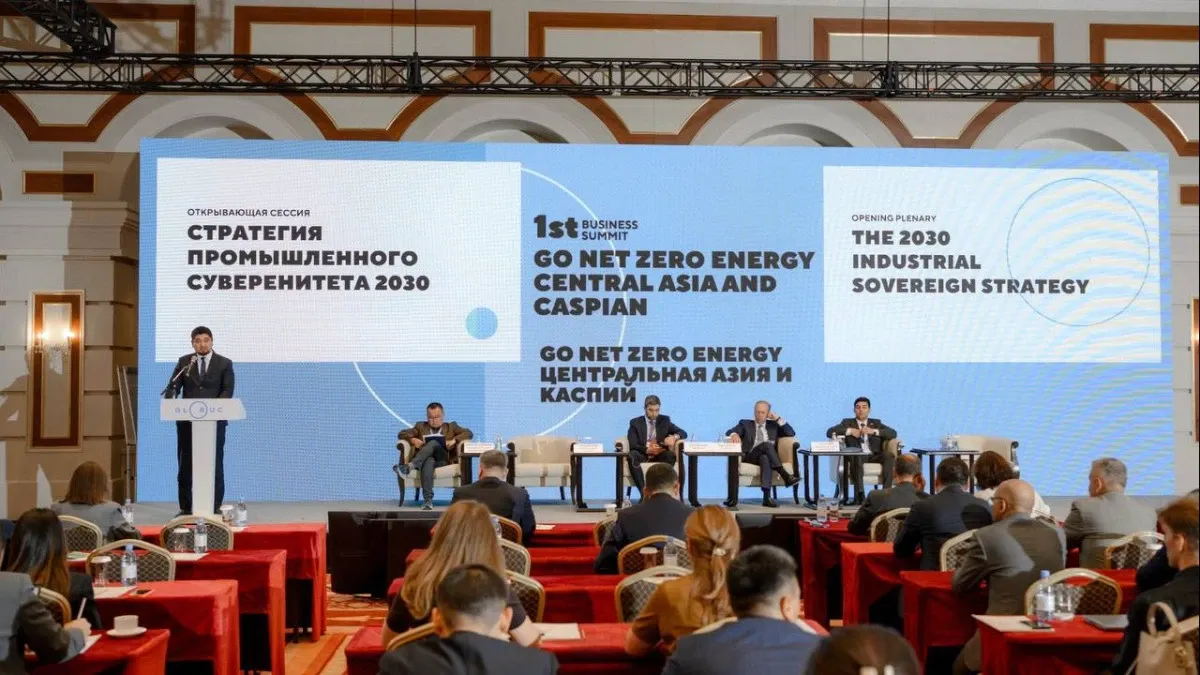
For an industry that has been ramping up solar and wind generation capacity in recent months without a comparable expansion of storage, this is a long-overdue step.
The gist in brief
- At the Go Net Zero — Central Asia and Caspian business summit, the director of the RES department at the Ministry of Energy of the Republic of Kazakhstan, Turar Alimzhan, said that a law on energy storage systems is under review, while a long-term green energy development concept is being drafted in parallel.
- The action plan for the development of the electric power industry through 2035 provides for the implementation of at least 8.4 GW of installed RES capacity.
- Kazakhstan, Azerbaijan, and Uzbekistan are synchronizing efforts to shape a new energy model for the region based on renewable generation, storage systems, and low-carbon technologies.
- The Central Asia — Azerbaijan — Europe green energy corridor project has moved into the practical implementation phase.
Why a separate law right now
Alimzhan's phrasing — "we are moving toward this goal systematically" — precisely describes the logic of the moment. Over the past year, Kazakhstan has noticeably accelerated the commissioning of solar and wind capacity, but at the same time, nowhere in the world, including in more mature markets, does generation growth without a comparable expansion of storage pass without consequences. It is precisely the lack of sufficient energy storage capacity that creates the risk of surplus and price collapse during periods of high output — a problem that more developed RES markets have already encountered. A separate law on storage systems must establish the legal basis for building such infrastructure within the country, rather than leaving the issue to the discretion of individual investors.
Three countries, one energy model
A telling detail of the summit was Alimzhan's statement that the countries of the region are united not only by shared history and cultural ties, but also by common energy systems, water resources, and shared responsibility for sustainable development. Kazakhstan, Azerbaijan, and Uzbekistan are now officially synchronizing efforts to shape a new energy model based on renewable generation, energy storage, and low-carbon technologies as the foundation of industrial sovereignty. Particular attention at the summit was given to the Central Asia — Azerbaijan — Europe green energy corridor, which, according to the organizers, has already moved from plans to practical implementation.
Part of an already familiar energy picture
The statement about the law logically continues several trends we have been following in recent months. Kazakhstan has commissioned seven of the ten RES facilities planned for 2026, providing the energy system with an additional 212 MW of capacity, while in parallel 24 investment agreements are being implemented in the country for the modernization of energy facilities with a total capacity of 3.8 GW. The wind farm under construction in Zhambyl Region with the participation of the UAE's Masdar already includes its own storage system of 600 MWh — that is, individual large projects are addressing the storage issue individually, whereas the new law should set uniform rules for the entire industry at once. At the same time, so far all this growth remains large-scale industrial generation — in neighboring Uzbekistan, a fundamentally different model is gaining momentum at the same time, the "Solar Home" program, which has paid subsidies to the country's residents for electricity from home solar panels, with payments growing 9-fold over the year. The updated plan figure — 8.4 GW of installed RES capacity by 2035 — also refines the target that we mentioned in earlier materials as "more than 8 GW."
Author's conclusion
The law on energy storage systems is not a flashy piece of news in itself, but it is precisely this kind of regulatory framework that determines whether Kazakhstan's RES industry will be able to avoid the problems that have already manifested in more mature markets such as Spain and Portugal. While the law remains at the review stage and the green energy concept is only being drafted, the real test of both initiatives will begin not at the moment of their adoption, but with how quickly they are followed by concrete storage projects capable of keeping up with the already established pace of commissioning solar and wind capacity.
Comments ()