Kazakhstan proposed that Caspian countries jointly monitor the state of the Caspian Sea
Kazakhstan called for stronger scientific cooperation among the five Caspian states, joint environmental monitoring and data sharing to protect the Caspian Sea at the UN COP31 climate conference in Antalya.
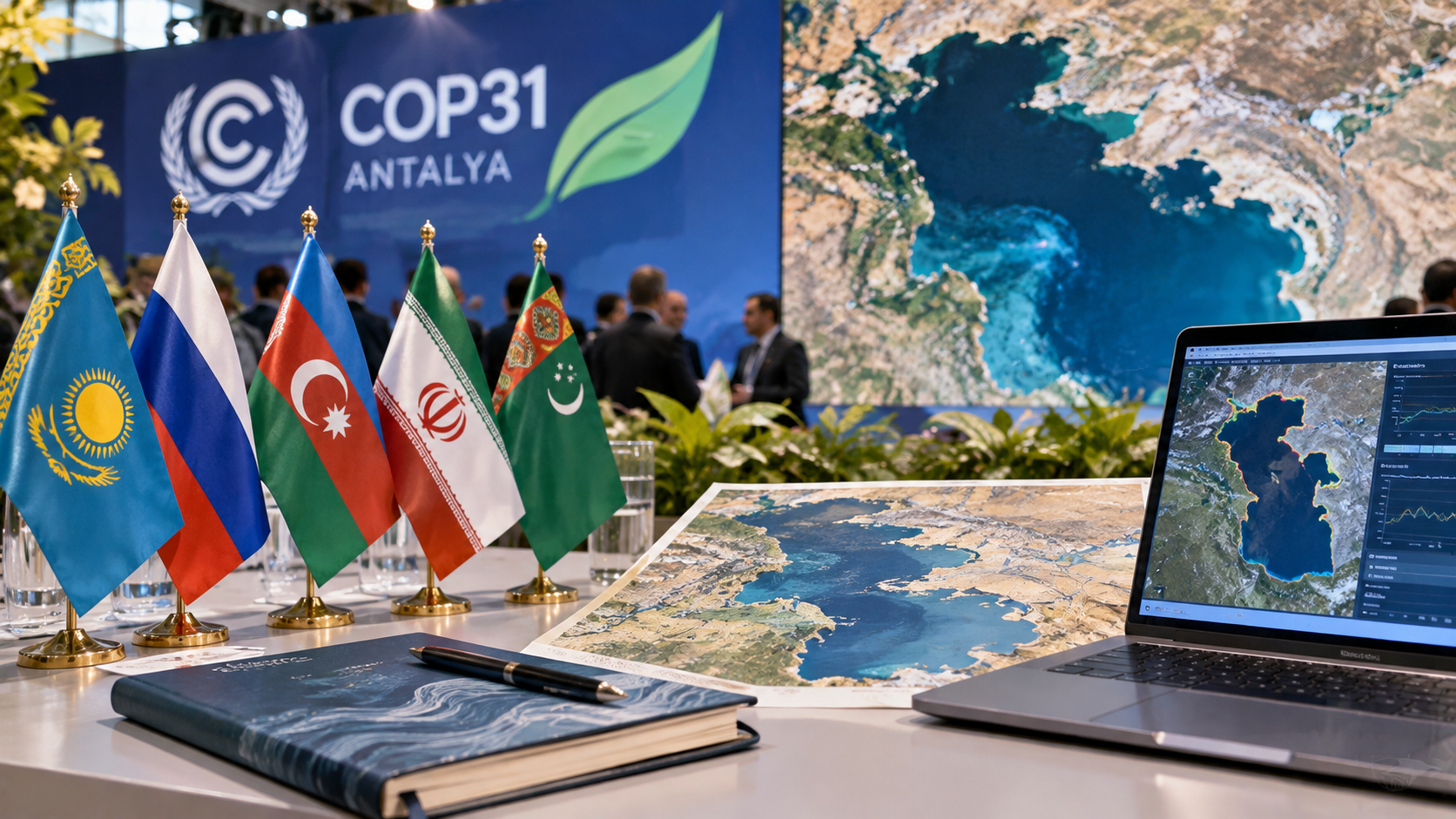
Vice-Minister of Ecology and Natural Resources Mansur Oshurbayev stated at a discussion in the Azerbaijan pavilion that over 25 years the area of Kazakhstan's sea waters has shrunk by more than 16 thousand square kilometers, reports the Ministry of Ecology and Natural Resources.
The gist in brief
- Kazakhstan advocated scientific cooperation among five Caspian states, joint monitoring and data exchange.
- The area of Kazakhstan's waters over 25 years has shrunk by more than 16 thousand square kilometers, according to an analysis of shoreline dynamics.
- According to the vice-minister, research results should become the basis for selecting priority environmental projects and attracting international support.
- The report contains no reaction from other countries, timelines or budget.
What Kazakhstan proposed
The topic was discussed at the panel "The Caspian Sea: Science and Regional Cooperation for Environmental Protection" in the Azerbaijan pavilion. It was opened by the representative of the President of Azerbaijan on climate issues Mukhtar Babayev and Vice-Minister of Ecology and Natural Resources of Kazakhstan Mansur Oshurbayev. According to the vice-minister, the scale of the changes requires joint solutions based on reliable scientific data and comprehensive research. He noted that joint monitoring, exchange of scientific information and interaction among research institutions of the five countries are of particular importance.
According to him, the results of scientific research and expert assessments should become the basis for identifying priority environmental projects, preparing them and attracting international support.
What is known about the shallowing
The decline in the Caspian level is described in the report as one of the most acute problems of the region. The area of Kazakhstan's waters has shrunk by more than 16 thousand square kilometers over the past 25 years, according to the press release, based on an analysis of shoreline dynamics. As we wrote, scientists at a discussion at the National Academy of Sciences of Kazakhstan said that the sea level had dropped by about 2 meters over 20 years, and proposed creating a water balance monitoring system based on satellite data and artificial intelligence.
What has already been done in Kazakhstan
The ministry recalled that on the initiative of President Kassym-Jomart Tokayev, the Kazakh Research Institute of the Caspian Sea was established. It conducts comprehensive study of the marine environment and provides scientific support for measures to preserve the ecosystem. Kazakhstan is interested in developing its potential and cooperating with relevant research institutions in the region. The institute was allocated 1.1 billion tenge for marine monitoring equipment, and observations are conducted across 50 parameters in the open waters and 26 in the coastal zone. In August, the United Nations Development Programme discussed three environmental projects for the Caspian with Kazakhstan.
What the Tehran Convention has to do with it
The discussion separately addressed interaction under the Tehran Convention, which for about two decades has served as the basis for environmental cooperation among the five Caspian states. Participants examined the role of science in preventing sea pollution, preserving biodiversity and restoring ecosystems. In September, the five countries at a convention session in Tehran agreed on an interstate program for preserving the Caspian's water resources, which provides for the exchange of data on water, biological resources and sea level.
Author's conclusion
For now this is Kazakhstan's position at the discussion: the report contains no reaction from Azerbaijan, Russia, Iran or Turkmenistan, no timelines, budget or description of how joint monitoring will be organized. The five countries already agreed on data exchange in September, and the press release does not make clear what exactly the current proposal adds. That will become clear when responses from other countries or specific projects for which Kazakhstan will seek international support emerge.

Comments ()