Kazakhstan sees growth in consumption of meat, milk and vegetables.
In Q1 2026, per capita consumption of most staple foods rose versus the same period in 2025.
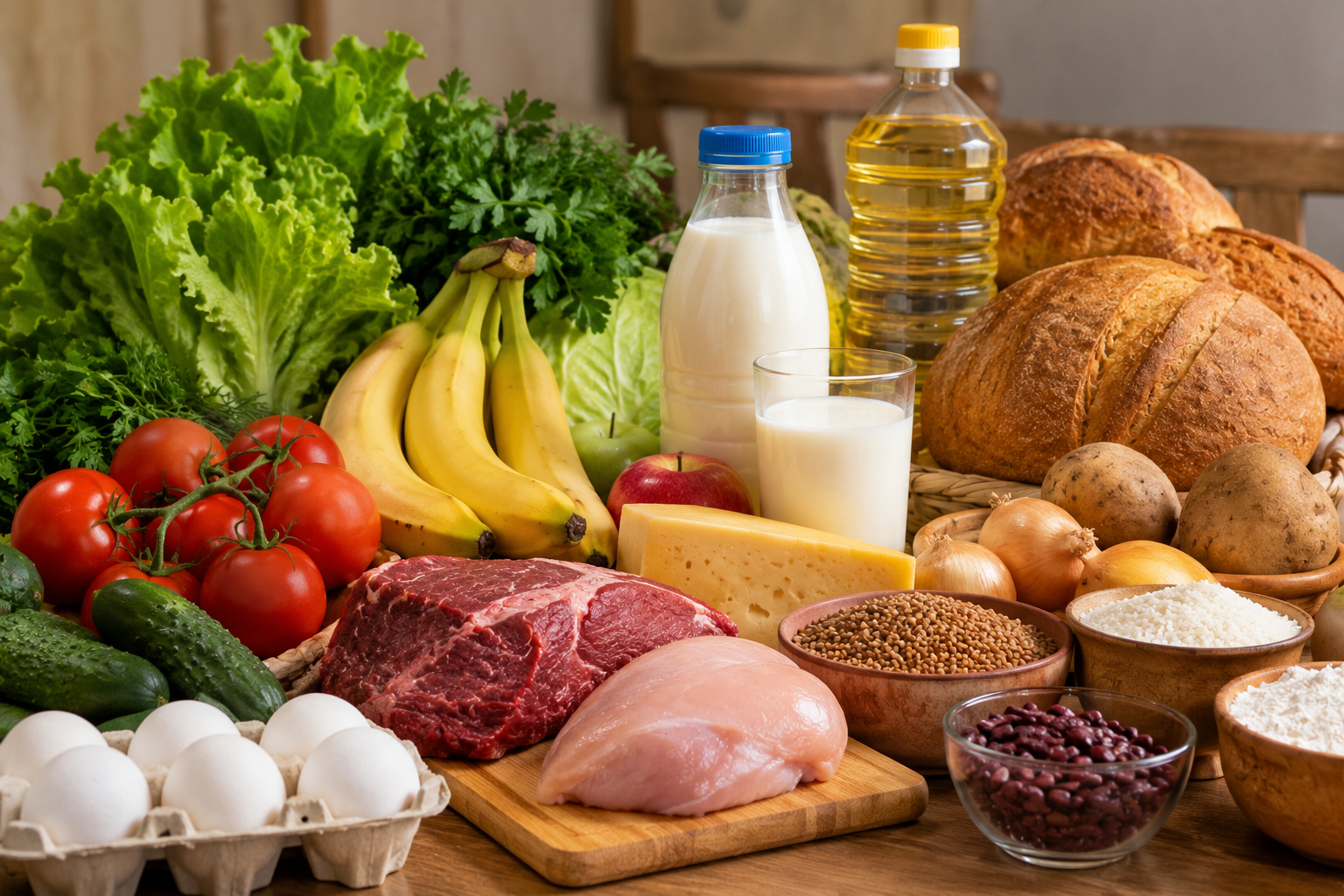
The Bureau of National Statistics has summarized the results of another survey of households on living standards — and the picture of the average resident's diet for the first quarter of 2026 turned out to be almost universally growing. Kazakhstani people began to eat more meat, milk, eggs, vegetables, and fish than a year earlier, while cereals, sugar, and fruits, on the contrary, declined slightly.
The gist in brief
- In Q1 2026, the average per capita consumption of most staple foods increased compared to the same period in 2025.
- Meat and meat products — 20.7 kg per quarter versus 20.6 kg a year earlier, milk and dairy products — 58.1 liters versus 57.2 liters, eggs — 54 eggs versus 52, vegetables — 18.7 kg versus 18.3 kg.
- Consumption declined for cereals and grain products (30.6 kg versus 31 kg), sugar, jam, and honey (10.3 kg versus 10.8 kg), and fruits, berries, and nuts (17.4 kg versus 17.5 kg).
- By region, the most vegetables are eaten in Almaty (23.2 kg per person), and the least — in East Kazakhstan and Almaty regions and the Abai region (16 kg).
What grew and what did not
According to the Bureau of National Statistics, consumption growth affected most key categories of the food basket. In addition to meat, milk, eggs, and vegetables, consumption of fish and seafood also increased — from 3.5 to 3.6 kg per person per quarter, as well as potatoes — from 11.3 to 11.4 kg. At the same time, statistics recorded a decline in three categories: cereals and grain products fell from 31 to 30.6 kg, sugar, jam, and honey — from 10.8 to 10.3 kg, fruits, berries, and nuts — from 17.5 to 17.4 kg. Consumption of oils and fats remained at the previous level.
A portrait of the average Kazakhstani table
The agency also provided a more detailed breakdown of specific products per quarter: 11.4 kg of potatoes, 6 kg of wheat bread made from first-grade flour, 6 kg of beef, 4.8 kg of apples, 4.6 kg of granulated sugar, 4.2 kg of rice, 3.1 liters of kefir, 2.6 kg of pasta, 2.4 liters of raw milk, 2.1 kg of fresh or chilled fish, 54 eggs, and 0.3 kg of black tea per resident of the country. This list is not a full annual diet but a snapshot of three winter-spring months, when the share of fresh vegetables and fruits in the diet is traditionally lower than in summer and autumn.
Geography of the table — where more vegetables are eaten, where more meat
Urban residents on average consume more vegetables than rural residents: 19.3 kg per person versus 17.6 kg. The leader in this indicator was Almaty with 23.2 kg per capita, followed by the Zhetysu region (22.8 kg) and the Turkestan region (21.4 kg). The least vegetables in the diet are found among residents of the East Kazakhstan region, as well as the Abai and Almaty regions — 16 kg each. For meat and meat products, the picture is mirrored: the highest consumption is recorded in the East Kazakhstan, Zhetysu, Akmola, and Karaganda regions, and the lowest — in Turkestan.
How differently the rich and the poor eat
Quarterly average figures mask a much sharper picture revealed by another slice of the same Bureau of National Statistics data — not by quarters, but for the entire year 2025, broken down by income groups (the survey covered 11,712 households across the country).
The gap in meat consumption between the 10% least and 10% most affluent Kazakhstani people is 3.3 times: 45.4 kg per year for the poor versus 150 kg for the rich. For milk, the difference is even more noticeable — 130.8 kg versus 434.5 kg, and for fruits — 46 kg versus 154 kg. The opposite pattern is seen for bread and flour products: the less affluent population eats more of them — 106 kg per year versus 159 kg for the wealthier group, since other products are simply less accessible. For Kazakhstani people with income below the subsistence minimum, the diet shrinks to 41.7 kg of meat per year — almost half the national average. At the same time, according to the same agency, 52.4% of household consumer spending nationwide goes to food — and the poorer the family, the higher this share.
What lies behind the numbers
The growth in meat and dairy consumption is occurring against the backdrop of a notable increase in meat imports — from Russia alone, Kazakhstan in 2025 increased purchases by 36%, entering the top five largest buyers of Russian meat products. That is, part of the increase on the plate of the average Kazakhstani is provided not only by domestic livestock farming but also by external supplies.
The trend toward increased consumption of animal protein with a declining share of cereals and plant-based products also fits into the structural shift in diet that WHO previously recorded across Central Asia — with a gradual increase in the share of saturated fats, sugar, and salt in the population's nutrition, which carries not only a positive signal of growing prosperity but also health risks in the long term.
Author's conclusion
Quarterly consumption statistics are not a one-time snapshot but part of the regular monitoring that the Bureau of National Statistics conducts year after year, and comparison with previous periods shows a steady, rather than accidental, nature of this growth. For the agro-industrial complex sectors, such dynamics are a signal of sustained domestic demand for meat and dairy products, and for the country's food security — a reason to look closely at what share of this demand will continue to be covered by imports, and what share by Kazakhstani producers.

Comments ()