Kazakhstan Senate adopts law "On Soil Protection". Mandatory land passport introduced
Kazakhstan's Senate approved the Soil Protection Law, introducing modern mechanisms for managing the country's land resources.
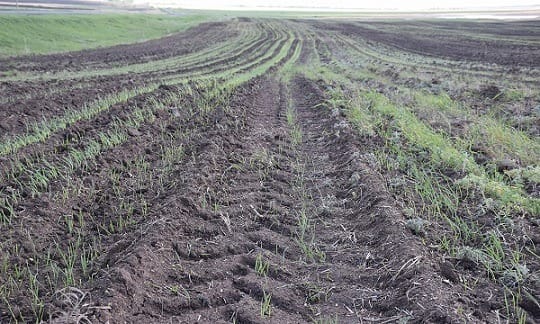
The document obliges land users to preserve soil fertility, introduces a unified soil monitoring system, and a mandatory land passport for agricultural plots. The law is accompanied by amendments to the Land Code and the law on regulating the agro-industrial complex.
The Gist
- The Senate of Kazakhstan approved the law "On Soil Protection," aimed at improving land resource management and preserving soil fertility.
- A unified system for comprehensive soil monitoring is being created; mandatory requirements are introduced for landowners and users regarding the preservation, restoration, and reproduction of fertility.
- Scientific support is strengthened — soil surveys and agrochemical analysis become mandatory. The introduction of modern rational land use technologies is envisaged.
- A mandatory land passport with soil characteristics is introduced, required when allocating agricultural plots.
- The Senate adopted accompanying amendments to the Land Code and the law on state regulation of the agro-industrial complex development to ensure regulatory consistency.
Why a Separate Law on Soils Was Needed
Until now, issues of land fertility in Kazakhstan were regulated fragmentarily — through the Land Code and sectoral by-laws, without a unified monitoring system and clear obligations for land users. Soil degradation — erosion, salinization, nutrient depletion — remained a problem recorded statistically for many years, but not managed systematically.
The Ministry of Agriculture emphasized that the adoption of the law is an important part of state policy in the field of rational use of land resources and will improve management efficiency, reduce land degradation, and create conditions for the sustainable development of the agro-industrial sector.
Land Passport as a New Control Tool
The most practically significant norm of the law is the mandatory land passport. A document with soil characteristics will become a necessary condition when allocating agricultural plots, which will strengthen the responsibility of all participants in land relations.
In effect, this means a transition from formal land accounting to substantive accounting: the state will have up-to-date data on the condition of a specific plot even before it is transferred for use, and the user themselves will receive clear obligations to preserve fertility, tied to the characteristics recorded in the passport.
Connection with Land Reform and the Agro-Industrial Complex
The amendments to the Land Code and the law on state regulation of the agro-industrial complex indicate the systemic nature of the reform — the law on soil protection does not exist in isolation but is embedded in the broader logic of agricultural sector management. This aligns with the general vector of state agricultural policy in recent months: the introduction of preferential lending for capital investments in processing, the introduction of meat export quotas to saturate the domestic market, and now — systemic regulation of the quality of the sector's most key resource, the land.
Author's Conclusion
The law "On Soil Protection" fills a long-standing gap in Kazakhstan's agricultural legislation: for the first time, land fertility receives the status of an object of systemic state accounting and protection, rather than an abstract concern of the farmer. The effectiveness of the norm will depend on law enforcement — how diligently soil surveys are conducted and how realistically the land passport will influence the practice of allocating plots. But the very fact of the law's emergence is a recognition that soil degradation in Kazakhstan has reached a scale requiring separate regulation.



Comments ()