Kazakhstan wants to double copper production by 2030 — and it's doing so at just the right time
KazMineral Management CEO Aizhan Balabatyrova announced at Astana Finance Day 2026 that Kazakhstan aims to double copper ore output to 300 million tonnes per year by 2030.
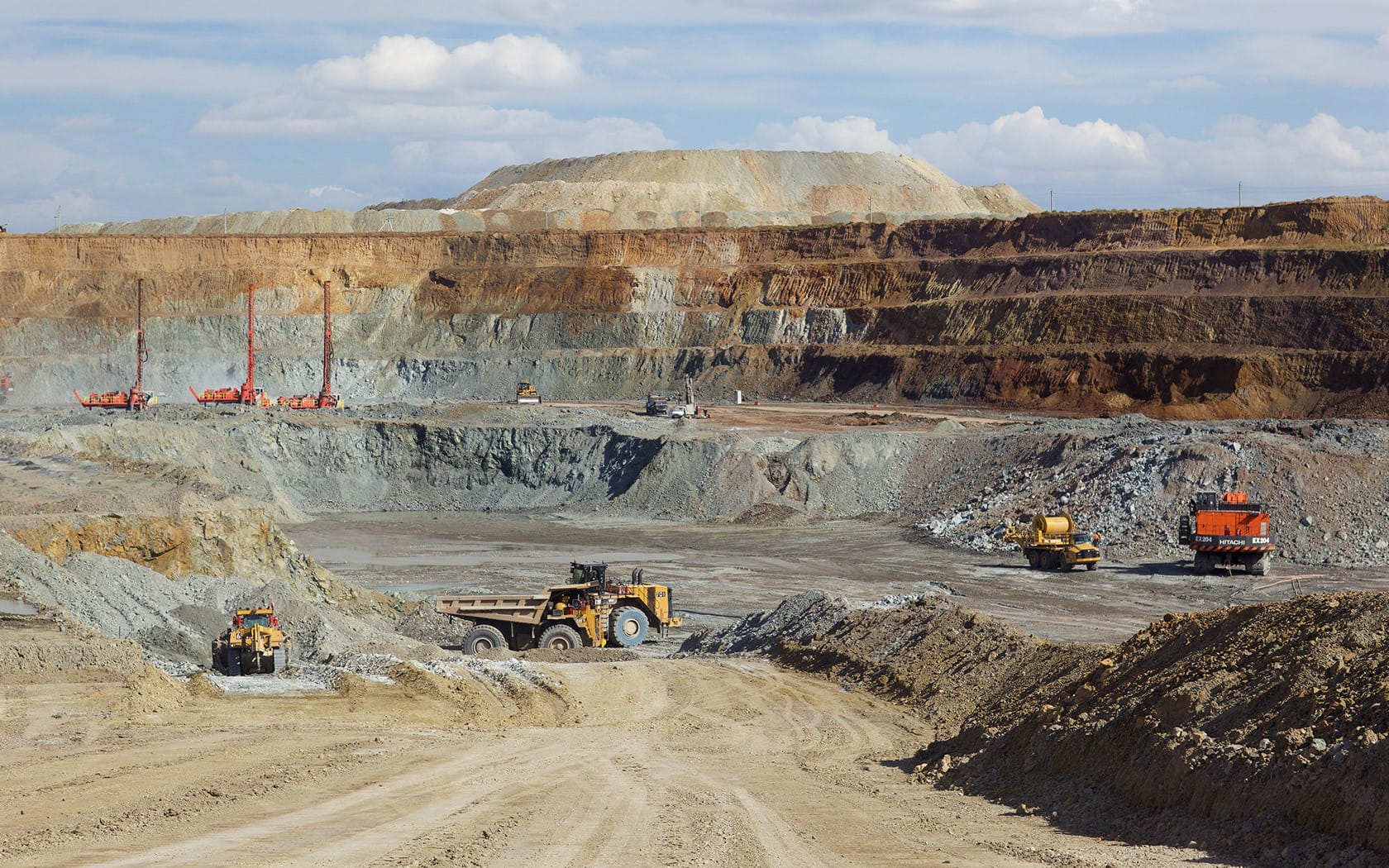
The task is ambitious but timely: the global copper market is entering a structural deficit, with demand from electric vehicles, renewable energy, and data centers growing faster than new deposits are being opened. Kazakhstan — a country in the global top 10 copper producers — has a real chance to take a key position in this race. But only if it does not limit itself to raw materials.
The essence in brief
- Kazakhstan plans to increase copper ore extraction to 300 million tonnes per year by 2030 through the development of new deposits — Aidarly, Koksay, Benkala, Ayak-Kodzhan — and by improving the efficiency of existing enterprises.
- Over the past decade, only 14 new copper deposits have been discovered worldwide, compared with about 200 over the previous comparable period. The resource base is being depleted faster than it is replenished.
- The global deficit of refined copper in 2026 is 150 thousand tonnes (ICSG). By the early 2030s, the deficit could reach 6 million tonnes annually. By 2040, demand will grow to 42 million tonnes — 50% above the current level.
- The main demand drivers: an electric vehicle consumes ~83 kg of copper versus 23 kg in an internal combustion engine car; a data center — 20–40 tonnes per MW; solar generation — 3–5 thousand tonnes per GW, offshore wind — up to 9,500 tonnes per GW.
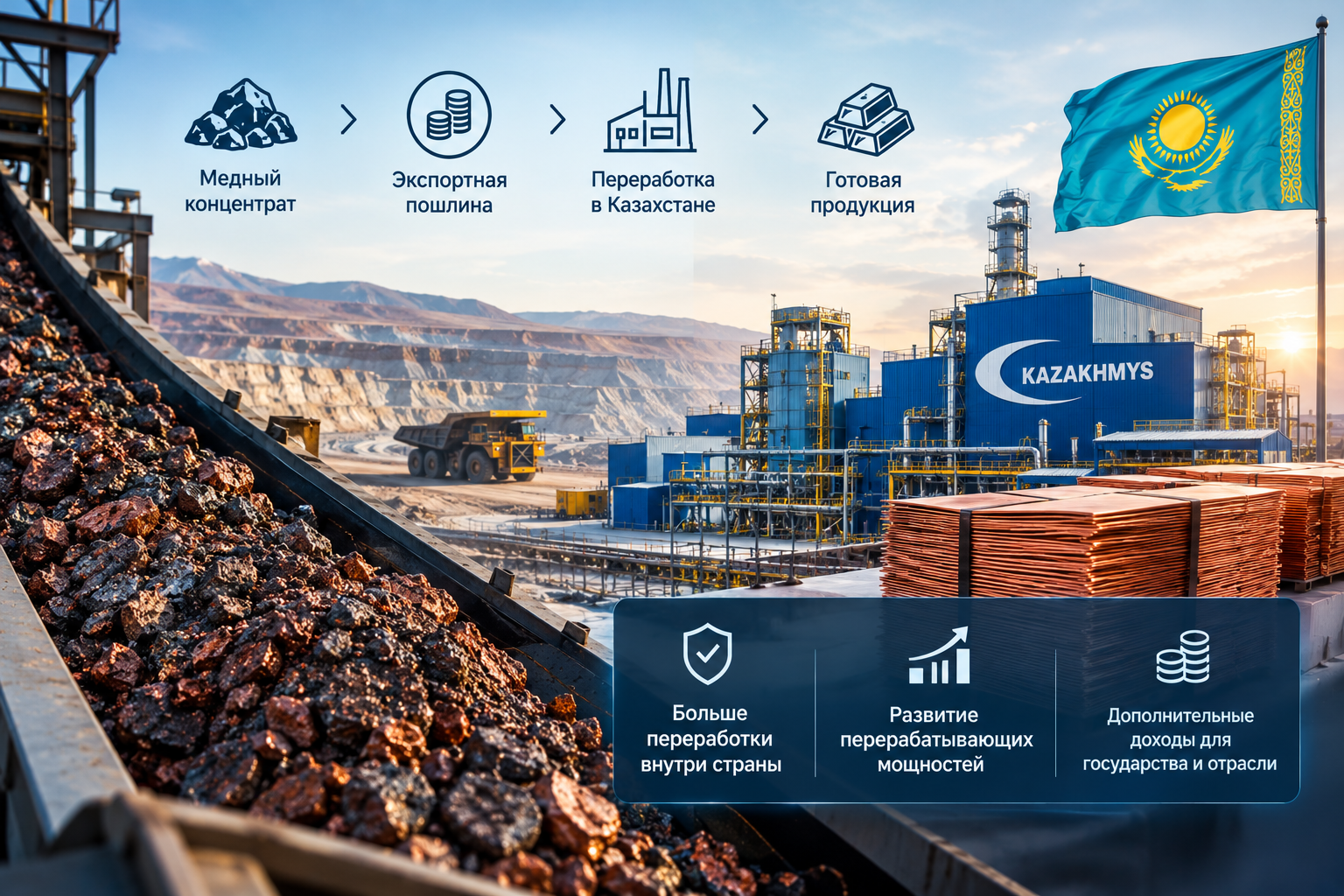
- Kazakhstan intends not only to increase extraction, but also to build a deep processing chain: from cathode copper to cable, wires, and industrial components.
Why the world is experiencing a copper hunger
Copper is the metal of electrification. Every wind turbine, every electric vehicle, every data center requires many times more copper than their previous-generation analogues. Global demand for the metal is growing along several independent tracks at once — and all of them are accelerating right now.
S&P Global published a large-scale study in January 2026 titled "Copper in the Age of AI": by 2040, total demand will reach 42 million tonnes — an increase of 50% from the current level. Data centers for AI infrastructure alone could consume from 250 to 550 thousand tonnes annually by 2030. Each gigawatt of offshore wind generation requires up to 9,500 tonnes of copper.
At the same time, supply cannot keep up. Refined copper production in 2026 is growing by only 0.9%. The International Copper Study Group (ICSG) recorded a shift from surplus to a deficit of 150 thousand tonnes already in 2026. By the early 2030s, according to forecasts by BloombergNEF and S&P Global, the deficit could exceed 6 million tonnes annually — and this is a structural, not cyclical, gap.
The main problem: the deposits have disappeared
Aizhan Balabatyrova identified the key constraint of the industry at the forum — and did so with figures that speak for themselves:
"Over the past decade, only 14 new deposits have been discovered, whereas about 25 years ago there were around 200. This clearly shows why we need not only to have a resource base, but also to use it as efficiently as possible."
There are several reasons. The most accessible and richest deposits are already being developed — new ones are either deeper, located in hard-to-reach regions, or have a lower metal content in the ore. The cost of building a new copper mine has increased many times over the past 20 years. According to estimates by Wood Mackenzie, merely to cover the deficit by 2035, the industry will require investments exceeding $210 billion.
Kazakhstan: what it has and what is being built
Kazakhstan has secured its place in the global top 10 copper producers — and possesses significant proven reserves. The key operating assets are concentrated in the Zhezkazgan and Zhambyl mining regions, with the leading operator being Kazakhmys / KazMineral Management.
New projects that are expected to ensure the doubling of extraction:
Aidarly, Koksay, Benkala — deposits at various stages of geological exploration and preparation for development. Their commissioning will form the basis for the growth of the resource base.
Ayak-Kodzhan (Pavlodar region) — an expansion project of existing production, allowing an increase in volumes using already-prepared infrastructure.
At the same time, the company is actively integrating AI directly into the production process.
"This is no longer talk about the future — it is part of our daily work. We use artificial intelligence for safety, in extraction and processing," stated Balabatyrova.
AI tools are used for equipment monitoring, predictive maintenance, optimizing the operation of flotation units, and reducing metal losses during ore processing. In conditions of depleting rich ores and rising costs, technological efficiency becomes the main competitive advantage.
From cathode to cable: the value-added challenge
Doubling extraction is a necessary but not sufficient condition for strengthening Kazakhstan's position in the copper market. The decisive question is how deep the processing within the country will be.
Today, Kazakhstan mainly exports copper in the form of cathodes — a high-purity metal but with relatively low added value. The next processing stages — copper wire, cable, pipes, industrial components — yield product prices 2–5 times higher. This is where the margin is concentrated that is currently captured by processors in China and Europe.
KazMineral Management's plans envisage the creation of a full industrial chain: from extraction through cathode production to cable and conductor production — with an eye on growing domestic demand from renewable energy, nuclear power plant construction, and power grid development.
The global context works in Kazakhstan's favor
The copper market of 2026–2030 creates a rare combination of favorable factors for Kazakhstan. First, prices: the spot price of copper is holding near $13,500 per tonne, and analysts at J.P. Morgan forecast long-term support at $12,000 per tonne. Second, the structural deficit: the market needs new producers, and Kazakhstan, with its geological base, is one of the few that can realistically increase supply in the medium term. Third, geopolitics: Western countries are actively seeking reliable suppliers of critical minerals outside China and Russia — this is precisely what opened the doors to Pax Silica for Kazakhstan and attracted the interest of European and American investors in Kazakhstan's mining and metallurgical complex.
Author's conclusion
Doubling copper extraction by 2030 is not just a production plan. It is a bid for a key role in the global energy transition, which is impossible without copper. The world is opening dozens of times fewer new deposits than a quarter-century ago, while demand is only accelerating. Kazakhstan, with its proven reserves, existing infrastructure, and technological ambitions, is entering this deficit from the right side. The question is whether the country will be able to convert the growth in extraction into growth in processing — and earn from cable, not just from cathode.
Comments ()