Kazakhstan wants to move from selling rare earth raw materials to processing them
As the world demands more green energy, EVs and high tech, Kazakhstan is tackling a classic resource-economy problem: not just selling ore, but processing it at home.
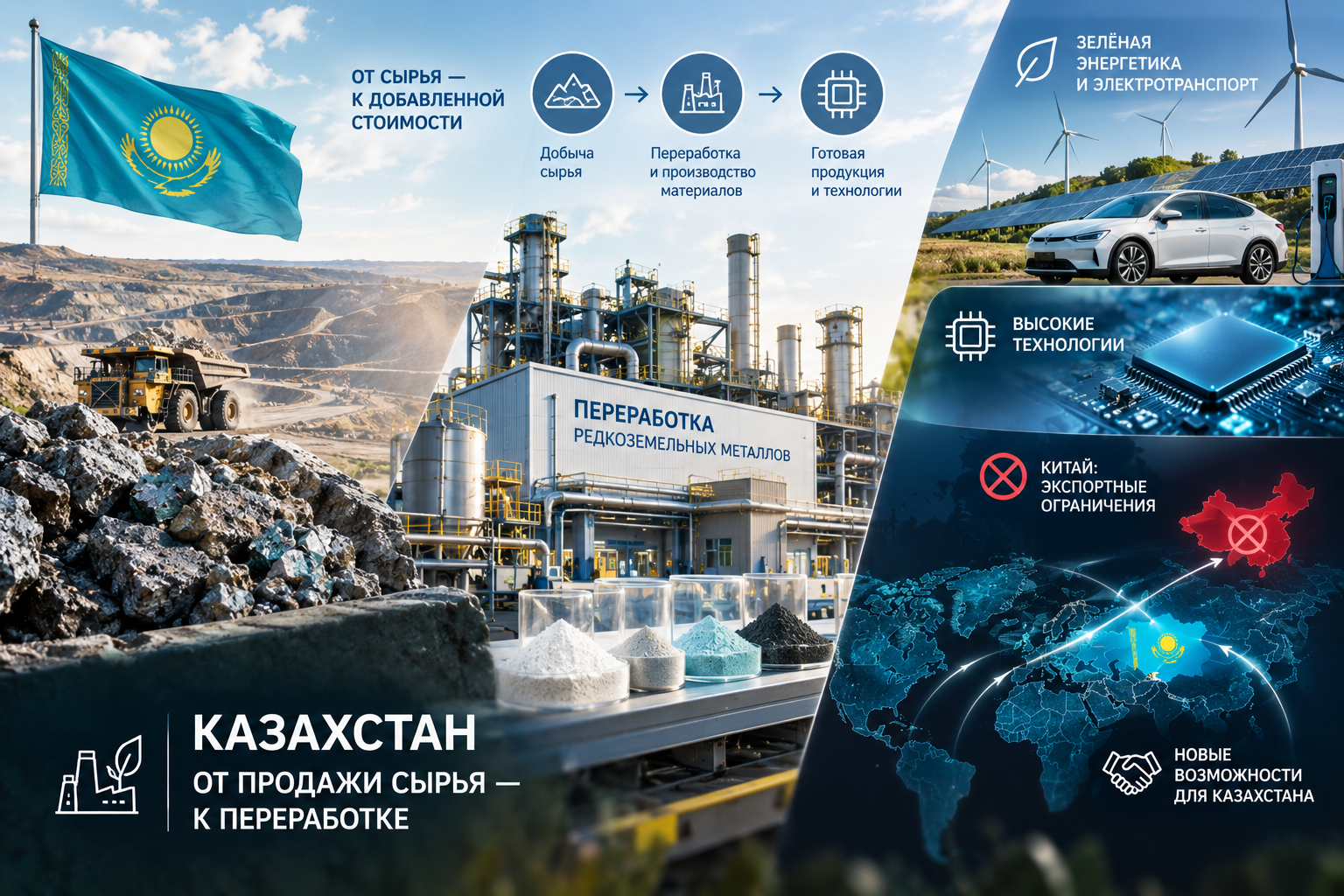
The timing for this transition is favorable: Chinese export restrictions on rare earth metals are opening a window of opportunity for new suppliers.
The essence in brief
- In 2023–2026, Kazakhstan exported six types of ores and concentrates to the EU; in 2025, exports of chrome ore to Sweden amounted to 129,290.5 tonnes worth $44.2 million, and in 2026 new gallium and antimony production facilities are planned to be launched, reports inform.kz.
- The country has identified more than 120 deposits of rare earth metals, and at the end of 2025, the "Zhana Kazakhstan" deposit was discovered in the Karaganda region, which is already being called the most significant geological discovery in the years of independence.
- The comprehensive plan for 2024–2028 envisages a 40% increase in investment in exploration and extraction, a minimum 40% increase in the production of rare and rare earth metals, the launch of five new production facilities, and the introduction of five new technologies.
- The global market remains extremely concentrated: China accounts for 69% of global extraction (270,000 tonnes out of 390,000) and already imposed export restrictions on a number of rare earth elements in 2025, which pushed prices for neodymium and praseodymium oxides up by nearly a third over the year.
From raw materials to processing — what already exists
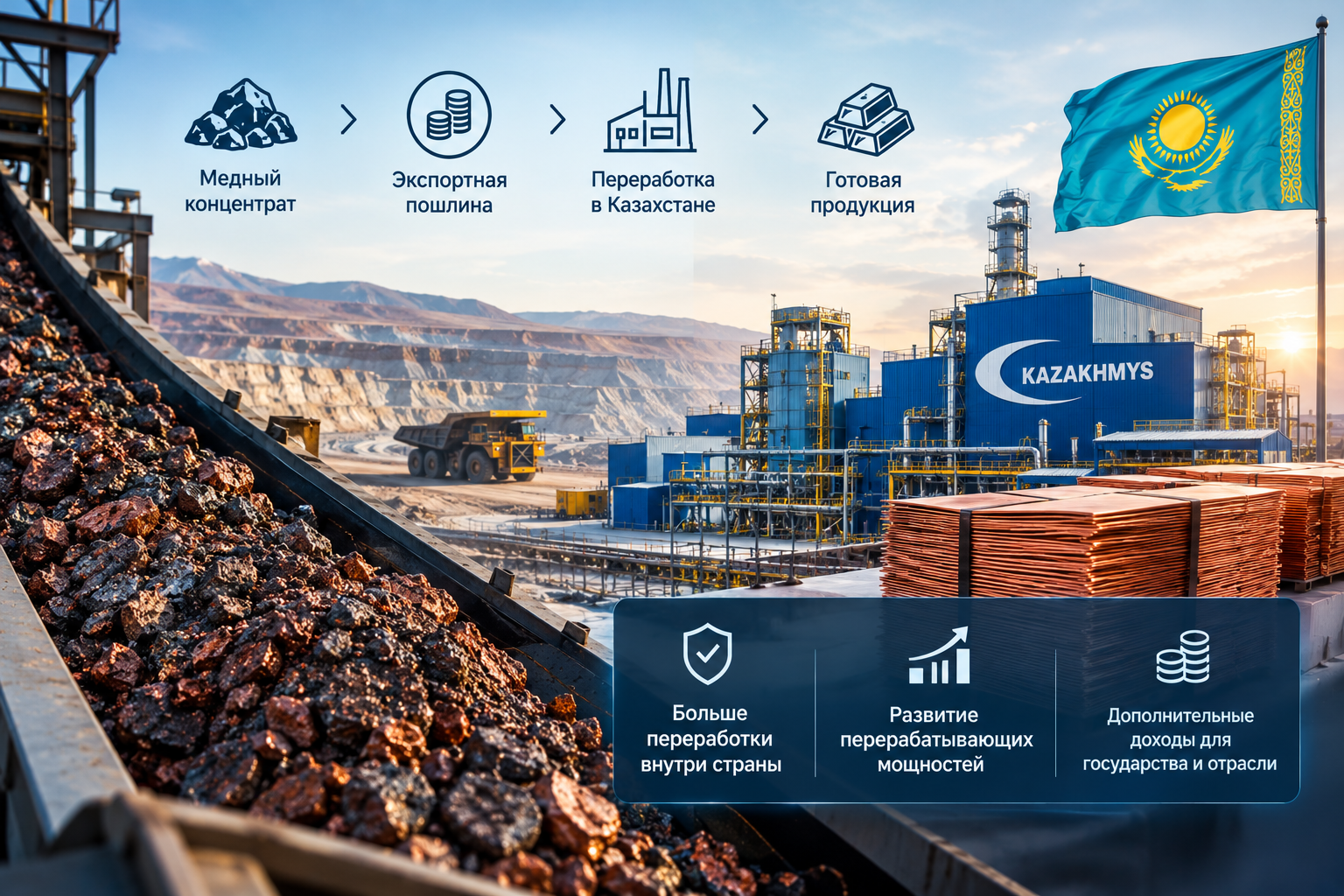
Kazakhstan has already established production and export of a number of mid-stream processing products — titanium, tantalum, beryllium, niobium, rhenium, bismuth, selenium, tellurium, and high-purity manganese sulfate monohydrate. But titanium, tungsten, molybdenum, and antimony are still exported primarily as raw materials, and it is precisely the increase in their processing level that the state has identified as the next priority. In 2023, the main export item to the EU was molybdenum ore and concentrate — 3,144.7 tonnes worth $60.2 million out of total exports of 3,262.7 tonnes worth $60.5 million. By 2026, plans include launching new gallium and antimony production facilities, which should deepen the processing of mineral raw materials and increase exports of products with higher added value.
Partnership with the EU and German investment
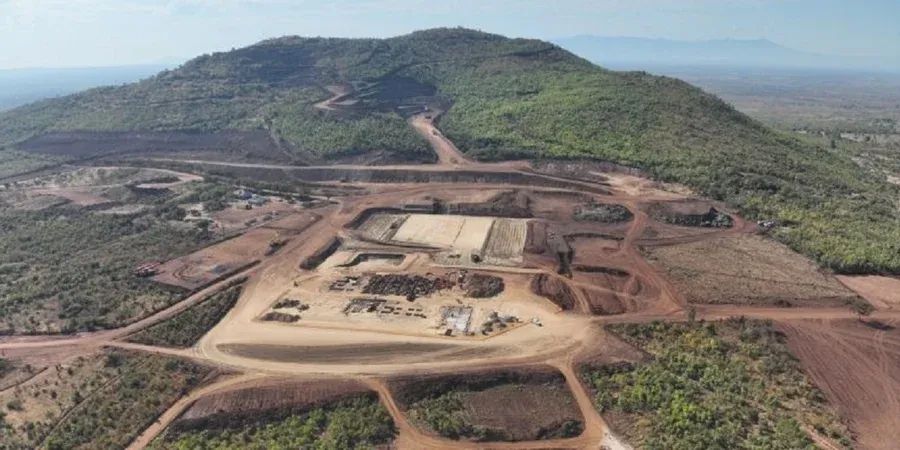
One of the key directions for the industry's development is a strategic partnership with the European Union, enshrined in a memorandum of understanding dated November 7, 2022, on sustainable supply chains for raw materials, battery materials, and renewable hydrogen. Since 2023, the parties have been implementing a roadmap, and in 2025 a new cooperation plan for 2025–2026 was approved. One of the practical results of this partnership is a project by the German company HMS Bergbau AG in the East Kazakhstan region: through its subsidiaries Alatau Lithium, Qazaq Lithium, and Bergbau Altai, the company conducts exploration, extraction, and processing of complex ores containing rare metals, including lithium.
Rules of the game for investors
In 2026, new rules for conducting auctions for the exploration and extraction of solid minerals were approved. A separate provision introduced by legislative amendments in 2025 concerns production and innovation projects worth more than 14.5 million MRP included in the Unified Industrialization Map — such projects, if their production process is related to subsoil use, have been given the opportunity to acquire subsoil plots for exploration or extraction of solid minerals directly, bypassing the auction, with the exception of uranium and coal. In return, additional obligations are imposed on the investor — regarding investment volume, wage levels, processing of extracted raw materials, training of Kazakhstani personnel, and technology transfer.
Problems that the industry itself acknowledges
The comprehensive plan for 2024–2028 does not hide systemic problems: insufficient volumes of geological exploration, low levels of assessment and use of technogenic mineral formations, depreciation of enterprise fixed assets, shortage of modern technologies, and an underdeveloped regulatory framework. At the same time, technogenic mineral formations — essentially waste from previous extraction and processing — are viewed as a significant additional resource: about 41 such sites containing rare earth metals are listed on the state balance, of which 31 have already been transferred to subsoil use. Promising new sources of lithium are being sought in the Kalba-Narym region of East Kazakhstan, in the Bayankol area, in the Aral Sea region, and in the Caspian region.
The Chinese factor as an opening window of opportunity
The concentration of global extraction and processing of rare earth metals in a single country creates a risk not only of an economic but also of a strategic nature — and 2025 demonstrated this clearly. China tightened export controls on samarium, gadolinium, terbium, dysprosium, lutetium, scandium, and yttrium, later extending restrictions to other elements as well; some measures were suspended for a year in November, but the main April restrictions remain in force. The price reaction was swift: the average price of neodymium oxide rose from $56 to $73 per kilogram, and praseodymium oxide — from $56 to $74. For Kazakhstan, such instability in the global market is not only a risk but also an incentive: countries dependent on Chinese supplies are interested in diversifying sources of critical raw materials, and Kazakhstan possesses all the elements to build a complete chain — from exploration and extraction to processing and production of finished goods. The country has already cemented the significance of this topic at the international level, becoming the first in Central Asia to join the global technology alliance Pax Silica, which unites countries around issues of AI, critical minerals, semiconductors, and data centers.
Part of an already familiar picture of reserve growth
The desire to increase the processing of rare metals logically continues what we wrote about quite recently: in 2024–2025, Kazakhstan placed 54 new deposits on the state register and noticeably increased reserves of gold, silver, copper, and other metals — among other things, precisely through promising sites for rare and rare earth metals such as Kuyrektykol in the Karaganda region. The fresh "Zhana Kazakhstan" deposit is another step in the same direction, showing that Kazakhstan's mineral resource base continues to expand in parallel with efforts to deepen the processing of already explored raw materials.
Author's conclusion
The task formulated by the Kazakhstani industry itself sounds simple, but its solution stretches over years: not to limit oneself to exporting raw materials, but to build full-fledged production chains within the country on their basis. The presence of a rich mineral resource base is a necessary but not sufficient condition for this transition: without large-scale geological exploration, modern technologies, and modernization of worn-out production assets, the reserves in the subsoil will remain potential rather than realized economic value. The Chinese episode of 2025 with export restrictions showed that the window of opportunity for new suppliers of rare metals is indeed open, but only those who manage to build their own processing faster than competitors will be able to take advantage of it.
Comments ()